
Technical consultancy, 11,000 engineers after 20 years demand a fee adjustment
The first national day of forensic engineering was held in Rome: specialisations and skills of the category at the heart of the debate

Key points
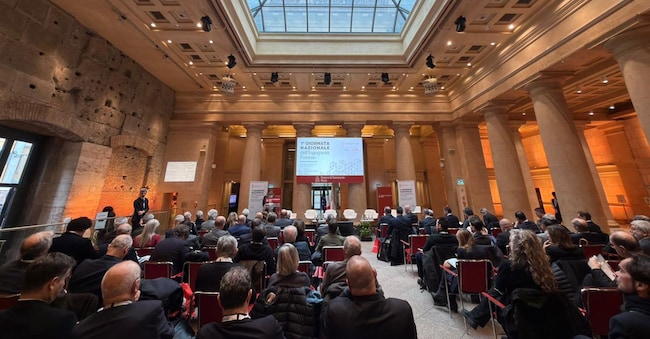
Giving greater recognition to the skills of technical consultants. By starting to think of this as a specialisation of the profession, to be cultivated also through dedicated university and training courses. And by acting forcefully on the compensation lever, which has been at a standstill for twenty years now. These are just some of the issues that emerged in Rome during the first Forensic Engineering Day, organised by the National Council of Engineers and, above all, by the deputy vice-president of the Cni, Carla Cappiello.
Perrini: 'Skills on two levels'
Cni president Domenico Perrini opened the proceedings by emphasising that 'forensic engineering is the discipline that applies the principles and technical methods of engineering to the solution of technical problems, mainly in the judicial field'. It is 'a profession that requires specific skills based not only on technical knowledge of the subject matter but also on the procedures adopted'. And it is precisely this double track, technical and legal, that was the focus of the day.
Almost 11 thousand engineers at work
This is where thousands of engineers work. "According to the national list of court-appointed technical consultants, 58,514 consultants are registered in the registers established at the individual courts, of whom 10,957 are registered engineers." For all of them, remuneration remains 'a sore point', since their services are compensated through a 2002 decree, which has not been updated 'for over twenty years'.
Cappiello: "Essential but invisible function"
These themes were also shared by Carla Cappiello: 'When a structure collapses, when a plant gives way, when a fire devastates, facts leave traces that only those with rigorous technical training are able to read, interpret and return in an intelligible form to those who have to make decisions. It is a task that requires dual skills: one needs to know science, certainly, but one also needs to know the rules of the trial, the value of evidence, the weight of words in a courtroom. Yet this essential function remains largely invisible in the public debate'.
Thinning Heritage
For Cappiello, however, 'we are faced with a wealth of expertise that is thinning, and in some territorial realities the situation is already critical. At the Court of Belluno, to give a concrete example, there are 16 registered engineers, 3 of whom are experts. Sixteen professionals to cover all the technical specialisations that a court may require. I wonder, and I ask you: what effective rotation is possible with these numbers? What guarantee of choice does the magistrate have?".


