
Ten years of technology in Europe: how much start-ups have raised and where
Just under USD 430 billion, ten times more than the USD 43 billion of the previous decade
4' min read
4' min read
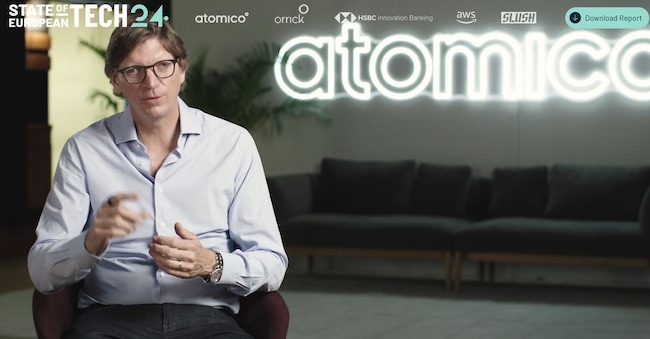
Just under $430 billion, ten times more than the $43 billion of the previous decade: this is how much European technology companies have 'cashed in' since 2015, and this year alone they will bring home around $45 billion in funding, a figure in line with that ($47 billion) recorded in 2023. Moreover, over the past ten years, the growth of venture capital funds in Europe has been unabated (total funding was $154 billion, almost three times the value of the previous decade) and has outpaced that of all other regions, exhibiting an average growth rate of 13%, compared to the 8% recorded over the same period by the United States, 2% by China and 10% by the rest of the world. There is the essence of the recent history of innovation in the tenth edition of the 'State of European Tech' published by the Atomico investment fund, a report that combines quantitative data from the 41 countries of the Old Continent with the findings of a survey conducted on thousands of operators, startuppers and institutional investors in the technology industry to understand what is really happening in this sector. Very indicative, to get an idea of the scenario recounted in the study, are the comments of the report's two co-authors, Sarah Guemouri and Tom Wehmeier, according to whom Europe's future ambitions in the tech sphere run along two main lines: greater support from private pension funds and government limited partners (through government bonds sold to investors) and an approach more devoted to ambition and confidence in the ecosystem's potential for success.
More start-ups are born in the EU but one in two seeks funding in the US
.But how has the European digital ecosystem evolved over the last ten years? Atomico analysts have tried to answer this question in several ways. One of them, for instance, certifies how Europe has become, in the last 10 years, the home par excellence of emerging technology start-ups: no fewer than 35,000 new companies were launched in the period and this number exceeds those of any other region in the world, including the United States. The icon of this escalation is London, which in 2015 was the only European city in the top 10 hubs in terms of volume of funding for new start-ups (with rounds of less than $15m) and now ranks second globally, ahead of Berlin and Paris in that order. A second very indicative snapshot, however, tells us that in Europe there are now eight times as many growth-stage companies as there were ten years ago, despite the still difficult economic environment. On the other hand, American start-ups are twice as likely to achieve rounds of more than $15 million as EU ones, and it is therefore not surprising that one in two (European) tech start-ups has knocked on the door of a US investor. A relevant figure, say Atomico's experts, because it reflects the risk of a flight of talent, knowledge and market economy. The problems are well known and structural (European pension funds currently invest only 0.01% of the approximately $9 trillion in assets under management in global VCs) and partly undermine the potential credited to the EU's tech ecosystem, which could reach a total value of $8 trillion over the next ten years, with a pool of 20 million employed professionals.
Italian figures: collection of 7.7 billion by 2034
Looking ahead to 2023, there are no particular fluctuations in the investments made by Italian tech companies, which are expected to settle at around 900 million dollars this year, a figure in line with the billion twelve months ago and lower (in Southern Europe) only than the performance of Spain, which will reach 1.4 billion. The leap forward compared to the previous decade (2005-2014), when start-ups raised a total of around 600 million dollars, is instead substantial and acts as a springboard for the next one (2025-2034), for which estimates speak of funding totalling 7.7 billion. There are therefore other numbers that confirm the development experienced by the Peninsula's tech companies, and the most important one relates to the number of employees in the sector, which has risen from 26 thousand in 2015 to 167 thousand today. Finally, one more fact: ten years ago, Italy still had no technology company capable of boasting unicorn status, today there are seven Italian 'scaleups' worth more than a billion euros.
A cradle for AI talent
.The growth curve recorded by European tech companies in ten years is also sanctioned on the talent front. The total number of employees has in fact increased sevenfold and today the sector can count on a workforce of 3.5 million people, the same number as the number of active professionals in the United States in 2020: numbers in hand, the market for digital and innovation talent in the Old Continent has expanded at a compound annual rate of 24%, the same as that recorded by the star-studded tech companies. The boom in artificial intelligence has played a decisive role in sustaining this forward rush, as the Atomico study further highlights. The pool of talent active at various levels in AI in Europe is in fact one of its greatest strengths, so much so that the number of roles related to this technology has risen sixfold, also exploiting the catalysing effect of artificial intelligence on investment dynamics. In fact, 33% of the total funding distributed this year has gone to deeptech start-ups, and funding over the past ten years has reached USD 94 billion, compared with USD 123 billion invested in Asia and over USD 300 billion in the United States.

