
Tesla, red alert for top manager leak. And a former Cruise arrives for AI
Omead Afshar, head of sales and operations in North America and Europe, was Musk's de facto right-hand man. A haemorrhage of senior figures in recent months. And sales fall: Europe and China, estimated -20% in the second quarter

4' min read
Key points
4' min read
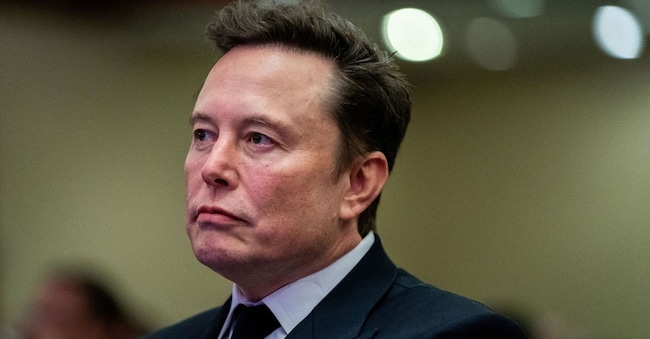
Omead Afshar's departure from Tesla, after seven years at Elon Musk's side, is more than just a farewell. For many within the company, Afshar - head of sales and operations in North America and Europe - was more than just an operations executive: he was one of the few people able to put his boss's - often unpredictable - insights into practice. His dismissal, decided directly by Musk, according to internal sources, comes at a critical time for the Californian company: sales are slowing down, competition is accelerating, and turnover in key roles is putting a strain on the group's resilience.
Afshar had earned in the field the nickname 'problem solver' - the one who solved problems, to quote a well-known Tarantino masterpiece, Pulp Fiction - capable of holding together complex processes, from procurement to assembly lines to coordinating sales in North America and Europe, two of Tesla's most strategic markets. By the end of 2024, he had been promoted to Vice President, but in the meantime the tide was already turning. Deliveries in Europe had fallen for five consecutive months, with a 28 per cent drop in May alone. Overseas, the gradual withdrawal of government incentives and increasing pressure from Chinese brands have reshaped the company's priorities, making Afshar's position more fragile.
Hemorrhage of senior figures
.His is not an isolated case. In recent months, Tesla has witnessed a veritable haemorrhage of senior figures. Among the most notable departures are Milan Kovac, head of the Optimus project (the humanoid robot on which Musk is banking heavily and which he claims will multiply Tesla's profits like no other product), and Jenna Ferrua, head of human resources for North America. According to The Atlantic, about one in three executives has left Tesla in the past year - through layoffs or resignations - while the company has cut 14,000 jobs. A haemorrhage that is beginning to raise questions about the group's ability to retain the human capital needed to compete in an increasingly technological and hyper-competitive industry.
The reasons for this 'brain drain' are many. But all of them, in one way or another, lead back to Elon Musk. His leadership, for years considered visionary and unconventional, today appears divided between too many fronts. His commitment to SpaceX, his leadership of X (formerly Twitter), and his political involvement in favour of Donald Trump - increasingly explicit, before the recent break-up - have generated discontent even among employees. Some, anonymously, have called for Musk's resignation, fearing that his choices - more ideological than industrial - could jeopardise the company's reputation and standing in the medium term.
A former Cruise to reinforce the robotaxi team
.But just Friday afternoon news broke that the Austin-based company has hired former Cruise executive Henry Kuang as the automaker's director of AI, according to a report by news site Electrek, to bolster the team dedicated to robotaxi operations in the US. Kuang had been responsible at General Motors' driverless driving unit, according to his LinkedIn profile. Cruise operations had been interrupted by GM after a serious accident in San Francisco. The robotaxi unit had caused losses of 8 billion to the Detroit giant. Tesla did not respond to Reuters' request for comment, nor could Kuang be reached by Reuters.


