
Tesla plummets, Musk loses his ‘magic touch’
The share price has fallen below one trillion in market capitalisation, a far cry from the massive targets set on the eve of the CEO’s incentive scheme – the quarterly results, delays at Optimus and the SpaceX effect are all weighing on the share price

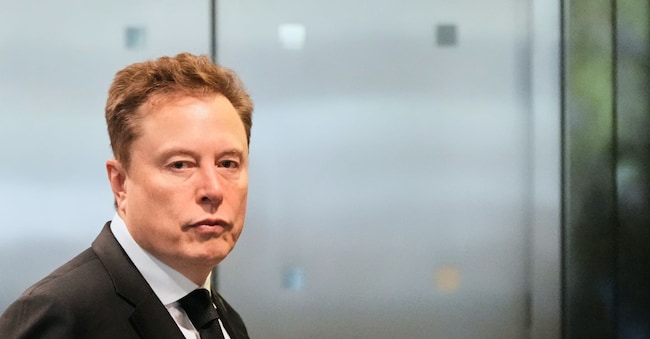
It has been a rude awakening for Tesla, with its share price on Wall Street falling by over 15 per cent in recent days, plummeting to very close to the psychological threshold of $300, dropping below a market capitalisation of one trillion dollars and wiping out all the gains made over the last twelve months. Not only is the peak of $8,500 billion in market capitalisation – a figure put forward by CEO Elon Musk at the end of last year during the presentation of the company’s massiveten-year remuneration plan, but even the $3,500 billion mark – seen by many as the next milestone after passing the $1,000 billion milestone – currently appears to be a difficult hurdle to clear.
The latest quarterly results were disappointing for many reasons, but the reasons for these difficulties are, once again, largely unrelated to the automotive business and relate to delays in implementing the expansion strategy in the robotaxi and artificial intelligence sectors, and in some respects also affect the recent SpaceX IPO.
From orbit to return to Earth
Many analysts believe that Elon Musk’s space launch company may have been, in recent years, the driving force behind much of Tesla’s overvaluation. Apart from SpaceX’s stake in the Texan car manufacturer, the businesses and corporate strategies of the two companies are separate, but their operations are intertwined: Tesla sells Megapack batteries and Cybertrucks to SpaceX, whilst the AI chatbot Grok is available in some Tesla vehicles. But, above all, up until the IPO, Tesla’s valuation multiples also partly incorporated certain ‘revolutionary’ expectations from a section of the market (perhaps hoping for a future merger, in order to justify the colossal market capitalisation targets). Now that SpaceX is listed, there is a ‘pure’ alternative on the market, and many investment flows have shifted in this direction. It goes without saying, then, that on the flip side, the recent slump in SpaceX itself – which has slipped below its IPO price – has also dragged Tesla down, cannibalising it, partly due to the cross-risks associated with the two companies’ developments. Musk, in the view of many observers, appears to be losing his ‘magic touch’ when it comes to convincing investors that his empire is heading in the right direction.
Optimus’s Slow Run
This leads to the second factor behind the share price’s slowdown, namely the still not entirely convincing prospects for the rapid adoption of robotaxis and, more generally, the new challenges relating to artificial intelligence that the group is facing. Even Elon Musk himself was rather evasive on this matter during the latest conference call with analysts, citing poor health as the reason. In addition to the difficulties in expanding robotaxi services in the US market, the delay also relates, in particular, to the development of the Optimus humanoid robot. Initial estimates had predicted that over 1,000 fully operational and productive robots would be in place within Tesla’s factories by the end of last year. In reality, the target is still a long way off: Tesla has confirmed that it has permanently decommissioned the historic Model S and Model X assembly lines at its Fremont factory to make way for the Optimus machinery, but formal production on the new line has not yet begun, and the start-up – scheduled for the coming weeks – will, in the words of senior management, be ‘extremely slow’.
Balancing the books
It was precisely Tesla’s commitments to AI that influenced its latest quarterly results, which showed an increase in deliveries and a rise in revenue, though this was accompanied by a rise in expenditure, which weighed on profits. In detail, total revenue for the quarter stood at $28.24 billion (up 26% on last year), exceeding analysts’ estimates of $26.71 billion. Earnings per share, however, stood at $0.33, 39 per cent below the $0.54 estimated by analysts. Net profit stood at $1.11 billion, down 5% year-on-year, supported only partially by one-off accounting gains, whilst the overall gross margin fell to 16.8% (compared with the expected 19.4%). Capital expenditure (Capex), as anticipated and announced on several occasions, more than doubled, surging to $5.79 billion (+142%) to fund the purchase of computing infrastructure and AI chips. As a result of these massive investments, Tesla had to report a cash deficit of $1.1 billion, burning through cash reserves. This is the first time this has happened since the start of 2024. Furthermore, research and development expenditure rose to $2.37 billion, driven by the training of models for the Robotaxi software and the Optimus robot. In summary, Tesla is investing heavily to become a leader in the autonomous vehicle and humanoid robot sectors in the future. However, the market – although forewarned – reacted negatively to the prospect of negative free cash flow in the short term, as well as to the falling EBITDA margin (impacted by lower average car selling prices and a reduction in incentives).

