
Mechanics, textiles and call centres: over 70 crisis tables
From Natuzzi to Sulcis, from Acc to Yoox: between open disputes and those being monitored, almost 60,000 workers are at risk. In 2025, 27 agreements were closed

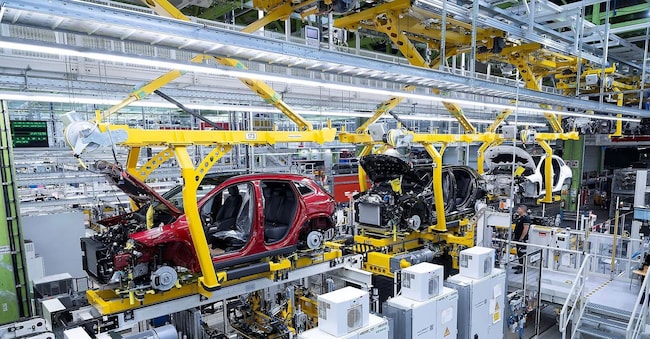
The company crises under direct observation at the Ministry of Productive Activities and Made in Italy, including open disputes and situations under monitoring, number about seventy. Fifty per cent of the companies in difficulty are in the metal-mechanical sector, 35% in the chemical-textile sector, and 10% concern call centres. Situations involving almost sixty thousand workers between the tables (35 thousand) and monitoring (24 thousand).
If the latest crisis in chronological order is that of Natuzzi with the announcement of the closure of the Altamura and Santeramo factories and 479 redundancies, the difficult situations in the manufacturing industry are growing compared to last year and mirror the constant reduction in industrial production.
Agreements and stabilisation
In the face of these situations of crisis and uncertainty, in several cases the ministry's handling of the disputes managed to stem or freeze the divestments or redundancies. According to data from Mimit itself, there have been 27 agreements or solutions to crises over the past year that have resulted in the stabilisation of jobs. This is for a pool of around 13,000 employees. The ministry's work in many cases has been to look for new buyers and to propose industrial reconversion projects. Among the cases where closure was averted are La Perla, the former Cinzano in Diageo, Venator (chemical), Nerviano medical sciences, Dema aeronautics, Coin itself and Sofinter in Gioia del Colle. The trends that emerge from reading the situations at the ministerial tables are of different kinds. Some are the product of events that come from afar such as the steel crisis related to the situation of the former Ilva, others have their roots in the endless recession of the automotive industry. If we add to these the crisis that seems to have no way out for the Sulcis mining district in Sardinia with Sideralloys Italia (former Alcoa), Eurallumina and Glencore, the territorial data show that it is precisely the South of Italy that is once again the area with the most critical situations. Among the most complicated situations as far as the automotive sector is concerned, there is certainly the crisis at Acc (Automotive Cells Company) concerning the now certain abandonment of the battery gigafactory project in Termoli.
Formerly sponsored by Stellantis, which then decided to invest abroad instead. The reasons for this failure to relaunch the Molise factory, which produces engines and employs two thousand people, are said to be high energy costs, strong competition from China and market uncertainty. The risk is clearly that of a structural industrial crisis for Molise, with the risk of definitive marginalisation of the Termoli site. Crisis that also seems to be without end for the Stellantis plant in Basilicata with two tables on the San Nicola di Melfi car plant. The first concerns Pmc, a components company for which an agreement for the complex crisis area has been closed: this will guarantee the approximately 90 workers access to training and further social shock absorbers. On the other hand, the road of reconversion seems to be the only possible route for Brose, which had as its only customer in Stellantis and produced a door module that will no longer be used.
Structural crises
To remain on the structural crisis side, there are also those concerning the coal-fired power stations of Brindisi and Civitavecchia and the Priolo refinery in Sicily, where a part will be reconverted for biofuels. Returning to Sulcis, one possibility being discussed is that of using the workforce now laid off for Rwm Italia, the subsidiary of the German group Rheinmetall, which specialises in the design and production of weapons systems. The delay is due to the political impasse over the expansion of the Domusnovas factory. The region of Sardinia has so far refused to decide on the environmental impact assessment, letting the terms set by the Regional Administrative Tribunal expire and paving the way for government commissioning.

