Asia

Thailand-Cambodia: it's escalation again, what's happening and why

The Thai army reported at least 9 dead in ongoing border clashes with Cambodia

Aggiornato alle ore 13:15

Aggiungi Il Sole 24 Ore
ai preferiti su Google
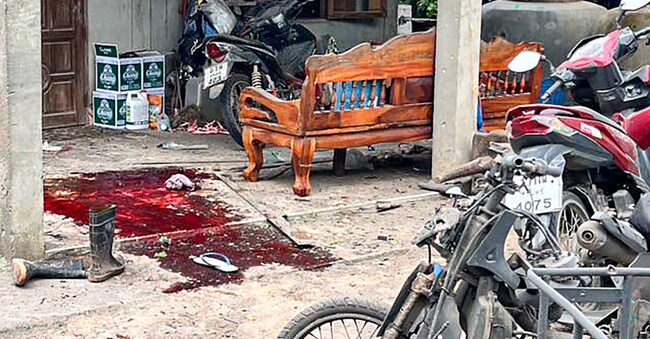
Foto della Royal Thai Army del 24 luglio 2025 mostra una grossa macchie di sangue davanti a una casa danneggiata da un colpo di razzo nella provincia di Surin, nel distretto di Kap Choeng. Un attacco missilistico cambogiano ha ferito tre civili tailandesi il 24 luglio 2025, l’esercito thailandese ha detto, mentre le due parti si scontravano su una zona di confine contestata. (Handout/Royal Thai Army)

4' min read

4' min read

At least 12 people, including 11 civilians and one soldier, were killed in artillery shelling by Cambodian forces. This was stated by Thai Health Minister Somsak Thepsuthin, adding that 24 civilians and seven soldiers were injured. The civilians killed include a child. There are no reports - at the moment - of casualties in Cambodia.

The clashes represent a new escalation of never-ending tensions, centred on a border dispute and intertwined with internal order in the two countries. The Thai authorities have evacuated 40,000 civilians from 86 border villages to safer places.
Loading...

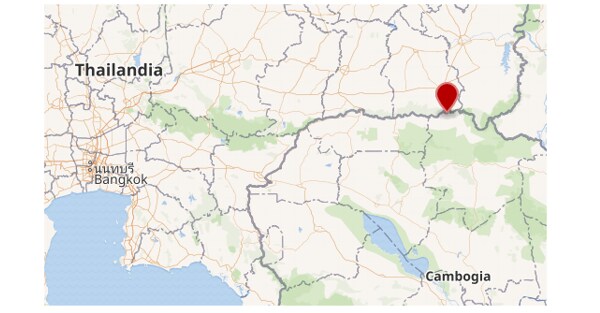
Dove sono i templi in territorio cambogiano

Oggetto da decenni di rivendicazioni thailandesi

The clashes started this morning near the disputed temple of Ta Moan Thom, along the Cambodian-Thai border, about 360 km east of the Thai capital Bangkok. Reuters reports that Thai Health Minister Somsak Thepsuthin said thatCambodian shelling included an attack on a hospital in Surin province, which he said should be considered a war crime.'Artillery shells fell on people's houses,' Sutthirot Charoenthanasak, head of Kabcheing district in Surin province, told Reuters.

The border dispute between Thailand and Cambodia has its roots in the colonial-era demarcation of the border, at the time of Chinese Indochina. The border, over 800 kilometres long, remains largely ill-defined, especially in the mountainous and forested areas separating the Thai provinces of Surin and Sisaket from the Cambodian provinces of Oddar Meanchey and Preah Vihear.

At the centre of the dispute are several Khmer-era temples, including the famous Preah Vihear (which is listed as a UNESCO heritage site) and the lesser known but important Prasat Ta Muen Thom: both are located on areas claimed by both Cambodia and Thailand. Despite the 1962 ruling of the International Court of Justice, which assigned the temple of Preah Vihear to Cambodia, the surrounding areas remain the subject of strong territorial claims and recurrent gunfights, culminating between 2008 and 2011 with at least 28 deaths and thousands displaced.

The escalation

.

This long-standing rivalry was triggered off again a few days ago by the explosion of a landmine in the disputed area, which seriously injured a Thai soldier. According to the Bangkok army, these weremines recently placed by Cambodian forces, a charge denied by Phnom Penh.

In response to the incident, the Thai government closed several border crossings, expelled the Cambodian ambassador and recalled its own ambassador from Phnom Penh. Cambodia reacted in mirror fashion, lowering relations with Thailand 'to the lowest level'.

Political tensions then escalated into armed confrontation. According to the Thai army, Cambodian forces opened fire near the Prasat Ta Muen Thom temple, in the area that has been guarded for years by military contingents from both sides. Phnom Penh, however, accuses Thailand of conducting an armed attack against Cambodian positions, invoking the right to self-defence under international law.

Tensions have actually risen steadily over the past two months. And there are also domestic political factors to take into account.

Cambodia's new Prime Minister Hun Manet, son of former leader Hun Sen, recently announced that compulsory military service will come into force in 2026, a decision publicly justified precisely by the 'escalating threats from Thailand'. At the same time, Phnom Penh stopped importing fuel and fruit from Thailand, a move that had the effect of further cooling relations.

Southeast Asian instability

.

The dispute derailed in artillery clashes increases instability in South-East Asia, where there are several crisis points - from Myanmar to the South China Sea - and the opening of a new front, even if circumscribed, risks further destabilising the area. Asean, the Association of Southeast Asian Nations, has so far maintained a cautious stance, but the pressure is growing for diplomatic mediation.

Both governments publicly declare that they do not want a full-scale conflict, but the war rhetoric and retaliatory measures taken by both sides point in the other direction. The memory of clashes more than a decade ago lingers and with the increasing militarisation of border areas, the risk of the crisis getting out of hand is real.

The border dispute nurtures nationalistic impulses and internal difficulties in the two countries complicate the picture. In Cambodia, the economy has serious problems and the premier Hun Manet (son of former strongman Hun Sen) has not yet consolidated his authority. Meanwhile, Hun Sen continues to influence national politics and seems intent on instrumentalising the conflict to strengthen his own position by exploiting nationalist arguments.

In Thailand, the government is fragile and based on an unstable coalition. Thaksin Shinawatra, a former premier and influential figure behind the scenes, said he was furious with Hun Sen after the latter allegedly leaked a private conversation, leading to the suspension of Thaksin's daughter Paetongtarn from the post of Prime Minister by the Thai Constitutional Court.

Trade blockades were imposed: Cambodia banned the import of fruit, vegetables, energy and internet services from Thailand. Both nations have intensified their military presence in the border area.

China invites dialogue

.

China is 'deeply concerned about the current escalation' between Thailand and Cambodia and 'hopes that both sides will resolve the issue through dialogue and consultation'. This was said by Chinese Foreign Ministry spokesman Guo Jiakun, responding to a question about the clashes between the two countries, at a press conference. "In light of the common interests and aspirations of the countries in the region, China, maintaining a fair and impartial stance, has played and will continue to play a constructive role in promoting dialogue and de-escalation in its own way," he adds. The spokesman then emphasises that Thailand and Cambodia "are both friendly neighbours of China and important members of the Asean" Association of Southeast Asian Nations. Finally, 'maintaining good neighbourly relations and properly managing differences is in the fundamental and long-term interest of both sides'.

Copyright reserved ©
Loading...

Brand connect

Loading...

Newsletter

Notizie e approfondimenti sugli avvenimenti politici, economici e finanziari.

Iscriviti