

That is why a law on end-of-life care must not overlook the right to treatment
A law is needed to establish clear rules, but no debate on self-determination can ignore the right to palliative care

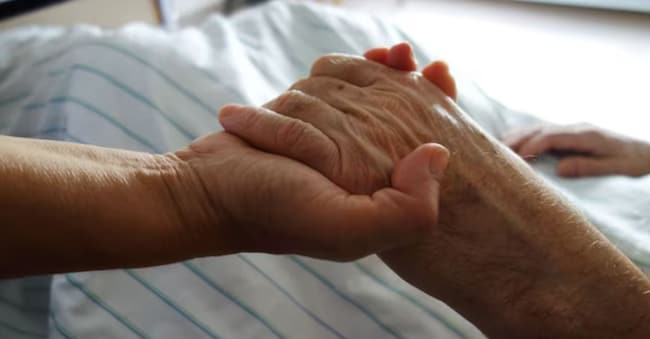
When a disease is no longer curable, the person can still be treated. To talk about end-of-life care without mentioning palliative care is to address only part of the issue. Palliative care is not a sign of giving up; it is the clinical, civil and ethical response to humanity’s most ancient and inescapable need: to care for patients when a cure is no longer possible. Palliative medicine addresses all aspects of human suffering – physical suffering first and foremost, but also psychological, social and spiritual suffering.
The right to palliative care is a right that is formally recognised and underpinned by a robust regulatory framework, which includes tools for planning, needs assessment, monitoring and financial sustainability. Law 38/2010 represented an extraordinary achievement for our country; however, the system is not yet able to guarantee uniform protection of this right, and there remains a significant gap between the recognition of the right and its effective implementation.
A further, crucial step regarding end-of-life care is represented by Law 219/2017, which governs informed consent and Advance Healthcare Directives and introduces shared care planning. The principle of self-determination, which is rooted in constitutional principles, can be translated in practice into a care plan developed jointly by the doctor and the patient, with both parties defining the objectives of care when a cure is no longer possible.
Access to palliative care is not guaranteed to all Italian citizens, with the same timings and the same quality. Such a sensitive issue cannot depend on where a person lives or on the interpretation of a single healthcare institution. It is precisely the failure to address the overall suffering of patients that makes it essential to include the culture and clinical practice of palliative care – which must be genuinely accessible – within the debate on end-of-life care.
There is also a second, more complex issue: the culture of limits in medicine.

