
The 28 municipalities where a quorum was reached: which ones and how it went
The hidden geography of the vote: in a few civic strongholds, referendums really mobilised voters

3' min read
3' min read
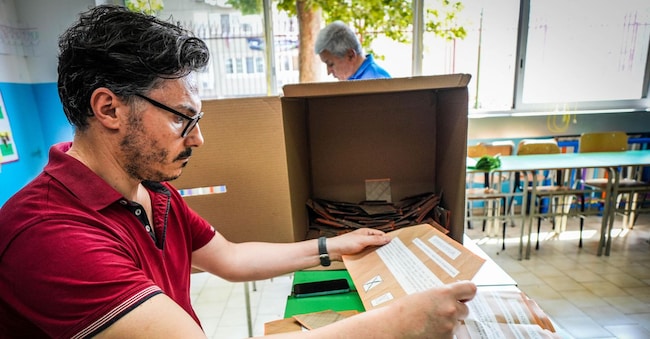
The five referendums did not achieve a quorum. In 28 municipalities scattered from north to south, however, the voting ritual endures. Italians were called to the polls on 8 and 9 June to vote on five referendum questions: four on the subject of work and one on the minimum requirements for obtaining Italian citizenship. At the national level, turnout was extremely low, just over 30%, confirming the low turnout of the previous political elections (when it was less than 50%) and a general lack of interest in these specific issues. However, in 28 municipalities, a turnout of over 50% was recorded, revealing particular contexts and local dynamics that deserve special attention.
These municipalities predominantly show small population sizes, with few exceptions. It is likely that in the smaller centres, civic participation and a sense of community favoured the success of the referendums. Emblematic are the figures from Rosello, in the province of Chieti, which leads the ranking with a 66% turnout, followed by Massello (Turin) at 65%, and Soleminis (Cagliari) at 60%. Numbers very far from the national percentages.
Interesting differences also emerged on the citizenship question, in which the vote was to lower the minimum time requirement for continuous residence in Italy, in order to obtain it, from 10 to 5 years. Nationally, the 'yes' vote prevailed about 60 to 40, but in several municipalities there was a clear reversal. Lodine (Nuoro) saw a large triumph of the 'yes' vote with 83%, a similar result to that of Vidracco (Turin), where the 'yes' vote even reached 84%. The case of Rosello was also significant, with 77% in favour of the 'yes' vote. On the contrary, in Sambuco (Cuneo) and Orta Nova (Foggia) the 'no' vote prevailed, albeit by a narrow margin, with 53% and 52% respectively.
There is one municipality where the results of the four labour referendums differ markedly from the national average. This is the case in Vidracco, where the turnout stood at 55%. In the questions promoted to increase worker protection, the 'no' vote prevailed clearly, with percentages above 70%, with the exception of the fourth, concerning the responsibilities of the contracting company in the case of an accident at work of a worker of a subcontracted company: in this case, the 'yes' vote prevailed with over 90%.
Another factor that certainly influenced some results was the coincidence of local elections, which increased the flow of voters to the polling stations. In several municipalities, in fact,the coincidence with the local vote pulled the turnout significantly higher than the national average. There are four large urban centres where, despite the absence of other consultations, political participation is still high, averaging over 53%. They are all in central Italy, between Emilia-Romagna and Tuscany, historically centre-left regions. They are Anzola dell'Emilia (Bologna), 9294 voters; Fabbrico (Reggio Emilia), 4737 voters; Pontassieve (Florence), 15433 voters; Sesto Fiorentino (Florence), 37690 voters.


