‘The alternative to the techno-right and the techno-left lies in the Mediterranean’
The three-day ‘Harmonic Innovation: Words of Hope for a Magnifica Humanitas’ dialogue on the themes of work, development and environmental protection in the age of AI has come to a close. Cicione: ‘An industrial policy for innovation can be built from the ground up. This path runs through Italia, the Mediterranean and Europe, insofar as they are able to rediscover the courage to embrace their own identity. By combining spirit, thought and action’. And with regard to the Pope’s text: ‘An encyclical becomes history through the concrete work of those who take responsibility for it’

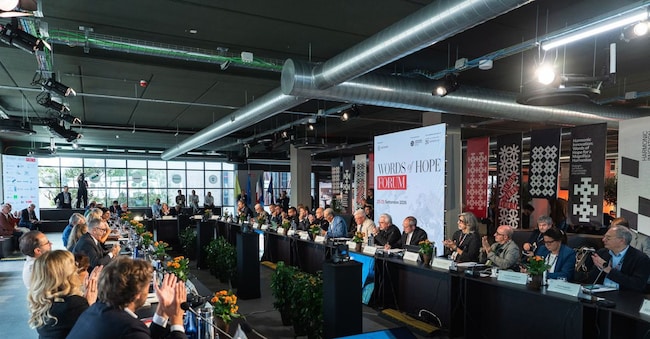
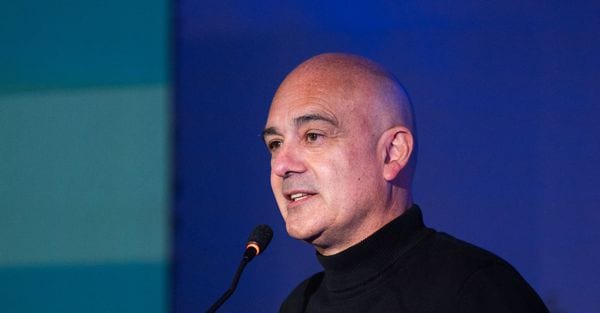
The three-day ‘Harmonic Innovation: Words of Hope for a Magnifica Humanitas’ dialogue has come to a close. The forum was organised by Entopan, an international think tank focusing on development economics and innovation, in collaboration with the Harmonic Innovation Group and under the honorary patronage of the Laudato Si’ Centre for Advanced Studies. The first stage of this international tour – which will visit San Francisco in the spring of 2027 before concluding in Castel Gandolfo – focused on the themes of work, enterprise and social development in the age of AI. Representatives from the industrial, financial and academic sectors across Europe, America and Africa were in attendance. Contributions were made by the Vice-President of the Council, Antonio Tajani; the Minister for Labour and Social Policies, Marina Elvira Calderone; the Minister for Universities and Research, Anna Maria Bernini; the Minister for Enterprise and ‘Made in Italy’ Adolfo Urso, the Under-Secretary to the Prime Minister’s Office with responsibility for innovation, Alessio Butti, and the President of the Calabria Region, Roberto Occhiuto. We asked Francesco Cicione, founder of Entopan, to summarise the proceedings.
The Forum was established to define practical ways of implementing the teachings of Magnifica Humanitas through the Harmonic Innovation Ecosystem. What are the short-term and long-term objectives?
‘To transform the assembly taking place over the coming days into a stable and proactive community that recognises harmonious innovation as the conceptual, industrial and operational platform through which to promote a positive vision of the future, of innovation and of technological development. A tool at the service of the vision of the Magnifica Humanitas. Harmonic innovation has offered a horizon of convergence not only to Catholic-inspired movements and currents such as the civil economy, the economy of communion or the social economy, but also to widespread secular initiatives that sense the unspoken urgency to contribute to a wise vision of the future. The discussions over the past few days have shown us that this is not merely possible: it is already happening. What once seemed like a dream has become a sign. A sign of hope. Concrete and tangible. In 1891, *Rerum Novarum* led to the emergence of rural credit unions, mutual aid societies, co-operatives and workers’ housing schemes. Following *Magnifica Humanitas*, the equivalent infrastructures have three names: innovation ecosystems, patient financial capital, and artificial intelligence with a declared purpose. ‘An encyclical becomes history through the practical work of those who take responsibility for it.’
What objectives have emerged from the three-day meeting?
‘There is, after all, a South that can see itself in a global context, that wants to be at the forefront rather than lagging behind, that wants to and can speak to the world, and that the world can and wants to listen to. If people are coming to Calabria today from Nairobi, New York, London, Paris, Madrid and New Delhi, it is because an industrial policy for innovation can be built from the ground up. Furthermore, there is another path to the future, an alternative to the capitalist techno-right and the statist techno-left. That this path runs through Italia, the Mediterranean and Europe, insofar as they are able to rediscover the courage to embrace their own identity. That innovation means combining spirit, thought and action. That ethics cannot and must not be a marketing tool but an ontological infrastructure. That innovation is, not is done. Finally, that the debate on the relationship between ethics and technology cannot and must not be conducted in a contradictory but rather a harmonious manner. There is no need to be apocalyptic. There is no need to be conformist.’