
Back on the Amalfi Coast: gardens, footpaths and the landscape
The ascent and architectural route between Scala and Atrani

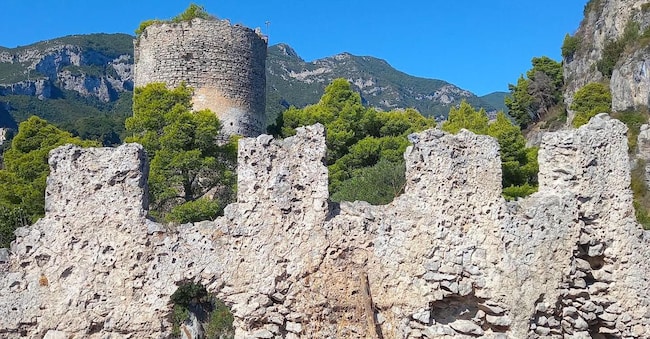
This exhilarating architectural and religious ascent can begin at the Cathedral of Scala, dating back to the 11th century, which bears witness to the many artistic transformations that took place over the following centuries, when elements characteristic of the Romanesque-Gothic style and examples of 18th-century Rococo in the form of stucco began to appear: the majolica floor, the little angels and the floral decorations framing the gridiron – a symbol of the martyrdom of Saint Lawrence – are truly moving. A few hairpin bends and the village of Minuta appears on the mountainside, where the heaviest loads are still carried on the backs of mules, which you come across as you descend into the little square dominated by the Church of the Annunciation, of early Christian origin. From here, you can access the Ferriere Valley and its extraordinary fern reserve. If, however, you choose to continue along the medieval path, you’ll find yourself facing the ruins of San Eustachio, perfumed by olive trees and citrus groves, perched high above the Dragone and Ferriere valleys: although the structure of the three apses, the remains of the ancient floor, the crypt and the base of the bell tower are visible, its Byzantine splendour and the yellow and black tuff decorations interwoven in the friezes, the Gothic-style pointed arches lend these ruins an unimaginable air of lightness and grace. Also of interest is the column protruding horizontally from the façade of the Church of St John the Baptist, which served to regulate the right of asylum for those reaching Pontone. If you persevere through the exertion of the sudden ascents and descents, you will eventually reach the Torre dello Ziro, from which you can enjoy a truly splendid view over Amalfi, especially from the second-floor window and the watchtowers: Giovanna of Aragon, who married Alfonso Piccolomini, Duke of Amalfi, at a very young age and was later widowed, was imprisoned there for having an affair with her steward. It was on these heights that the artist Maurits Cornelis Escher came to carve out a very personal perspective, dipping his pen to sketch the dazzling silhouette of Santa Maria del Bando (where public announcements or the sentences of criminals were proclaimed to the people) overlooking Atrani.

