
Paris and the banlieues: the hidden and increasingly fragile face
The economic heart of Paris coexists with suburbs marked by poverty, infrastructural deficiencies and urban transformations that threaten social cohesion and community identity
by Silvia Martelli (Il Sole 24 Ore, Italia) and Francesca Barca (Voxeurop, France)
 Aggiungi Il Sole 24 Ore
ai preferiti su Google
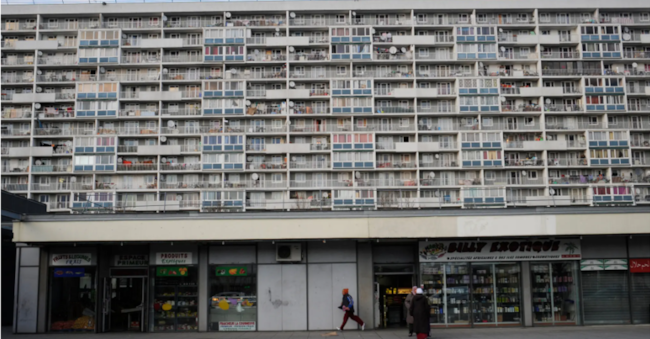
Big European cities tell stories of prosperity and growth, but also of deep inequalities. Milan, Paris, Athens and Madrid show how economic and cultural centres can coexist with suburbs marked by precarious housing, difficult access to services and social marginalisation. From the Parisian banlieues to the Milanese working-class neighbourhoods, from the Athenian suburbs to the Madrid suburbs, a common thread emerges: urban development often advances faster than the social fabric, generating 'two-speed' cities where opportunities are not distributed equally. Analysing incomes, access to housing, transport and public spaces, these reports offer a comparative look at how the suburbs of European metropolises experience a double reality, between wealth and fragility. After the first episode dedicated to Milan, here is the report on Paris.
Paris is the cultural, historical and economic heart of France. The city attracts investment, tourism and innovation, but beyond the Champs-Élysées, boulevards and luxury districts, there is another reality. The banlieues - the working-class suburbs - tell a complex story of social and economic inequalities, post-colonial immigration, urban renewal and community resilience.
"The banlieue is a village where everyone knows each other, where there are delinquents, liars, nice people and bad people. Where there are stories that are passed on, misfortunes and joys,' explains Rachid Laïreche, a Libération journalist originally from Montreuil, a commune in Seine-Saint-Denis. 'A village where there are more poor people than anywhere else'.
Economic and social inequalities
Seine-Saint-Denis, known as 'Neuf-trois' (93), is the poorest department in metropolitan France: out of 1.6 million inhabitants, 27.6% live below the poverty line, against a national average of 15.4%. In Aubervilliers, for example, 10% of families survive on less than EUR 609 per month. "The fact that these are precarious, poor neighbourhoods says a lot," observes Héléna Berkaoui, journalist and editor-in-chief of the Bondy Blog, which was born in the wake of the 2005 riots. "There are very strong social dynamics: neighbourhood ties, solidarity between inhabitants, informal networks of mutual aid."
Yet, despite their proximity to the centre of Paris, the districts suffer from structural deficiencies. There is a lack of school, medical, law enforcement and judicial personnel: there are only 49.8 general practitioners per 100,000 inhabitants, compared to the national average of 83.5. Courts are on the verge of collapse and industrial infrastructures - data centres, incinerators and motorways - expose the population to pollution, scorching heat and energy insecurity.


