
Duties, Bill Ackman attacks Lutnick: 'He makes money while the economy implodes'. Dimon: inflation risk. White House: stronger with Trump
From Bill Ackman to Ray Dalio, protest grows over the impact of Trump's moves

4' min read
4' min read
Wall Street's big managers are speaking out against the impact of Donald Trump's tariffs and the damaging consequences on global stock exchanges. And even those who had supported the tycoon during the election campaign are beginning to distance themselves. From Bill Ackman to Ray Dalio to Larry Fink and Jamie Dimon. The White House entrusts an advisor to the president with the retort: 'Trump's policies are making us stronger'.
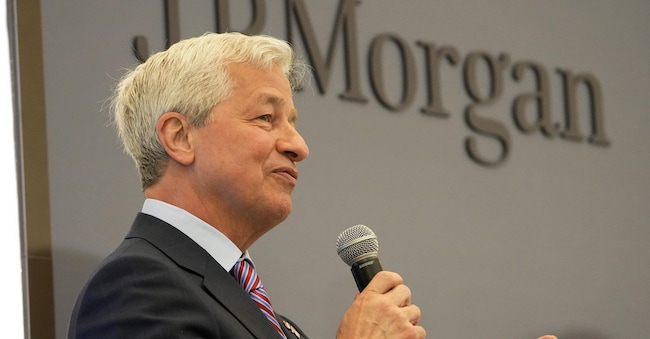
The ceo of JPMorgan Chase Jamie Dimon warned investors that the turmoil caused by US tariffs and a global trade war could slow growth in the world's largest economy, spur inflation and potentially lead to lasting negative consequences. In his annual letter to shareholders, released Monday after index losses last week wiped trillions of dollars off global stock markets, Dimon expressed concerns about how tariffs would impact America's long-term economic alliances. "The economy is facing significant turbulence (including geopolitics), with the potential upsides of tax reform and deregulation and the potential downsides of tariffs and 'trade wars', persistent inflation, high fiscal deficits and still quite high asset prices and volatility," Dimon wrote.
Jamie Dimon
Dimon, 69, has headed the largest US bank for 19 years and is one of the leading voices in corporate America. "We will probably see inflationary outcomes.... Whether or not the tariff list will cause a recession remains a question, but it will slow growth." Economists at JPMorgan raised the risk of a recession in the US and the world this year from 40 per cent to 60 per cent after US President Donald Trump last week unveiled the steepest trade barriers in 100 years. When asked on Sunday about the drop in markets, Trump said that sometimes you have to take medicine to fix something.
Dimon noted the potential for retaliation from other countries and said tariffs could affect economic confidence, investment, capital flows, corporate profits and the dollar. "The quicker this issue is resolved, the better because some of the negative effects will increase cumulatively over time and would be difficult to reverse," the ceo wrote. Rates also raise questions about the direction of interest rates, Dimon said. While rates have fallen recently because of the weaker dollar, the prospect of slower growth and a decline in risk appetite could cause rates to rise, he said, referring to the stagflation of the 1970s.
Even expectations of modest US growth, known as a soft landing, could be derailed. "We enter this period of uncertainty with high stock and bond prices, even after the recent decline... markets still seem to be pricing assets on the assumption that we will continue to have a fairly soft landing. I am not so sure," Dimon wrote.

