
From the ball season to new exhibitions in the museums, via the cafés of the Servitenviertel: Vienna’s magical winter
The buckle that saved an emperor

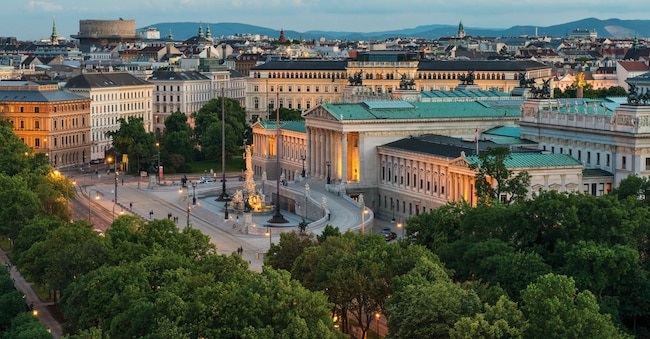
It was the stiff collar of a military uniform that, on a cold February morning in 1853, shaped the monumental character of the Ringstraße, the circular avenue stretching over 5 kilometres that encircles the historic centre. When the Hungarian tailor János Libényi attempted to slit the throat of the young Franz Joseph whilst he was out walking, the blade of his bayonet miraculously bounced off the metal buckle of the Habsburg uniform. To celebrate this narrow escape and give thanks to divine providence, the spectacular Votivkirche was built, whose twin openwork spires still soar towards the Viennese sky today with the boldness of a medieval cathedral. Yet, one need only turn one’s back on that solemnity directed towards the divine to discover the capital’s most magnetic and unsettling side. In the nearby ninth district, the Alsergrund, the Josephinum answers the church’s prayers by looking into the very heart of human nature. Inside the classical-style palace commissioned by Joseph II, the famous anatomical wax Venuses, modelled in Florence in the late 18th century, lie stretched out on white silk sheets: revealing muscles, blood vessels and internal organs with surgical precision that blends with the aesthetic sensuality of the Baroque. It is precisely along this ridge of contrasts that ‘Vienna, Grand New’ comes to life – the new horizon through which the city reinterprets its imperial past. No archival nostalgia or regrets evoked by a faded postcard: the ancient Habsburg splendour is rediscovered as a vibrant tapestry that pulses through urban life and repurposed architecture.

