
Interview

The Car-T that costs three times less: the Barcelona hospital's gamble

Susana Rives Sola talks about a project that combines science, solidarity and political vision: cheaper, potentially safer and realised with a decentralised production model
by Michela Moretti

3' min read

3' min read

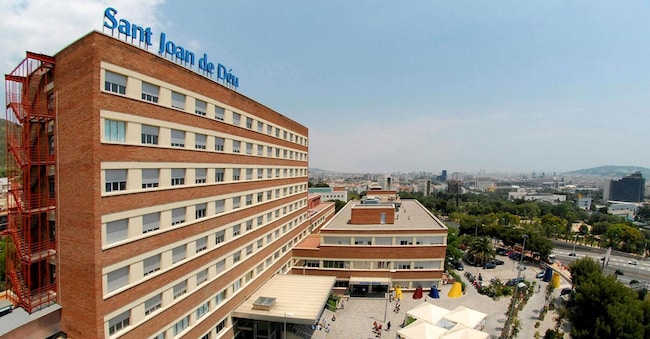
Susana Rives Sola is the paediatrician at Sant Joan de Déu Hospital in Barcelona who is trying to bring the academically developed Car-T for acute lymphoblastic leukaemia to approval in Europe.

What prompted you to develop Ari-0001?

Loading...

The idea was born in 2013, after the first studies on Car-T in acute lymphoblastic leukaemia published by the Children's Hospital of Philadelphia. In Spain, as elsewhere in Europe, there were no Car-T options then. Hospital Clínic involved our children's hospital Sant Joan de Déu to try to replicate that model in academia. Preclinical tests gave good results and the Spanish Medicines Agency (Aemps) authorised the start of a clinical trial.

How did you incur expenses for clinical studies?

About one million euro was needed, but the Ministry of Health covered one third of it. The rest came thanks to the family of Ariana, one of our patients: I treated her when she was 14, then she had two relapses. When she came of age, she was transferred to Clínic, but was not among the patients on whom a trial of an industry-developed Car-T was being carried out. The family started a fundraiser that allowed us to treat 10 patients, then 38, including adults and children. It was 2017. Our phase I academic trial was conducted with full regulatory approval. The results were promising, with efficacy comparable to industrial Car-Ts and, in the paediatric case, superior safety due to fractionated administration, which reduced toxicity.

In the meantime, however, two Car-T therapies have been approved by the Ema for this indication: Kymriah in 2018, for children and young adults up to 25 years of age, and Tecartus in 2020, for patients over 25 years.

After the 2018 approval in our paediatric hospital we treated 11 children with isolated extramedullary relapses under compassionate use, because they were not covered by Kymriah indications. And until 2020 for adults over 25 we administered Ari-0001 under 'hospital exemption', and only in Barcelona, as hospital exemption is authorised on a facility-by-facility basis. The breakthrough came in 2021 with complete data from our studies and an official evaluation, which showed that Ari-0001 cost around 89,000 euros, three times less than approved products. Besides being effective and safer, it was also cheaper. From there we decided to go for Ema authorisation to extend access to the whole of Europe.

Does your Car-T compete with those already approved?

In paediatrics, no, we cannot apply for authorisation for the same indication as Kymriah without demonstrating a 'major therapeutic benefit', which would require a randomised trial with hundreds of patients, unfeasible for us. We focus on a high-risk early relapse population where there is an unmet medical need. The goal is to demonstrate superiority over chemo and transplantation.

And for adults?

Ema approval of Tecartus is conditional: it is available, but the company must provide follow-up data to confirm authorisation. Tecartus has significant neurological toxicity, which we do not observe with Ari-0001. So even with similar efficacy, a better safety profile is an advantage. In this case, we can aim for the same indication without a direct comparative study.

How are you doing?

Phase II studies demonstrating efficacy on a larger scale are needed for Ema authorisation. The adult team received 1 million from the Spanish government and 9 million from a European call, with a multicentre study launched in Spain, Belgium, France, the Netherlands and Austria. We paediatricians obtained almost 2 million euros from the State (the maximum ever allocated to a clinical study in Spain) and we participated in the call for 7 million, indicating Italy, with the Bambino Gesù Hospital, as the fifth country. The result is expected in November 2025. The production of Car-T has also been transferred to our hospital, which has been accredited by the regulatory authority. This shows that it is possible to replicate Car-T production in several centres: a decentralised 'point-of-care' model that can be extended to other European countries.

How many children could benefit from your Car-T each year?

Around 15 to 17 in Spain and 18 to 20 in Italy. These are patients with a very poor prognosis: less than 30% survive 5 years with standard therapies. In some cases, Ari-0001 could avoid transplantation, improving quality of life and reducing healthcare costs. Of course, all this is only possible if the results of the clinical study confirm its efficacy. But what we are trying to build goes far beyond the single product: the most important goal is to show that this academic pathway and point-of-care production can be developed across Europe and in other countries to look for therapeutic indications in which industry will never invest.

Copyright reserved ©

Brand connect

Loading...

Newsletter

Notizie e approfondimenti sugli avvenimenti politici, economici e finanziari.

Iscriviti