

‘The second life of the CRISPR revolution: it will heal the planet, not just people’
The scientist at the Woma Forum in Milan: from the first drug approved by the FDA to cattle, right through to artificial intelligence and the risk that American science might lose its talent

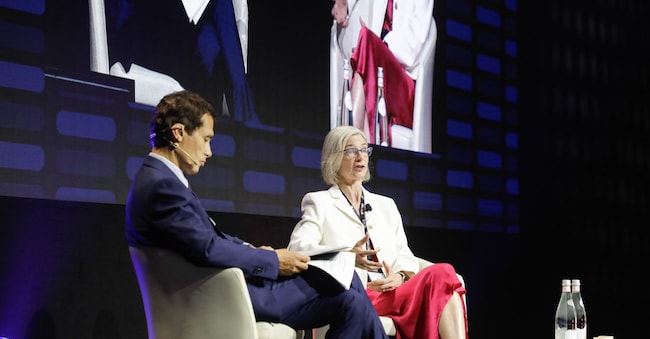
‘I’ve always been a rebel.’ Jennifer Doudna, a biochemist at the University of Berkeley, winner of the 2020 Nobel Prize in Chemistry and co-founder of the Innovative Genomics Institute (IGI), says this with disarming simplicity. She was one of the key speakers at the first edition of the Woma Forum, ‘Inspiring the World of Pharma’, held on 25 and 26 June at the Allianz MiCo in Milan – a new annual international event serving as a benchmark for the health and life sciences ecosystem, organised by BioPharma Network and 24OreSalute. Born in Hawaii and raised reading Watson’s *The Double Helix* – a gift from her father – she chose to focus on RNA at a time when the entire scientific world was fixated on DNA; and from that unconventional choice emerged the CRISPR revolution – the molecular scissors capable of removing or replacing sections of DNA. Today, this technology is not only used to correct faulty genes: it aims to reprogramme the metabolism of cattle to reduce methane emissions. An unexpected second life, which says a great deal about how science really works.
The first CRISPR drug approved by the FDA came less than 12 years after its discovery. Did you expect it to happen so quickly?
No, I’m genuinely surprised. It’s extraordinary: the approved drug uses exactly the same enzymatic protein that Emmanuelle Charpentier and I were working on years ago. A perfect example of how the most fundamental science can be transformed into something applied when there is the right intuition and the determination to develop it. Obviously, science alone wasn’t enough: it took academics, companies, investors, patients willing to take part in clinical trials, courageous doctors and open-minded regulators. All working together. This makes me very optimistic about the future. That said, the therapy is still expensive and requires cells to be extracted from the patient, modified in the laboratory and reinfused. It is neither simple nor accessible to everyone.
The next step is in vivo therapy: modifying DNA directly within the body. How far away are we from this?
The IGI has already spawned 31 companies with a combined value of around 9 billion dollars. Some, such as Azalea and Scribe Therapeutics, are working precisely on this: anti-tumour cells that form within the patient following a single infusion, or therapies for cardiovascular diseases. The ability to administer CRISPR in vivo is absolutely key to expanding its use far beyond rare diseases. There are already therapies that modify liver cells via injection, because the liver is naturally accessible via the bloodstream. In the coming years, we will see real progress in the field of neurology too – Parkinson’s, Alzheimer’s – even though reaching the brain remains a huge challenge. We’re talking about a few years, perhaps not too many.


