
Piantedosi: green light for the AI decree to support the police, but it won’t be a Big Brother scenario
Preliminary approval has been given to two legislative decrees aligning Italian legislation with European regulations on artificial intelligence

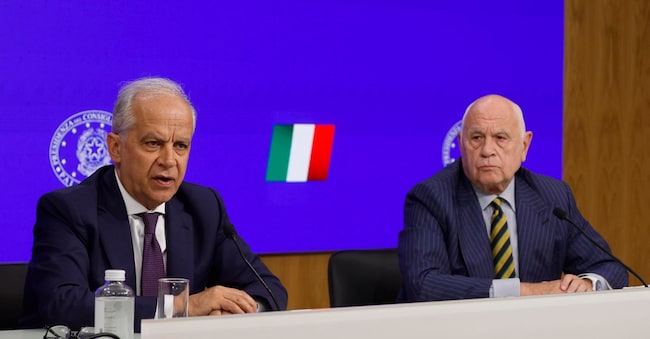
The Council of Ministers has given preliminary approval to two legislative decrees aligning Italian legislation with European regulations on artificial intelligence. “Thanks to these implementing decrees, together with Law 132 of last year, Italy is the first country to adopt a comprehensive national regulatory framework on artificial intelligence”, announced Alfredo Mantovano, Undersecretary to the Prime Minister, at the end of the cabinet meeting.
“AI used to support security will not be a Big Brother”
“Any use of artificial intelligence for security purposes must be subject to a review and qualified human supervision. Furthermore, it must ensure the protection of personal and sensitive data. AI is a support tool and not an automated police officer: final decisions always remain with human beings. There are no plans for any mass surveillance system or generalised ‘Big Brother’ system, and the use of large biometric databases is prohibited.” So says Interior Minister Matteo Piantedosi. There is provision for “a dual mode of use” of AI for security purposes. “The first is ex ante to the commission of crimes: that is, in cases of danger and threat linked to situations such as terrorism or the search for missing persons or victims of trafficking.” In these cases, “a request from the police commissioner and authorisation from the judicial authority are required. Mechanisms are in place to assess the impact on fundamental rights and to notify the Data Protection Authority. There is also ex post use in relation to the offence. Here too, safeguards are in place.”
“The police’s use of AI,” said the minister, “relates primarily to video surveillance, facial recognition and the use of biometric data for purposes linked to establishing identity following the commission of crimes.” Safeguards are also in place in this case. “Biometric data is stored for only 7 days and then automatically deleted, whilst operation logs are retained for 5 years to prevent any misuse. It is prohibited to make decisions regarding an individual based solely on the result of facial recognition, and any form of generalised, non-targeted biometric identification not linked to criminal proceedings is prohibited.”
“AI enters the school curriculum: a revolution for maths”
«AI is being explicitly, strongly and prominently integrated into the curriculum in sixth-form colleges; in primary schools, however, there are already some elements included to familiarise children with the language of AI and the concept of algorithms.” This was stated by the Minister of Education, Giuseppe Valditara, at a press conference at Palazzo Chigi following today’s Council of Ministers meeting. “Precisely because a new vision of mathematics is fundamental, in the new guidelines for secondary schools we have launched a revolution in mathematics with a significant overhaul of the curriculum,” added the minister. “Then there is the issue of teacher training: to be able to teach risk prevention, strengthen STEM subjects and teach AI, it is clear that teachers need to be trained: we have allocated 100 million euros. We have allocated a further €100 million to promote AI in education and €100 million for teacher training on the prevention of risks associated with AI. We have also decided to involve families.”
‘Ours is a comprehensive approach that takes into account measures already underway. We are starting with the new guidelines on civic education: we need to educate young people about the risks associated with AI and the use of social media, and there is the issue of the related ethical implications. The second point is the enhancement of scientific knowledge through the use of AI. The third is guidance towards further study, particularly STEM subjects. Finally, changes to school curricula: AI is being explicitly incorporated into the curriculum, with a particularly strong focus in secondary schools; in primary schools, however, some introductory elements have already been included to familiarise children with the language of AI and the concept of algorithms.

