
The Diary of Anne Frank: free online, whilst respecting copyright
Digital access must be restricted for countries where copyright is still in force

Key points
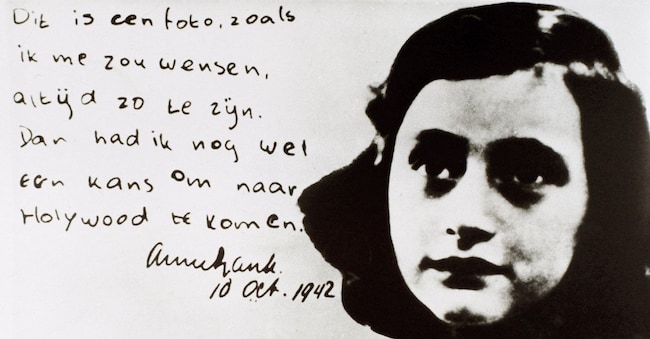
It is permissible to publish online a work in the public domain in an EU country, such as *The Diary of Anne Frank* is, even if it is still protected in others. This was confirmed by the European Court of Justice in its judgement in Case C-788/24, handed down on Thursday 9 July. Following the death of Otto Frank, the Anne Frank Foundation holds the copyright to Anne Frank’s works. In the Netherlands, certain parts of these works remain protected until 2037. By contrast, in many other countries, including Belgium, the copyright has already expired and the texts are now in the public domain.
The story
Established in 1957, the Anne Frank Foundation is dedicated, in particular, to the preservation of the Anne Frank House in Amsterdam and the promotion of the ideals bequeathed to the world in *The Diary of Anne Frank*. In September 2021, on the initiative of the Foundation and other organisations, a scholarly edition of Anne Frank’s manuscripts was made available online free of charge, in Dutch. Access has, however, been restricted by a system of geographical blocking which prevents consultation from countries where the manuscripts are protected by copyright .
The knots to untangle
The Supreme Court of the Netherlands has referred a number of questions to the Court of Justice, asking in particular whether EU law defines such online making available as a ‘communication to the public’ where Internet users in the Netherlands are able to circumvent geo-blocks via a Virtual Private Network (VPN) or a similar service.
Terms and conditions
In its judgement, the Court clarified that a work in the public domain in certain Member States may be published free of charge on a website even if it remains protected by copyright in another Member State. Provided, however, that the website contains a geo-blocking measure designed to prevent access to the site by digital users accessing it from that Member State.
The concept of communication
The Court points out that the concept of ‘communication to the public’ combines two cumulative elements, namely an act of communicating a work and the communication of that work to the public.


