World Day

The dreaming brain: between memory, emotions and scientific research

New research shows how dreams can anticipate illness and help with trauma

by Francesca Cerati

(AdobeStock)

3' min read

3' min read

Every night we enter a parallel universe of images, emotions and surreal narratives: dreams. They have fascinated philosophers, artists and scientists for centuries, so much so that World Dream Day was established on 25 September. But today, neuroscientific research helps us understand more and more about why we dream, how we do it and what dreams reveal about our health.

'Dreaming is not a simple 'noise' of the resting brain,' explains Luigi Ferini Strambi, head of the Centre for Sleep Medicine at the San Raffaele Hospital in Milan and professor of Neurology at the Vita-Salute San Raffaele University, 'but a fundamental function. During Rem sleep, when dreams are most intense and bizarre, the consolidation of emotional and procedural memory takes place. It is as if the brain puts the day in order, cleaning up and reprocessing the emotions experienced'.

Loading...

Why and when you dream

.

Contrary to the common idea, we do not only dream in the Rem phase: dreamlike activities, albeit more realistic and less imaginative, can also emerge in other sleep phases. "Fantastic and unreal dreams belong mainly to Rem sleep, while those closer to reality are found in the non-Rem phases.

On average, the first Rem episode appears about 90-100 minutes after falling asleep and is very brief; as the night goes on, the Rem phases become longer and more intense. "That is why the last dreams, between 4 and 7 a.m., are the longest and most vivid".

In children, Rem sleep occupies a much larger proportion of the night, providing dreams full of fantastic characters and scenarios. With age, the percentage decreases, and the content also becomes more sober.

The dream brain

.

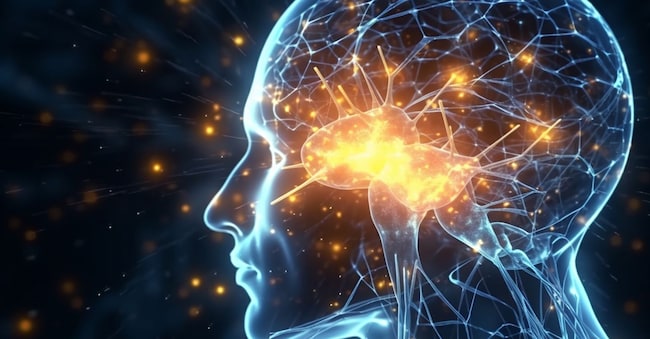
Dreaming is a complex neurophysiological process. When the brain goes into dream mode, some areas switch on and others switch off: amygdala and hippocampus, the seats of emotions and memory, are among the most active.

Instead, the prefrontal cortex, which normally restrains illogical impulses and thoughts, reduces its activity: hence the imaginative freedom and absurd nature of dreams.

At the electrical level, theta waves prevail, which open a window of 'uncensored' consciousness, fostering bizarre associations and creativity.

Neurotransmitters also play a key role. Dopamine contributes to the vividness and emotional content of dreams; acetylcholine is crucial for brain activation during the Rem phase; serotonin and noradrenaline, on the other hand, drop dramatically, favouring the hallucinatory scenario and the loss of contact with external reality.

Recurring dreams and trauma

It is no coincidence that recurring dreams are often linked to unresolved emotional states. 'In post-traumatic stress disorder,' Ferini Strambi explains, 'the trauma recurs at night, relived and transformed by dream activity. The dream becomes a place where the brain mulls over memories and emotions stored in the emotional memory'.

In such cases, lucid dreaming, the ability to realise you are dreaming and even modify the dream plot, can intervene. 'It is a complex technique,' adds the specialist, 'but it can help break recurring nightmares and better manage the emotional load.

When dreams anticipate illness

.

One aspect that is crucial for research today concerns the behavioural sleep disorder Rme: sufferers experience their dreams in a physical manner, moving or making violent gestures in their sleep. 'It is a disorder that mainly affects men over 50,' Ferini Strambi explains, 'and which often anticipates the onset of neurodegenerative diseases such as Parkinson's or Lewy body dementia by 10 to 15 years.

The link with neurological diseases also passes through neurotransmitters: 'The dopaminergic system, the one affected in Parkinson's, is closely linked to the ability to remember dreams and their intensity,' Ferini Strambi emphasises.

Dreams as a mirror of society

.

Not everything, however, is written in neurons. Recent studies show that the content of dreams also reflects culture and environment. Hunter-gatherer populations, for example, report more threatening dreams but with cathartic and socially supportive endings, unlike Western dreams, which are more individualistic and often lack resolution.

Between science and mystery

Today, neuroscience is even trying to 'read' dreams through artificial intelligence and neuroimaging, although - warns Ferini Strambi - 'there is a risk of invasion of privacy. The dream remains an anarchic and original space, the last free refuge of the mind'.

Whether they are mirrors of emotions, evolutionary training for threats or anticipators of disease, dreams continue to hold a kernel of mystery. And perhaps it is precisely this unfathomable dimension that makes them so fascinating.

Copyright reserved ©
Loading...

Brand connect

Loading...

Newsletter

Notizie e approfondimenti sugli avvenimenti politici, economici e finanziari.

Iscriviti