
ECB cuts deposit rate by 0.25 points to 3.25 per cent
At today's meeting in Ljubljana, Slovenia, there will be no new macroeconomic estimates from Frankfurt

2' min read
2' min read
A new cut, by 25 basis points. The third since June. The European Central Bank raised deposit rates to 3.25 per cent, the refinancing rate to 3.40 per cent and the rate on the deposit facility to 3.65 per cent. Above all, it suggests that the restrictive monetary policy manoeuvre could end a little earlier: the 2% target will be reached, explains the communiqué published at the end of the meeting, 'in the course of next year' while in September it was indicated as 'the second half' of 2025.
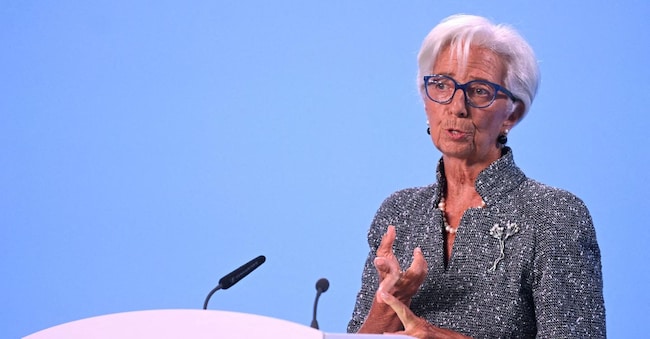
"All the indications we received in the five weeks after the last monetary policy meeting were in the same direction: downwards," explained President Christine Lagarde at a press conference. The decision for a 25 basis point cut was taken unanimously, albeit after extensive discussion. However, the next rate moves will continue to be taken 'meeting by meeting', based on the data. "We have not opened the door to anything," Lagarde added, referring in particular to the decision to cut the official cost of credit at a meeting that did not include - as is the case every three months - the publication of economic projections.
The decision was made in the light of a reassessment of the inflation outlook, following the September figure - an index increase of 1.7 % p.a. - and indications of a slowdown in economic activity (which cools, and to the extent that it cools, prices): volatile industrial production and sluggish growth in services after a robust summer season, while consumption increased less than expected. Risks to growth remain tilted to the downside. However, the ECB still, Lagarde pointed out, does not 'see' a recession: a soft landing is still the baseline scenario.
Inflation, meanwhile, is expected to 'rise in the coming months', before falling, due to purely arithmetical factors, the comparison with a 2023 characterised by declines in energy prices. Wages 'continue to increase at a high rate' even though labour cost pressures are expected to continue to fall gradually, while profits 'partially' absorb their impact on inflation. Monetary policy remains restrictive.


