
The energy transition depends on gender equality, but there is still a long way to go
This situation is highlighted by an international study led by the Institute for Research on Population and Social Policies of the National Research Council (CNR-IRPPs) in Rome

Key points
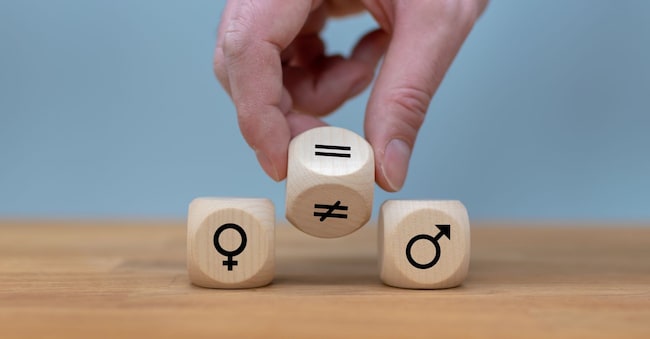
The gap remains significant. And the most telling figures can be found in the energy sector, where women are still in the minority. Yet the transition also depends on narrowing this gap in STEM disciplines, given that energy transition brings with it new professions.
The international study
This situation is highlighted by an international study led by the Institute for Research on Population and Social Policies of the National Research Council (CNR-IRPPs) in Rome, which focused on inequalities in educational and career pathways within the energy sector. The study, published in *Humanities & Social Sciences Communications* (Springer Nature), was carried out in collaboration with Jagiellonian University in Kraków, Imperial College London and the Fraunhofer IAO-CeRRI in Berlin. It investigated the reasons and ‘biases’ that make this sector appear unattractive or unwelcoming to women, going beyond mere statistical data on female representation in STEM disciplines.
Two sets of guidelines
“Through nine focus groups conducted between 2024 and 2025 – six of which involved students and three involved lecturers from the participating universities – the analysis has brought to light two interlinked dynamics,” the CNR emphasises. The first is defined as ‘unmet aspiration’, arising from the gap between the expectations of students – who are seeking courses that tackle socio-environmental challenges head-on – and an educational offering perceived as overly technical, poorly communicated and ‘gender-blind’.” The second dynamic “is the ‘repelling effect’: a combination of cultural stereotypes, disciplinary and professional practices, and organisational cultures that are not very inclusive, which discourage women from entering and remaining in the sector”.
STEM subjects
One of the key aspects concerns universities and STEM subjects. Cloe Mirenda (CNR-IRPPs) highlights the link between the energy transition, STEM subjects and the representation of women. “The energy transition is closely linked,” she says, “because of the subjects involved and the roles that need to be filled.”
The other study
Against this backdrop, data from the 2025 “She Figures” report show that, amongst PhD students in STEM disciplines across the European Union, women account for just 22 per cent of those studying Computer Science and ICT, and less than 40 per cent of those studying Engineering, Manufacturing and Construction. Only in PhD programmes in Health and Wellbeing do women account for 59 per cent. In professions within the energy sector, the 2024 data from IRENA (International Renewable Energy Agency) are no more encouraging: in the renewables, women in permanent employment account for 32 per cent, whilst in the traditional oil and gas industry the figure is 22 per cent.

