The future of retail

The final stretch of the customer journey: physical shops

Having survived the digital revolution, retail outlets are transforming into places that offer experiences, services and advice, where an increasing part of the competition between brands is played out

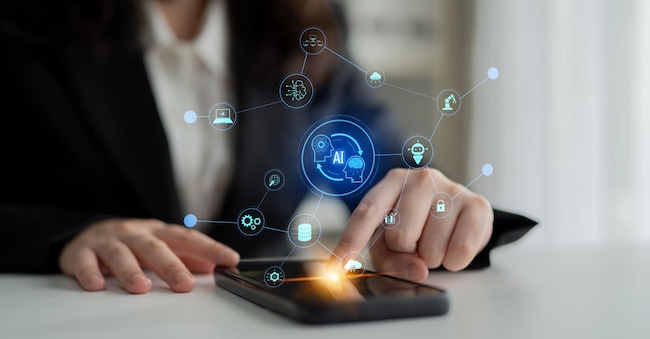
by Giampaolo Colletti and Fabio Grattagliano

(Adobe Stock)

4' min read

Translated by AI
Versione italiana

Key points

  • The challenge of integration

4' min read

Translated by AI
Versione italiana

A record-breaking leap, and not just for the champion involved. Because for the first time, a brand linked to mass retail has decided to tell its story by showcasing its products. The new campaign by Lidl features a special jump by Armand “Mondo” Duplantis, a Swedish pole vaulter with US citizenship, two-time Olympic champion and three-time world champion. The athlete clears a wall 5.50 metres high and 12 metres wide, built from a wall of three thousand products.

The Hybridisation of Worlds

Welcome to proximity marketing, which is knocking on brands’ doors and forcing them to recalibrate their offerings between technologies that enhance the customer experience and the physical aspect of the shop that restores a sense of tangibility. So, amidst pervasive artificial intelligence and the dematerialisation of experiences, there is a shift towards physicality. Packaging to touch, to unwrap, and above all to buy in person. In this age of constant conversation, the shop amplifies the relationship and the business. The shop ceases to be the final mile of logistics and becomes the final mile of relationships.

Loading...

According to Mordor Intelligence, the POS software market – that is, point of sale – is set to reach a value of $32.3 billion by 2031. Investment is focused on tools that personalise the in-store experience: digital signage, self-scanning, digital kiosks, integrated CRM systems, AI and omnichannel solutions. There are three key areas: simplifying the shopping experience, strengthening the relationship between brand and consumer, and enhancing the entertainment aspect.

According to the Milan Polytechnic Observatory, 46% of top retailers in Italia have already integrated artificial intelligence to personalise offers, optimise product ranges, support staff and improve the customer experience. The real leap forward, however, will be in-store: smart self-scanning, contextual recommendations, in-store programmatic and measuring the effects at the checkout.

“The demise of the high-street shop has been talked about more than it has actually happened. In Italia e-commerce accounts for around 13% of retail spending: which means that almost 87% remains physical, with huge differences by category. The physical shop isn’t making a comeback because it was already the centre of the relationship; it’s just that many treated it as a cost. “The paradox is that often the brand is chosen in front of the shelf, not before,” says Lucio Lamberti, professor of marketing at the Polimi School of Management and scientific director of the Behavioural Research in Immersive Environment Lab at the Politecnico di Milano. “Three key findings emerge. First: the physical space remains dominant, but the network is shrinking. Second: retailers’ digital investment is growing, reaching 4.7% of turnover. Third: the shop is no longer just a place of transaction, but an operational, relational and informational hub within a hybrid system,” explains Lamberti.

The challenge of integration

But this contest does not pit the online and offline camps against one another; rather, they are allies on the same playing field, which has become hybrid by necessity. ‘After years of e-commerce taking centre stage, the physical shop remains strategic for relationships, service and direct experience. Today, the challenge is to integrate the best aspects of digital into the shop: simplicity, personalisation and continuity of the shopping journey. This is the approach taken by Alkemy Group with projects such as Iconic Smart Cart, which brings the seamless experience of e-commerce closer to the richness of the physical store: less friction and a smoother checkout process,” says Duccio Vitali, CEO of Alkemy Group.

For years, point-of-sale software was seen as a technical component, whereas today it is a strategic asset. “The quality of the customer experience depends on the ability to orchestrate data, processes and touchpoints in real time. The store is no longer an isolated channel, but part of an ecosystem that interacts with e-commerce, CRM and loyalty. The major enterprise players have never occupied this space: too much local specificity, differing tax regimes, and processes that cannot be standardised. Today, fragmented models are giving way to integrated platforms, to players who combine technology with an understanding of the Italian retail sector,” concludes Vitali.

The value of multi-channel marketing

Meanwhile, retailers are transforming their shops into entertainment venues. Ikea is moving into urban neighbourhoods with lightweight digital formats. Walmart is transforming its stores into omnichannel hubs that connect stock, logistics and customer relations. 7-Eleven uses data and AI to tailor its offering to the needs of each local community for a personalised experience. At the Burberry store in Shenzhen, developed with Tencent, every physical interaction generates connections via WeChat: customers book appointments, discover products and take part in experiences. A pioneering model of social retail. In Copenhagen, there is Son of a Tailor, a tailor’s shop guided by algorithms: it produces made-to-measure garments using algorithmic models. It has opened physical stores where customers are measured, advised and guided through the personalisation process. In this way, technology eliminateswaste and strengthens the personal relationship.

‘The shop has always been a medium, but the industry has chosen to monetise where it was most convenient: intermediary channels, familiar metrics, and established revenue streams. This has led to an obsession with e-commerce, which accounts for less than a seventh of the market. The real challenge is to bring data, content and measurement into the shop, where the purchasing decision actually takes place. The direction is omnichannel: choosing the best channel for that specific customer, at that moment, for that shopping mission, and delivering the service perfectly,” says Lamberti.

Forget about frictionless, i.e. a seamless experience. “The most underestimated friction is late identification: customers often only log in at the till, by which point their shopping is already finished. If the retailer helps them choose thanks to their expertise and knowledge of the customer, then the irreplaceable valueof local retail,” says Lamberti. In the conversational era, the consumer expects continuity.

Copyright reserved ©
Loading...

Brand connect

Loading...

Newsletter

Notizie e approfondimenti sugli avvenimenti politici, economici e finanziari.

Iscriviti