
The François Tomb arrives at the Etruscan Museum at Villa Giulia, with the support of Bulgari
The Bulgari Foundation has funded the innovative display of this precious artefact. It is led by Jean-Christophe Babin, who, from tomorrow, after 13 years as CEO of Bulgari, will officially hand over the reins to Laura Burdese

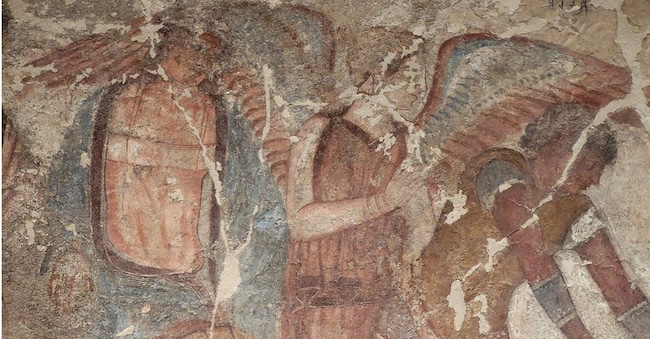
The François Tomb has taken its place in the National Etruscan Museum at Villa Giulia, following its purchase by the Italian state last May for 15 million euros. This marks the culmination of a process that began over a century ago, when, as early as 1921, the State expressed its interest in acquiring the François Tomb.
This Etruscan tomb, dating from between 340 and 320 BC, is one of the finest examples of Etruscan painting and, more generally, of ancient painting that has survived to the present day. It takes its name from its discoverer, the archaeologist Alessandro François, who unearthed it on 1 May 1857 on land belonging to Prince Alessandro Torlonia, in the Ponte Rotto necropolis at Vulci, in the province of Viterbo, in the Maremma region of Lazio. The display of the tomb is accompanied by the exhibition ‘The Return of the Heroes’, open until 31 December, which recreates the monument’s original context through unique artefacts from the Musée du Louvre, the British Museum, the Royal Museum of Art and History in Brussels, the Musée cantonal d’archéologie et d’histoire in Lausanne, the Vatican Museums and the German Archaeological Institute in Rome.
The initiative is being supported by Bulgari Foundation, established in 2024 as an umbrella organisation for the numerous and diverse patronage activities of the Roman fashion house – part of the LVMH Group – which had previously collaborated with the museum on the restoration of the Sala dei Sette Colli and the new exhibition galleries housing the collection of Ori Castellani.
This also marks Jean-Christophe Babin’s final act as chief executive; from tomorrow, he will officially hand over the reins to Laura Burdese, who had been a strong advocate for the establishment of the Bulgari Foundation.
The partnership with the National Etruscan Museum at Villa Giulia is just the latest in a series of initiatives to support the cultural heritage of Rome, the city where Bulgari was founded in 1894. Shortly after Babin took the helm of the fashion house in 2013, Bulgari announced a €1.5 million grant for the restoration of the Spanish Steps, a short distance from the historic shop on Via Condotti.


