
Bundestag approves military service reform, enlistment remains voluntary
The goal is to reach 260,000 active and 200,000 reservists, up from the current 184,000 active and 50,000 reservists. Incentives and pay of 2,600 euros per month to convince young people. But the Cdu wants to return to conscription if results are not achieved

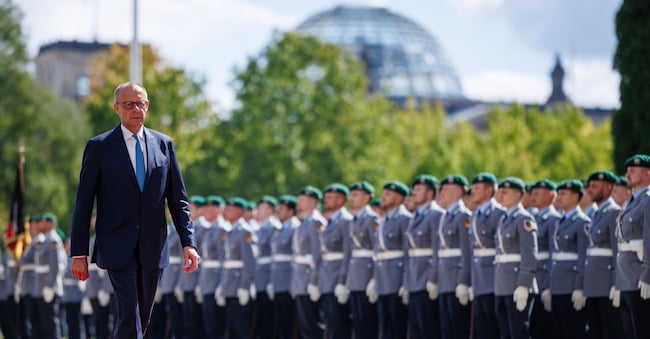
On 5 December, the Bundestag approved the reform of military service proposed by the government led by Friedrich Merz. The aim is to increase the number of troops: this will be done by offering incentives and higher pay, from the current 1,800 euro to 2,600 per month (about 2,300 net). Enlistment will remain voluntary and, at least for now, compulsory military service will not be reinstated. The measure will be examined by the Bundesrat, the House of Länder, before Christmas.
260 thousand active
Compulsory conscription was suspended in Germany in 2011, under Defence Minister Karl-Theodor zu Guttenberg (Csu). At the same time, the necessary facilities were abolished: new centres will have to be set up. The obligation could return if the desired results are not achieved. Already under the current system, the Bundestag can reinstate conscription if necessary.
The measure will enter into force in January. The aim is to increase the number of personnel to at least 260,000 active members and 200,000 reservists from the current 184,000 active members and 50,000 reservists by 2030. Military service will have to last at least six months, but there are additional incentives for those who sign up for more than 12 months.
The confrontation in the majority
"We want to make military service more attractive and convince more young people to enlist, but if we determine that we have to take further action, we will do so," Merz said back in August, when his government passed the reform. The conservatives of the Cdu-Csu, which Merz leads, pushed for compulsory service and many of them demanded an automatic return to conscription if the reform failed. Defence Committee chairman Thomas Röwekamp (Cdu) still insists on a decision on reactivating conscription by summer 2027 if there are not enough volunteers. Precisely what critics within the SPD fear and reject.
From next year, males over the age of 18, born in 2008, will be obliged to complete a questionnaire on their health, skills and readiness for military service. For girls this will be optional. The draft examination will start gradually from 1 January and will become compulsory for all males from 2027.


