

The half flop of the NRP, new community hospitals concentrated in only four regions
163 facilities for the frail and chronically ill who cannot be cared for in traditional hospitals have been opened to date, 118 of them in Veneto, Lombardy, Emilia and Tuscany. In the South only 23 have been opened

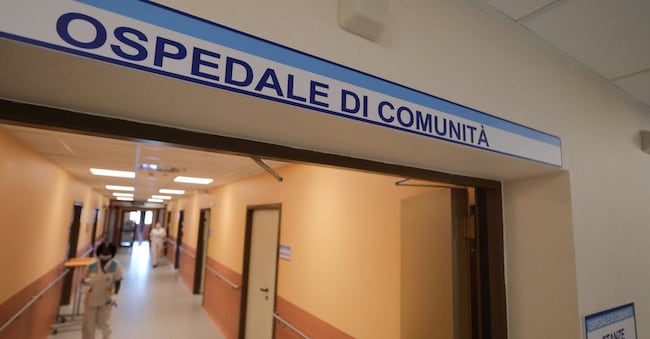
The great gamble of a healthcare system closer to the citizens promised by the NRP investments is in danger of making more than a half-flop, at least in much of Italia and particularly in the South. Not only are the more 'well-known' Community Hospitals - the maxi clinics that are supposed to reduce the number of emergency rooms and provide prevention - lagging behind and concentrated in the Centre-North, but also the brand new Community Hospitals are lagging behind and are largely active in a handful of regions. These new facilities, financed with a billion euro and designed to accommodate those patients, often the chronically elderly and frail, who need specific care that they cannot receive at home, but without the need to resort to the high-intensity care of traditional hospitals, are in fact about three-quarters distributed in just four regions, namely Veneto, Lombardy, Emilia and Tuscany, where - according to the latest monitoring by Agenas (the Agency for Regional Health Services) - 118 out of a total of 163 certified openings in December 2025 will be recorded, for a total of almost 3,000 beds. In particular, there are 47 in the Veneto, 30 in Lombardy, 17 in Tuscany, and 24 in Emilia Romagna, which alone has already opened one more community hospital than all the southern regions together, which as of last December had activated a total of only 23. There are four regions with zero facilities: Marche (the first was actually opened just yesterday), Basilicata, Valle d'Aosta and Bolzano.
The risk, therefore, that next June - the date set as the deadline by Europe for the projects to be financed with the funds of the NRP - we will arrive with the usual short blanket and with so many regional differences, as already happens in everyday healthcare, is more than concrete. According to the regional programmes, there are no less than 594 community hospitals in the pipeline, but those to be opened to meet Europe's minimum target next summer number 307. This is a result that is still achievable at the national level so as not to run the risk of losing European funding if, as is to be expected, there will be a final rush in the coming months, but with the almost certain result that a large part of Italia - starting with the South - will remain without these new healthcare facilities for who knows how long. At the moment, according to the latest monitoring, all 163 Community Hospitals already in operation guarantee the presence of nurses all day long seven days a week, while 133 are those that also have the minimum presence of a doctor and finally, only 61 Community Hospitals also ensure the presence of protected environments with beds dedicated to patients with dementia or behavioural disorders.
But what is the identikit of the community hospital? According to the Agenas definition, they are 'intermediate structures between home care and the hospital and have the objective of avoiding inappropriate hospitalisation by supporting the discharge process from hospitalisation facilities in the best possible way, guaranteeing care for patients with complex conditions'. On average, the community hospital has about 15-20 beds up to a maximum of 40. Admission must be for a maximum of 30 days and 'only in exceptional cases, motivated by the presence of unresolved clinical situations, may the hospital stay be extended further'. Only certain types of patients may be admitted to these community hospitals, i.e. 'tendentially, subjects belonging to the fragile categories of the population, who, despite having an already exhausted diagnostic framework, a therapeutic programme already defined and an overall stabilised clinical picture, still need clinical supervision or the provision of nursing services, but with a prognostic assessment of short-term resolution', i.e. within 30 days.


