

The health service is asking for 5 billion, one for recruitment. But the funding is already in the balance
Healthcare staff are the priority, but the aim is also to secure funding for waiting lists, prevention, new Essential Healthcare Services (LEA) and fees

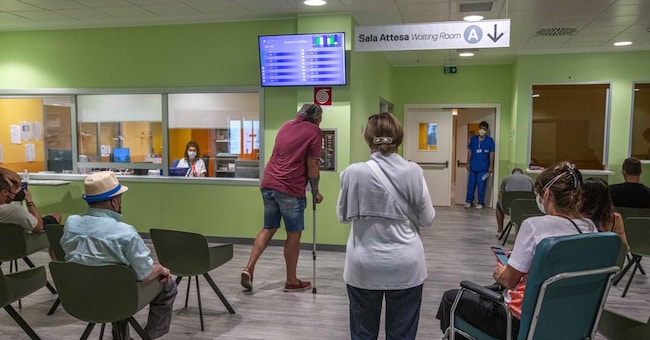
A billion is needed to fund a genuine recruitment plan for doctors and nurses, to be allocated as a priority to new local healthcare facilities such as community care homes, and to help tackle waiting lists. This funding should also include a possible increase in healthcare staff salaries, in particular the specialisation allowance that appears on the payslips of both nurses and doctors. Another billion should be allocated to updating the essential levels of care (the LEA) – that is, the care that the National Health Service must guarantee to all Italians – as well as hospital fees and specialist outpatient charges (consultations and tests). Furthermore, 600–700 million would be needed to further strengthen prevention, building on the measures taken in last year’s budget: the idea is to further expand the provision of cancer screening and vaccinations, starting with those against the respiratory syncytial virus (RSV), which causes bronchiolitis in newborns. There are also plans to allocate around 100 million to begin establishing a network of tertiary-level hospitals (comprising IRCCS centres and major hospitals), for which a draft enabling bill is currently before Parliament. Finally, a further 300 million could fund tailored interventions for autism, mental health and eating disorders, as well as for those who are unable to care for themselves and end-of-life care. Here is the long list of priorities for the new Budget Law drawn up by officials at the Ministry of Health, led by Orazio Schillaci, who met with his counterpart at the Ministry of Economy and Finance (MEF), Giancarlo Giorgetti, requesting an additional 5–5.5 billion for healthcare, about half of which was to be left ‘unallocated’ within the Health Fund to stem the effects of inflation and raise the ceilings on pharmaceutical expenditure (see *Il Sole 24 Ore* of 20 August).
These additional resources are also needed to keep healthcare funding at the ‘Maginot Line’ of 6.3–6.4 per cent of GDP – a threshold which, if fallen below, would invite attacks from the opposition, who would thus also have a strong argument – the infamous ‘healthcare cuts’ – to play up in the run-up to the long election campaign leading up to next year’s general election. This is why Giorgetti should not reduce the amount requested by Schillaci too much, even though it seems highly unlikely – given the limited resources and the many emergencies – that his request will be fully met: it is more likely that the figure will be reduced by a further 3–4 billion, whilst checking whether the billion already allocated in last year’s budget will also be included in the overall calculation. In short, the funding is still up in the air and remains to be confirmed, but it is certain that the staffing crisis – as the Health Minister has emphasised on several occasions – will be the top priority. First and foremost, resources must be secured to recruit the staff needed to ensure the over 1,200 community care homes – recently opened thanks to the 2 billion allocated under the National Recovery and Resilience Plan (PNRR) – operate at full capacity: it is estimated that these new facilities, where initial consultations and tests are carried out alongside preventative care, require around 19,000 family and community nurses. Regardless of the funding available, it will be very difficult to find such staff on the ‘market’ given the chronic shortage of nurses. Doctors will also need to be recruited – and not just GPs, who are expected to work a certain number of hours within the community care homes – even though they remain highly reluctant to do so, as demonstrated by yesterday’s announcement of a strike by the SMI trade union specifically against these compulsory hours. It is precisely this difficulty in finding staff that could prompt some regions – as is already happening – to outsource services to the private sector after having built the facilities for community homes and hospitals.
A clear signal will also be needed regarding waiting lists, an issue on which Minister Schillaci has staked his reputation with a plan and the Platform that is finally beginning to function: on this front, it cannot be ruled out that the spending ceiling for the procurement of services from accredited private providers may be raised further. Similarly, the pharmaceutical spending cap should be increased by 0.20–0.25 per cent to help cushion the impact of the payback scheme on pharmaceutical companies.


