
The heatwave is affecting trout and sturgeon farms (meaning that even the prized Italian caviar is at risk)
The Italian Fish Farmers’ Association: greater public protection is needed for waters used for fish farming

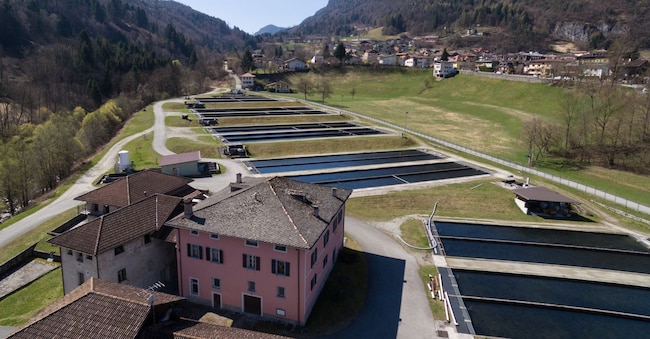
Not only mussels and clams (already heavily affected by blue crab) and, more generally, fishing and fish farming in an increasingly tropical Mediterranean Sea. Freshwater aquaculture is also suffering , where the warming of the tanks leads to slower growth in the fish, which are fed less to avoid health problems.
The warning comes from API, the Italian Fish Farmers’ Association – a member of Confagricoltura – which states that “although the sector has tenaciously withstood the drought, current production losses have reached critical levels: immediate, structural public intervention is needed”. Initial estimates suggest a drop of at least 15 per cent for trout (with national production standing at 28,000 tonnes per year).
According to the API, small and medium-sized enterprises in the sector have been particularly hard hit, including trout and sturgeon farms. Trout is the most commonly farmed fish in Italia, which is also the second-largest producer of sturgeon caviar in the world.
In addition to the water shortage, there is also a health risk: ‘The overheating of the water and the resulting drop in dissolved oxygen levels,’ the association explains, ‘risk compromising the fish’s immune system. In an attempt to save the fish stocks, fish farmers have been forced to minimise feeding, thereby halting growth and production, and to bear substantial costs for artificial oxygenation». They have also had to implement measures to forcibly reduce stock levels, with inevitable and severe repercussions on future production planning and the markets.
“Companies,” said Andrea Fabris, director of API , “are investing in systems to reduce water consumption. This technological effort is accompanied by a circular approach, based on sustainable feed and the optimisation of water and carbon footprints, as well as rigorous scientific monitoring of the tanks, ensured through the use of welfare indicators and specific diagnostic assessments.”

