

The hefty bill for dog and cat care: expenses doubled in 9 years, the burden of the most expensive medicines
Costs have risen from 642 million to 1.236 billion: the knot of drug prices much higher than the same for humans

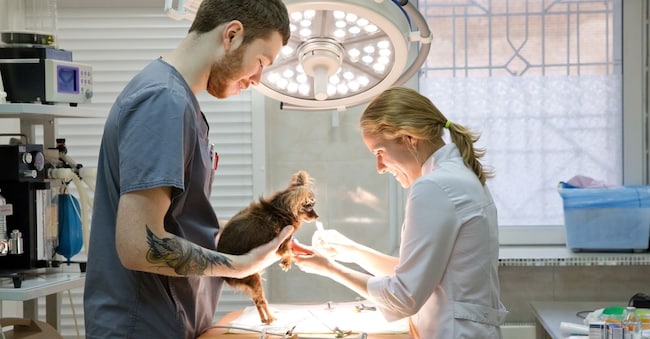
n Italy there are 22.5 million pets living permanently in Italian homes: according to Istat, 10 million households - practically one in four - own at least one, mainly dogs and cats. These housemates, in addition to becoming life companions, are also true allies of their owners' health with beneficial effects, proven by various studies, on stress, anxiety, depression and even cardiovascular health. But how much does it cost to treat them? The bill, as just certified by the State General Accounting Office, which draws on the data of the health card, is always more salty for pet owners, so much so that it has doubled in nine years against a limited increase (+1.5%) in the number of pets: if in 2016 Italians spent 642.14 million to care for them less than ten years later (in 2024) the cost rose to 1,236.96 million. The vast majority of expenditure is related to veterinary visits for 866 million and medicines, whose costs have more than doubled to 320 million.
Costs that weigh on the budgets of families that have some tools at their disposal to save a little. First of all, those who take care of dogs, cats or other pets can benefit from tax relief on veterinary expenses to be deducted in the tax return. As is the case for medical expenses, the allowance only applies above the amount of EUR 129.11 and up to the limit of EUR 550 up to a maximum value of about EUR 80. A few months ago, a specific contribution, provided for in the 2024 manoeuvre, for the over-65s finally became operational: a bonus on veterinary expenses to be assigned on the basis of the Isee (which must be less than 16,215 euro), but resources are very limited and so there is a risk that the benefit will really only be available to a lucky few.
There is, however, one item of expenditure - that for medicines - that could have a less heavy impact on the pockets of families with a pet in the house. The crux of the matter lies in the fact that an active ingredient intended for the treatment of a dog or cat costs much more than one - identical - intended for human patients. For example, a diuretic for animals costs between EUR 12.70 and EUR 13.40 compared to EUR 1.72 for humans; an amoxicillin antibiotic costs between EUR 26.24 and EUR 27.25 compared to EUR 7.90 for humans; and finally, a cortisone varies in price between EUR 14.50 and EUR 16.20 for animals compared to EUR 3.25 for humans. Why? The problem has several reasons and ancient roots: the market for veterinary medicines is certainly more limited than the human one and hence the higher prices, but the problem is also in the prices which, unlike those of human medicines, are not negotiated by Aifa (the Italian Medicines Agency) but are 'free'. Yet the overwhelming majority of human medicines are first tested in animals, so much so that in limited cases when the animal medicine is not available, the veterinary surgeon may prescribe the use of one for human use. The price of drugs for animals was also discussed in recent days at the Ministry of Health, during the meeting on 'Antimicrobial resistance. Scientific evidence, NHS sustainability and new territorial models', organised by Fenagifar (The Federation of Young Pharmacists' Associations). "Veterinary drugs are suffering from a choice made in 1992: the liberalisation of prices," recalled Federfarma president Marco Cossolo. A choice made "thinking that it would lead to a reduction in costs, but it did not. Liberalisation only worked with telephony. We must rethink this mechanism,' he added. An occasion on which Health Undersecretary Marcello Gemmato, with responsibility for pharmaceuticals, reiterated how "undeniably some active ingredients cost much more than those for human use" and how "the government intends to intervene, as we have already done for Fip, feline infectious peritonitis, by authorising the use of remdesivir. The next step,' warns the undersecretary, 'is to be able to make the treatment of our animals sustainable: several measures have already been taken, now we must make this work organic'.
Finally, Vladimiro Grieco, President of Fenagifar, pointed the finger at antimicrobial resistance: 'Even on veterinary drugs for domestic use, more attention should be paid. Expiry dates should be shortened so that antibiotics left over from previous therapies are not used, and electronic prescriptions should be made compulsory with a series of filters that we pharmacists know well to limit their improper use".


