

The Hormuz Effect: a new energy route from Iraq to the Mediterranean
Iraqi Prime Minister Ali al-Zaidi flew to Washington and returned home with a package of agreements worth 60 billion. At the heart of this is the reconstruction of the Kirkuk pipeline to the port of Baniyas. This strategy has been made possible by Turkish involvement and complements the Saudi and Emirati approaches aimed at reducing the strategic importance of the Strait and curbing Iran’s influence.

Key points
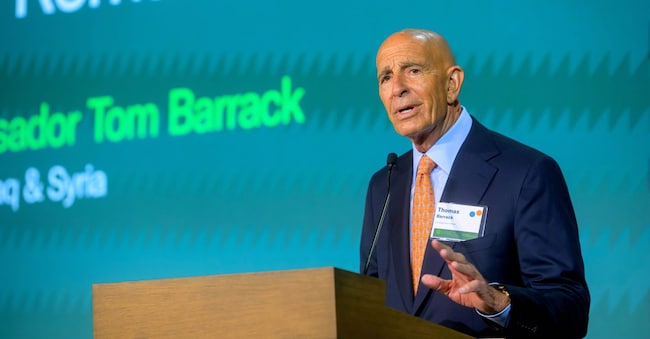
The effects of the turmoil in the Strait of Hormuz are beginning to be felt and are driving new agreements and efforts to establish alternative routes. At the weekend, the first Iraqi minister Ali al Zaidi flew to Washington and returned home with a package of agreements worth 60 billion. Cooperation in the energy and electricity sectors. The main objective is to build an oil pipeline through Iraq and Syria that runs straight to the Mediterranean. This is, of course, made possible by the launch of the joint project between the Basra Oil Company and the Syrian Petroleum Company, which will work together on the pipeline – severely damaged in 2003 during the Gulf War – that runs from Kirkuk towards the port of Baniyas, some 50 kilometres from Latakia. The US State Department has in turn confirmed that it will provide technical support for the works, whilst Tom Barrack, US Ambassador to Turkey and Special Envoy for the region, added: ‘This is a project designed to bypass Hormuz and render it a secondary route.’ A statement that may be an exaggeration from a technical point of view, but not from a political one.
Cooperation
In parallel with the project, Iraq’s Ministries of Oil and Electricity and their affiliated companies have signed agreements with US firms including ExxonMobil, KBR, GE Vernova, Shell and Halliburton, whilst Starlink has reached a cooperation agreement with the Iraqi Communications and Media Commission to introduce its services in the country. Further agreements include a memorandum of understanding between Keysight Technologies and the Iraqi private sector, a cooperation agreement with PepsiCo, partnerships in the fields of education, manufacturing and pharmaceutical supply, as well as memoranda with KBR, UOP, Polaris, the Association of Energy Engineers and the electronic networking firm PPTA. Two separate agreements were also signed with Frito-Lay to support the Iraqi agricultural sector, alongside partnerships with companies operating in the agricultural, commercial and industrial sectors. The US energy company ConocoPhillips has also agreed to acquire a 42 per cent stake in BP Energy Company of Kirkuk Limited to support the reactivation of the Baba and Avanah fields and the Bai Hassan, Jambur and Khabbaz oil fields in northern Iraq. The Office of the Iraqi Prime Minister has stated that these agreements establish a clear framework for economic and financial cooperation between the two countries, elevate bilateral relations to a more advanced level of mutually beneficial partnership, and lay the foundations for deeper long-term collaboration.
The Peninsula
However, the issue cannot be analysed solely in terms of relations between Iraq and the United States. The scope is broader and also touches on the so-called Abraham Accords. The memorandum, signed in 2020, has been portrayed as a diplomatic breakthrough between Israel and the Sunni world. But from the outset, its true significance has been deeper and less visible: not merely political normalisation, but an attempt to redraw the global energy routes. For decades, the energy system has relied on a handful of chokepoints. The Strait of Hormuz, the Suez Canal and the Bab el-Mandeb Strait have been – and still are today, given the effects of the current war in Iran – the true linchpins of oil and gas. At the same time, they have been points of extreme vulnerability: susceptible to threats and exposed to regional crises. It is upon this structural dependence that the logic of the Abraham Accords is based. The underlying idea was – and remains today – to build an alternative. To link the Gulf to the Mediterranean via a land-based network – oil pipelines, railways, logistics hubs – through Saudi Arabia, Jordan and Israel, transforming the latter into an energy hub between Asia and Europe. Within this framework, existing infrastructure such as the oil pipeline between Eilat and Ashkelon became part of a wider network, whilst more recent projects, such as the India–Middle East–Europe corridor, represent the natural evolution of this vision. In geopolitics, the difference between relying on a single route or having several is crucial.
Turkey
The ‘Hormuz effect’ was predictable, but not so easily managed. Consequently, Saudi Arabia has begun to act independently. The United Arab Emirates have done the same, having accelerated work in recent months on the Etihad Railway project, which aims to bypass Hormuz on its way to Oman. The pipeline linking Iraq, Syria and the Mediterranean, in turn, necessarily involves Turkey. It is no coincidence that, at the recent NATO meeting in Ankara, the US not only gave the go-ahead for the delivery of six F-35 aircraft, but also recognised Recep Erdogan as a key interlocutor in the region.
In any case, the new routes are heading towards the Mediterranean, with Syria, Lebanon and Israel as the primary terminals. The Strait of Hormuz alone accounts for 20 million barrels a day. If we add up the options available in Iraq, Saudi Arabia and the United Arab Emirates, the total capacity is only slightly lower. The question is: how long will it take for the new infrastructure to come on stream? Years, probably. In the meantime, Europe will have to contend with rising prices and inflation. This does not mean that opportunities will not also arise for the EU and Italia in the medium term. For example, Iraq’s immediate future, from October, when the anti-ISIS mission ends, is crucial.

