

The invisible front that protects the Mediterranean
The Italian Defence Force’s engagement in the heart of the sub-Saharan region. Strategic, operational and institutional implications for regional security in the Sahel and the Horn of Africa
by Giuseppe De Magistris
 Aggiungi Il Sole 24 Ore
ai preferiti su Google
Key points
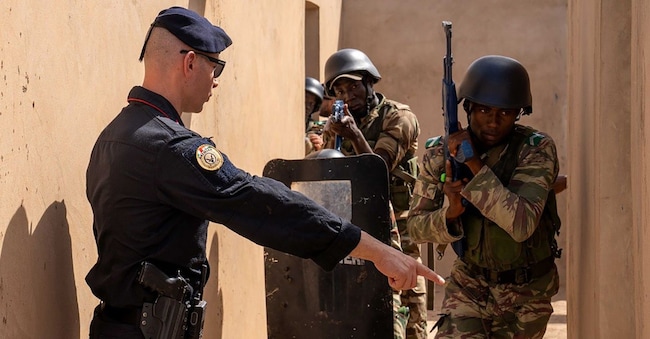
At dawn, in the Sahel, the sunlight cuts across the sandy horizon, whilst a convoy prepares to set off and a team of Italian trainers is holding a briefing for some local military personnel. Thousands of kilometres away, in the Mediterranean, commercial ships sail routes that also depend on that work. And it is in these extremely remote areas – from the Sahel to the Horn of Africa, where the desert meets fragile institutions and transnational threats – that part of our security is at stake.
It is one of the world’s most sensitive flashpoints, where competition between global powers, persistent institutional fragility and jihadist dynamics – which are evolving faster than the state’s capacity to counter them – intersect, and where we are now witnessing the effects of the state of perpetual crisis in which we live, the transformation of conflicts into multi-domain phenomena and the growing interdependence between African security, Mediterranean stability and European strategic interests. For Italia, observing these territories means anticipating the pressures that may reach the wider Mediterranean. This is because it is also the place where Europe’s ability to protect its vital routes and manage increasingly intense strategic competition is put to the test. This is why we must turn our attention to the sub-Saharan belt, an epicentre of instability, where jihadism, illicit trafficking, institutional crises and competing global actors are reshaping balances that intertwine with European and Italian interests. And it is here that Defence operates quietly every day, far from the spotlight, helping to stabilise a neighbourhood that serves as a zone of advanced security and a crossroads for essential energy, trade and food routes, protected by Italia through the strengthening of local institutions, so that they can independently guarantee the security of their own territory. A multi-level strategy, therefore, which integrates diplomacy, defence, cooperation and targeted operational presence (Capacity Building), consistent with NATO’s Projecting Stability approach and with our international responsibilities.
MISIN: a welding base in the Sahel
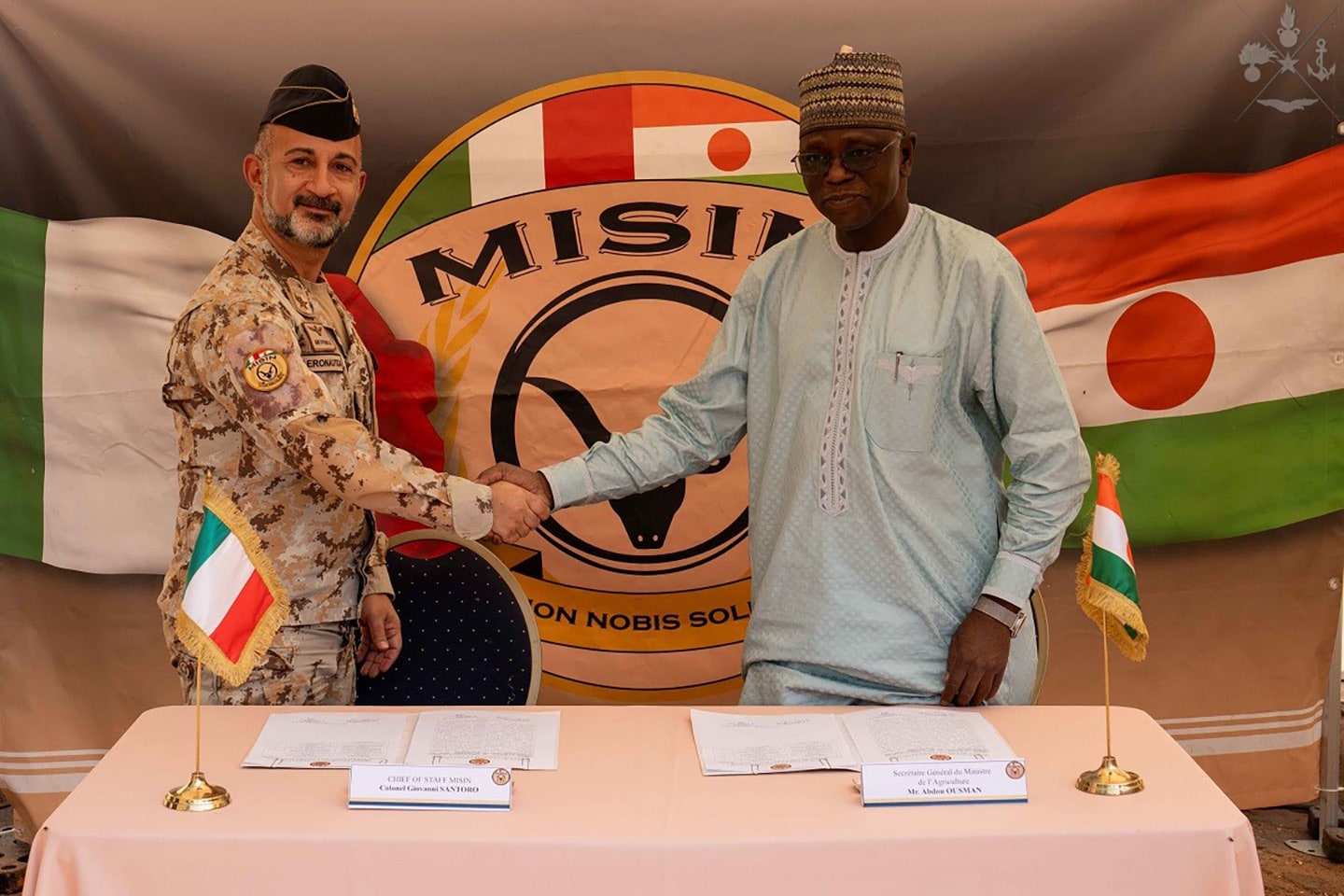
At the heart of the Ministry of Defence’s efforts is the bilateral mission MISIN in Niger. Through advanced training, support for border security and cooperation with European and US partners, MISIN contributes to the resilience of a region that is crucial for combating trafficking and jihadist organisations. A prime example is the CEMEDAN, a dual-use aviation medical centre and a key facility in the Sahel region, designed to certify the fitness to fly of military and civilian personnel from Niger and neighbouring countries, as well as to strengthen local diagnostic and treatment capabilities. This demonstrates a sustainable approach, geared towards fostering autonomy rather than dependence.
Somalia and the Gulf of Aden: the blue line that must not be crossed
By contrast, in the Horn of Africa, the Ministry of Defence is engaged along three complementary lines of action: EUTM Somalia, for the reconstruction of the Somali Armed Forces; EUCAP Somalia, for strengthening law enforcement capabilities; and Operation Atalanta, an EU naval mission protecting trade routes in the Gulf of Aden, to help enforce the arms embargo against Al-Shabaab, as well as to combat piracy and illicit trafficking, and to ensure the safety of World Food Programme convoys in one of the most vital trade corridors for the global economy. Here, the Ministry of Defence draws on its recognised expertise in the maritime domain, the Army’s extensive experience in Security Force Assistance, and the Carabinieri’s global leadership in Stability Policing, that is, the policing function carried out in fragile states to ensure public order and security, as well as the rule of law and human rights, within a continuum between military and civil security, in order to fill the governance vacuum caused by the inefficiency of local institutions.
The Carabinieri’s CoESPU: a tool for security diplomacy
As laboratories for interoperability and cooperation, these missions require cultural awareness, flexibility, adaptability and investment in dual-use infrastructure that enhances institutional resilience. In this context, the Centre of Excellence for Stability Police Units (CoESPU) in Vicenza plays a decisive role. Its hallmark is the provision of advanced training for police forces in the context of peacekeeping and stabilisation operations, predominantly led by the UN. Established in 2005 through a partnership between the Italian and US governments under the auspices of the G8 (now the G7), the Centre – under the leadership of the Carabinieri – is an international research hub dedicated to practical training, exercises, the development of doctrine, innovative thinking, best practice and lessons learnt. Through the Train The Trainer method (nearly 17,000 police officers from 129 countries have been trained over 20 years), the CoESPU – an instrument of security diplomacy – multiplies the impact of training, contributing to the building of autonomous, interoperable and sustainable institutions.

