

The Italian pharmaceutical sector is among the top performers in the EU, but the supply chain is not moving at the same pace
Speeding up the digitalisation of processes, making research more attractive and cutting red tape are essential for meeting the challenges posed by international competition

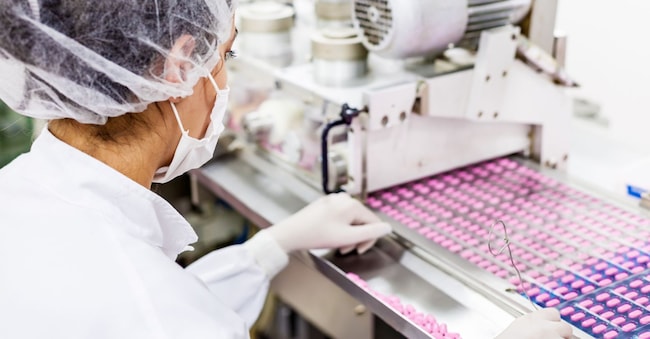
The Italian pharmaceutical industry ended 2025 with production worth 74 billion euros and exports in excess of 69 billion. With exports up by 28.5%, over the past year our sector has not only become a national flagship but has firmly established itself at the top of the European Union and ranks as the fourth-largest pharmaceutical hub in the world.
Building on this indisputable position of leadership in both production and science, a discussion took place in Rimini during the 65th Symposium of the Association of Pharmaceutical Industry Professionals (AFI), bringing together companies, institutions and clinicians. However, we must not be lulled into complacency by the figures. On the contrary, they impose upon us a duty to be forward-thinking, at a time when the real challenge lies in our ability to rapidly bridge the competitive gap in digitalisation and the attractiveness of clinical research, and to drastically reduce the impact of bureaucracy.
Digitising processes
New technologies – amongst which artificial intelligence plays a leading role – are transforming clinical research. How? They optimise data management, the predictive power of studies and drug development times. To compete with such advanced ecosystems, already in place in the United States, the United Kingdom and Asian hubs, Italia must enhance its appeal by simplifying regulations and accelerating the digitalisation of processes. Despite its high scientific quality, Italian clinical research suffers from structural challenges: the fragmentation of healthcare systems, digital disparities across the country and excessively long authorisation times. Added to this is data management that is not yet interoperable.
Put an end to bottlenecks
It is therefore urgent to harmonise trial procedures, ensuring fixed timelines and eliminating regional duplication. It is also a priority to ensure that the regulatory framework between the AI Act and the European Health Data Space (EHDS) is consistent and operational, and to define clear rules for the use of AI. By early 2026, 32 per cent of Italian companies had integrated AI into their processes. In the pharmaceutical sector, however, there is a significant divide between large players and small and medium-sized enterprises. The transition to data-driven models is hampered by cultural, technological (lack of interoperability) and financial bottlenecks.
Recent figures released by the Bank of Italia confirm this polarisation: whilst over 80 per cent of large high-tech companies have already launched advanced digitalisation projects, the figure falls to below 25 per cent among SMEs, which are held back by financial barriers and a shortage of technical staff. Overcoming these constraints is essential to enable the entire supply chain to keep pace with global scientific progress.

