

The Italian start-up founder who is revolutionising hospital care from India
Healthcare facilities make money when patients are well, not when they are admitted to hospital. Five new hospitals are set to open in Bangalore

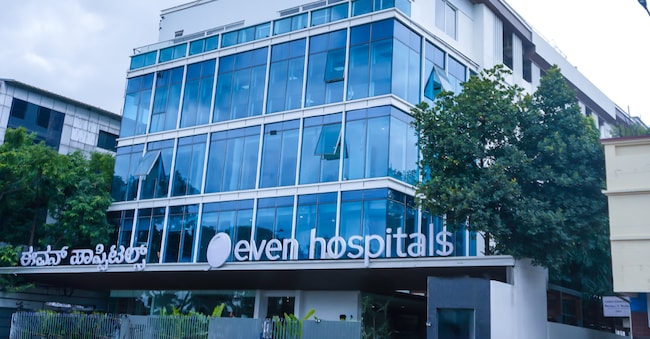
A young Italian entrepreneur is reinventing the economic model of hospitals, starting in India. She is Matilde Giglio, co-founder of Even Healthcare, a start-up that builds and manages healthcare facilities based on a counterintuitive approach: making a profit when patients are well, not when they are admitted to hospital. Doctors, too, are paid fixed salaries and incentives linked to clinical outcomes, rather than to the number of consultations, tests and procedures. This revolution in the business model has won over some of Silicon Valley’s leading investors: the company has just raised $50 million in a funding round led by Khosla Ventures, the first venture capital firm to invest in OpenAI. The funds will finance five new hospitals in Bangalore over the next six months, which will join the two already in operation and turning a profit.
‘In healthcare, nobody makes money if the patient is well. The hospital makes money when it admits you, the doctor when they examine you, and the laboratory when they prescribe a test. I saw this first-hand in India: every family’s greatest fear has always been hospitalisation – not because of the illness, but because of the bill. So in 2021, we decided to build a healthcare system from scratch, but with a completely different approach,” says Giglio, a 34-year-old born in Rome and a globetrotter by profession, with a degree from the London School of Economics under her belt and the challenge of setting up a company that integrates insurance, prevention and hospital care, offering a healthcare model that rewards clinical outcomes rather than the number of services provided.
Today, Even Healthcare has 250,000 members across ten cities – a threefold increase in one year – $35 million in revenue and over a thousand employees. The first hospital, with 70 beds in Bangalore, was built in six months for $4 million and broke even at 23 per cent occupancy. “We are the first healthcare provider in India to operate on an insurer’s business model: we collect payment first and make a profit if people stay healthy. Our members pay an annual subscription that covers everything, from a GP available 24 hours a day to check-ups and programmes for chronic conditions, right through to admission to our hospitals,” says Giglio. This is value-based healthcare, a new paradigm that is reshaping economic incentives, organisational models and healthcare metrics. ‘Here, the focus shifts to reducing avoidable hospital admissions, prevention, recovery times, quality of life and the economic sustainability of care pathways. The hospital is no longer just the place where action is taken when a person falls ill, but becomes the hub of an ongoing relationship with the patient. We are also paid for hospital admissions that do not take place. The same incentive applies to our doctors, who receive a fixed salary and a bonus linked to patient outcomes, not to the number of procedures performed,” says Giglio.
The figures are encouraging: for partner insurers, patients are monitored after discharge. 90 per cent of patients participate, and readmissions within thirty days have halved. Similarly, the fever programme has reduced hospital admissions by 44 per cent. In these hospitals, unplanned readmissions are below 1 per cent and hospital stays are 40 per cent shorter. This is not an entirely isolated phenomenon. In the United States, ChenMed has developed a network of medical centres for older people in which healthcare professionals are incentivised based on the quality of care and patient outcomes, whilst Oak Street Health focuses on prevention and the continuous management of patients. These models differ from that of Even Healthcare because they do not necessarily involve a radical overhaul of hospital remuneration, but they reflect the same cultural shift: from service provision to outcomes. In other words, a hospital can become more economically competitive precisely because it manages to reduce hospital admissions. ‘Value-based care is not a technology, but a business model: it is discussed only in relation to medicines, whilst it must apply across the entire supply chain; otherwise, each player passes the cost on to the next. Whilst the system operates in terms of years and silos, prevention pays off over a decade in a different area of expenditure.’ The hospital of the future? Giglio has no doubts. “We’ve installed a ‘black box’ inside: every room records all clinical interactions, from consultations to operations, and artificial intelligence compares this with the protocol. Technology does not replace the doctor, but gives them back the time for what requires the most attention. For India, where there are few doctors and many patients, it is the only way to scale up. For Italia, where doctors are ageing alongside their patients, this is probably the case too.”

