

The map of the Mattei Plan projects
The third report has been presented. The scheme has seen six steering committee meetings, 18 partner countries and 15 interventions approved for the Italia Climate Fund, totalling approximately 1.2 billion euros. The initial budget of 5.5 billion has enabled not only a doubling of the number of partners (from 9 to 18), but also the implementation of 76 projects
by 24Ore NextMed
 Aggiungi Il Sole 24 Ore
ai preferiti su Google
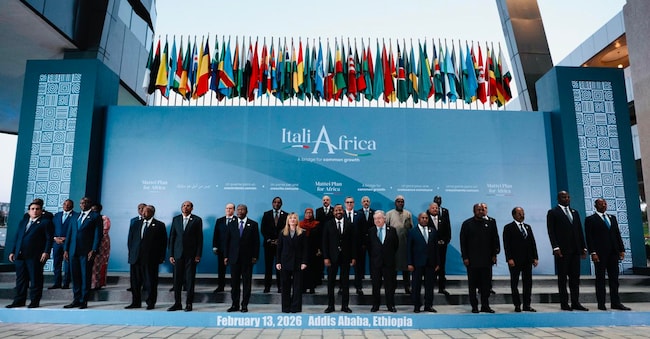
The term ‘cooperation’ is increasingly giving way to another noun: ‘partnership’. Before 2024, of the approximately 4 billion allocated annually for cooperation with the Global South, 75 per cent was channelled through multilateral models, via international organisations or the European Union. Only the remainder was channelled through bilateral channels. With the launch of the Mattei Plan in 2024, the proportions were effectively reversed, bringing a substantial advantage: namely, the opportunity to build long-term relationships of a more financial and infrastructural nature. The model has now become established and is focused on a continent that is growing at 4 per cent, holds 30 per cent of global mineral reserves and is experiencing record levels of population growth. “Today, the Mattei Plan – recognised as an initiative of European and international scope – is a fully operational strategy that is producing tangible results,” said Prime Minister Giorgia Meloni during the presentation of the third report on the Mattei Plan. “Together with our African partners, we have launched more than 70 projects in recent years, thanks to a solid financial framework that is mobilising public and private resources. Italia will continue to work in this direction, to consolidate this approach and further strengthen the model of cooperation we have in mind: collaboration on an equal footing, based on respect, mutual trust and shared development.” To date, the Plan has seen six steering committee meetings, 18 partner nations and 15 interventions approved for the Italia Climate Fund, totalling approximately 1.2 billion euros. The initial budget of 5.5 billion has enabled not only a doubling of the number of partners (from 9 to 18), but also the implementation of 76 projects. These are spread across Algeria, Congo, Côte d’Ivoire, Egypt, Ethiopia, Kenya, Morocco, Mozambique and Tunisia. With the addition in 2025 of Angola, Ghana, Mauritania, Senegal and Tanzania, and, in the first half of this year, Gabon, the Democratic Republic of the Congo, Rwanda and Zambia. All of this is being carried out across six key areas of consolidation aimed at developing access to water, agriculture and fisheries, energy, physical and digital infrastructure, education and health.
Water
According to World Bank estimates, only 68 per cent of the population (840 million people) have access to basic water services, and this figure falls to 53 per cent in rural areas. In East and Southern Africa alone, around 281 million people lack access to safe drinking water and around 476 million do not have access to basic sanitation. The infrastructure projects under the Mattei Plan cover the entire water cycle, from supply to treatment, distribution and reuse, in particular through the launch of activities involving the design, construction, management and maintenance of complex water infrastructure, as well as water treatment and quality control facilities. The fifth meeting of the Steering Committee identified water resource management as a thematic priority for 2026, fully in line with the decision of the African Union, which has designated this sector as the continent’s priority for the year. In terms of concrete actions, the water programme saw some of its most significant operations take place in 2025. In Morocco, the Italian Climate Fund approved, in September 2025, a grant of 100 million euros to support the National Water Strategy, as part of an overall programme worth 347.3 million co-financed by the French Development Agency (AFD), the German Development Bank (KfW) and the EU. Morocco is among the countries with the lowest availability of fresh water in the world, and its 2020–2050 National Water Plan provides for total investments of 38 billion euros. In Tunisia, where the water stress level has already reached 98 per cent and estimates for 2050 indicate that the water deficit is set to exceed available renewable water resources by 28 per cent, the Italian Climate Fund approved funding of up to 250 million euros in April 2026 as part of the TANIT – Italian-Tunisian TANdem project. The initiative aims to reuse treated wastewater for the irrigation of state-owned agricultural land managed by the Office des Terres Domaniales, involving five treatment plants in the areas of North Tunis, South Tunis, Sousse-Enfidha and Sfax, with the first plots expected to be irrigated within three years of construction commencing. In the Republic of the Congo, as part of the Pista programme (Platform for Investment Support and Technical Assistance) funded by Mase, a technical and economic feasibility study is currently being carried out for the project to improve and strengthen the drinking water supply for the city of Brazzaville, commissioned by the United Nations Development Programme (UNDP) to the consortium led by Acea. The project involves infrastructure for water production and distribution, as well as a photovoltaic system to ensure the infrastructure’s energy self-sufficiency, with an estimated impact on over one million residents of Brazzaville.
Agriculture
According to the State of Food Insecurity 2024 report, over 280 million people in Africa suffer from chronic undernourishment, and over 95 per cent of African agriculture still depends on seasonal rainfall, making the sector extremely vulnerable to droughts, floods and climate change. As indicated by the World Bank, the average cereal yield in sub-Saharan Africa is less than 1.8 tonnes per hectare, less than half the global average. Inadequate rural infrastructure also poses a significant obstacle; many smallholder farmers lack adequate access to roads, cold-storage facilities and regional markets, leading to high post-harvest losses which, in some countries, exceed 30 per cent of food production. Against this backdrop, the initiatives under the Mattei Plan support the transition from subsistence farming to more efficient and profitable techniques, the establishment of equal partnerships with leading Italian companies and research centres, the development of local supply chains, the promotion of skills and employment for young people, and the introduction of technological innovations to increase crop yields and their resilience to climate change. The portfolio of projects in this sector is among the most comprehensive. In Algeria, Bonifiche Ferraresi has been granted a concession for 36,000 hectares in the Wilaya of Timimoun to establish an integrated seed-to-finished-product supply chain. The first sowing took place in October 2024 and the irrigation systems, comprising wells and pivot sprinklers, are already operational. This is the most significant Italian investment in a high-tech regenerative agriculture project in the Southern Mediterranean region. In the Ivory Coast, the Italian Climate Fund approved, in July 2025, €100 million in funding for the North-East Agro-Industrial Hub project, co-financed by IFAD and the African Development Bank, which aims to improve the productivity and processing capacity of agricultural products in the Zanzan district through climate-resilient infrastructure, efficient irrigation techniques and climate-smart farming practices for the benefit of smallholder farmers. In Senegal, the Italian Climate Fund has approved €90 million in funding, co-financed with IFAD, for the ‘Support to Food Sovereignty in Senegal Project’ (SFSP), which will extend the UN agency’s initiative to seven new regions in Senegal through interventions on integrated groundwater management, the diversification of climate-resilient crops and household food security – with a focus on women and young people – benefiting around 150,000 households. Finally, the Terra Programme, promoted by CDP, the EU and the FAO with an EU guarantee of €109.5 million, improves access to credit for micro, small and medium-sized enterprises in the agri-food sector through credit lines channelled via local financial institutions. To date, loans totalling €21 million have been granted to African SMEs.
Energy
According to a report drawn up by the United Nations, the International Energy Agency and the World Bank, in collaboration with other international organisations, over 660 million people worldwide still lack access to electricity, and the majority of them live in sub-Saharan Africa. In 18 of the 20 countries with the largest global energy deficits, there is a severe shortage of electricity infrastructure, exacerbated by population growth and limited capacity for public investment. To support Africa’s energy transition, the World Bank, in partnership with the African Development Bank, has launched the Mission 300 programme, which aims to mobilise around $90 billion in public and private funds to ensure access to electricity for 300 million Africans by 2030. Italia is participating in the initiative through a €150 million grant from the Italian Climate Fund in support of the “National Electricity Digitalisation and Access” project in Côte d’Ivoire. In Mozambique, thanks to a €100 million grant from the Climate Fund, Italia is supporting the World Bank’s Ascent programme, which will fund off-grid renewable energy systems for one million households (around 4.5 million people) by 2030 in the most remote rural areas, including the electrification of 250 healthcare facilities. Similarly, in the Republic of the Congo, the Mattei Plan is contributing up to 100 million euros to the Pasel (Projet d’Amélioration des Services d’Électricité), developed by the World Bank at the request of the local government, with the aim of improving the quality of and access to electricity by strengthening transmission and distribution networks and reducing energy wastage. In a country where 50 per cent of the population lacks access to electricity, the impact is substantial. In Kenya, in January 2025, Italia disbursed the first 100 million of the total 150 million in policy-based financing. This operation is in addition to the 75 million dollars (out of a total package of 210 million arranged by the International Finance Corporation) allocated by the Climate Fund for the construction and operation by ENI Kenya of vegetable oil production plants and the utilisation of extraction by-products (the Agri Hubs), with the aim of supporting the production of advanced biofuels from raw materials grown on degraded land, a scheme which has already involved around 140,000 farmers. Against this backdrop – as the report states – the Italian Strategy’s commitment to supporting the Elmed cable project between Italia and Tunisia remains firm, as does the central role of training, for example in the field of the energy transition through the initiative launched by the ENEL Foundation in collaboration with Res4Africa in Morocco, Kenya and South Africa.
Infrastructure
In addition to the fact that over 600 million people lack access to electricity, according to the report *Africa’s Development Dynamics 2025*, significant disparities persist between urban and rural areas in terms of access to tarmac roads, water supplies and energy. The most pronounced gaps relate to water and electricity, with differences of more than 45–50 percentage points between urban and rural areas. Internet access is available to only 41 per cent of the population (below the global average), whilst vast rural areas remain excluded from connectivity. Finally, the entire continent has access to less than 2 per cent of global data centre capacity, a significant constraint on the development of the digital economy and artificial intelligence. In terms of physical infrastructure, the Lobito Corridor represents the initiative of greatest strategic significance, with Italia being the only European nation – alongside the United States, the European Union and the participating African nations – to be included in the Memorandum of Understanding establishing the project. At the same time, the three institutions signed the Lobito Declaration, which commits the parties to identifying new funding opportunities linked to the development of the corridor and to organising matchmaking events between local sponsors and the Italian private sector. In August 2025, the Italian Climate Fund also approved an initial equity investment of 35 million dollars in the ICRF (Infrastructure Climate Resilient Fund), managed by AFC Capital Partners, which is planning the development of the ‘Lobito II’ railway network to link Zambia and Angola. At the continental level, the Italian Climate Fund is contributing 137 million euros to the Special Fund managed by the African Development Bank as part of the Rome Process Financing Facility – of which 100 million comes from the FIC, 10 from Development Co-operation and 27 from the Ministry of the Environment and Energy Security – which in 2025 financed five projects totalling 29 million euros, with 11 projects planned for 2026 totalling 96 million, many of which are in the infrastructure sector. In the field of infrastructure and digital innovation, the AI Hub for Sustainable Development, established as part of the Italian G7 Presidency, is funded by the Ministry of Enterprise and Made in Italy (MIMIT) with 14.9 million euros over three years and implemented with technical support from the UNDP. Since its launch on 20 June 2025, the Hub has moved from the co-design phase to operational implementation, recording 376 expressions of interest for the Compute & Talent programme and 135 applications for the AI Infrastructure Builder Programme. This framework includes the Cyber4Africa programme, developed with Cyber 4.0 and Cisco Kenya, collaborations with the Italian Space Agency, and the seven industrial and scientific partnerships formalised in June 2026 at the DAMA Technology Park in Bologna. By 2028, the initiative aims to support up to 15 acceleration programmes, reach thousands of innovators and micro, small and medium-sized enterprises, facilitate partnerships and promote investment projects. In Ghana, the initiative focuses on strengthening the digital innovation ecosystem, developing agritech solutions and promoting digital and entrepreneurial skills, with a particular focus on young people and start-ups. In Côte d’Ivoire, the programme supports three strategic initiatives: the creation of an AI & Data Innovation Hub at Félix Houphouët-Boigny University in Bingerville. The Terna Innovation Zone Tunisia – inaugurated on 29 January 2025 – operates on three pillars: university-level energy training, a start-up ecosystem and technical cooperation with the Tunisian Electricity and Gas Company on workplace safety and live-line working, as part of the Elmed project.

