

NATO in Ankara is coming to terms with the 1990s model
Global defence spending exceeds 2,400 billion. In 2025, Europe spent over 700 billion. But simply increasing the share of GDP is not enough. We need to reform the models, the types of weaponry and the relationship with private funding.

Key points
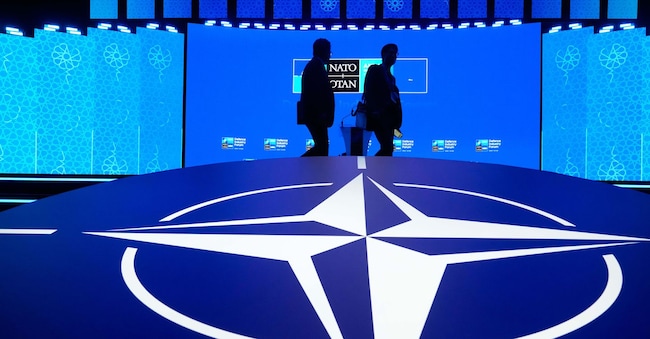
As one of NATO’s most important meetings gets underway in Ankara, a key issue regarding the quality of rearmament comes to the fore. According to data from SIPRI, the Stockholm International Peace Research Institute, 2025 ended with total government spending of around 2,400 billion euros. The United States spent around 1,000 billion, whilst Europe as a whole spent around 700. Among individual countries, China ranked second and Russia third. Germany followed closely behind, just above India. Obviously, the wars in Ukraine, Gaza and Sudan have contributed to this trend. This is due both to the need to replenish stocks and to the need to keep pace with new operational models. Compared with 2016, global arms expenditure has increased by around 500 billion. If we look at the figures relative to GDP, we see that Moscow allocates 7.5 per cent, Saudi Arabia 6.5 per cent and Algeria 8.8 per cent. Ukraine is in a league of its own: last year it spent 39 per cent of its GDP on defence systems. The percentages are lower in Western countries. The US stands at around 3 per cent, France at 2 per cent, Germany at 2.27 per cent, the UK slightly below that, Canada at around 1.6 per cent and Italia at 1.89 per cent.
Groceries
Beyond Donald Trump’s public statements and outbursts, the spotlight in Ankara is therefore on these figures within the broader, much-debated context of the US demand for other NATO partners to increase their defence spending. From a political perspective, the wider debate touches on the very future of the Alliance should the US, as its cornerstone, shift its focus to other fronts – where NATO has no presence. The Indo-Pacific is a case in point. But above all, the question is: what might NATO become if, for its main stakeholder, Russia is not considered an enemy? It is not an adversary, but a partner with whom to engage in dialogue on sensitive issues such as the Middle East. Within this complex landscape lies an aspect that is both technical and strategic. What does it mean to increase the defence budget without changing the models of warfare? Italia currently spends less than 2 per cent of its GDP on defence. A quarter of this expenditure goes on salaries and pensions. Only 15 per cent is actually allocated to research and development. France remains a nuclear power, but if what Palantir’s top executives claim is true – namely, that this is the century of software rather than the atom – how will Paris be able to transform its deterrence capabilities? It is no coincidence that, at the start of the meeting, the Secretary-General of the North Atlantic Treaty Organisation, Mark Rutte, announced – whilst presenting the new NATO Drone Edge Initiative – that 40 billion will be invested over the next five years to strengthen the allies’ anti-drone capabilities, and that the number of specialist operators within the armed forces will be increased fivefold by the end of 2027. ‘From what we are seeing in Ukraine, the Middle East and across the Alliance, the allied nations themselves have suffered repeated drone incursions,’ said Rutte. For this reason, he explained, NATO is rapidly expanding its capacity to deploy and operate drones on a large scale and, at the same time, is building ‘robust anti-drone defences to detect, identify and neutralise’ threats.
Outdated model
What has emerged from the meetings in Ankara is that, although the EU invested more than 700 billion last year in defence and attack systems, its involvement in NATO is still based on frameworks that are too closely tied to the 1990s. The 40 billion announced by Rutte is certainly not enough unless action is taken to overhaul the frameworks and implementation models. The new systems based on drones and very-long-range missiles leave the Old Continent defenceless. And the rearmament models – particularly the national ones envisaged by the European Commission – are out of step with the times. They are out of step with the new patterns of warfare.
Ced
It is therefore not enough simply to increase the budget as a proportion of GDP. We need to redefine the very nature of our involvement in rearmament. The model envisaged in 1952, known as the European Defence Community, would be more relevant than ever today. It would consolidate the internal market whilst at the same time enabling a new form of partnership with NATO. It would allow the EU to replicate Ukrainian development models whilst also forging partnerships with countries in the Middle East and the Indo-Pacific with a new degree of autonomy. Compared with China and the US, Europe would probably remain a step behind, but it could experience a new sense of maturity. We need to consider the involvement of private funds, so as to accelerate returns and time-to-market.

