Debuts

The new Hyundai Tucson: everything you need to know – engines, specifications and dimensions

The fifth generation is growing in size and features, and is now incorporating artificial intelligence.

5' min read

Translated by AI
Versione italiana

5' min read

Translated by AI
Versione italiana

More than 20 years after the debut of the first generation, the Hyundai Tucson is now in its fifth generation and has undergone a marked change compared with the current model. It is larger, features a new design language and, above all, has a completely redesigned interior, where a central display measuring up to 17 inches makes its debut. The range will continue to focus on petrol and hybrid powertrains, with no all-electric version, offering power outputs ranging from 150 to 292 cavalli. For the European market, production will continue at the Hyundai Motor Manufacturing Czech plant in the Czech Republic.

The new Hyundai Tucson: dimensions and styling

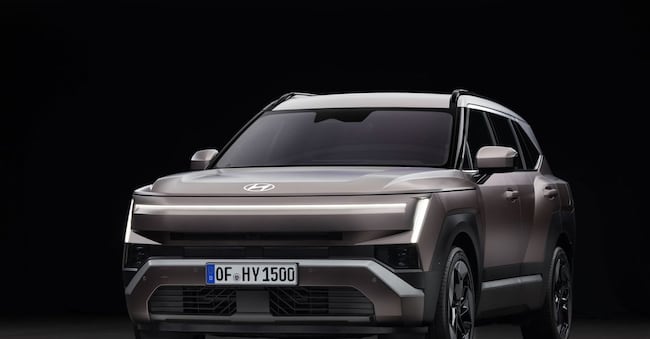
The new Tucson marks a break from the styling seen to date on the Korean SUV. The design language is called “Art of Steel” and features more pronounced wheel arches, less ornate surfaces and clean lines. This marks a significant departure from the fourth generation, which may leave those accustomed to the outgoing model’s look feeling a little disoriented, but it is in line with the aim of giving the Tucson a completely new personality.

Loading...

The dimensions have also changed. The length is now 4.56 metres, 5 centimetres longer than the previous model, whilst the width has increased by 3.5 centimetres to 1.90 metres – a figure worth bearing in mind, particularly when driving in town and accessing older garages. The height has increased by 2 centimetres to 1.67 metres and the wheelbase has grown by 4 centimetres, reaching 2.72 metres.

The front end features the H-Edge lighting signature, where the central indirect lighting combines with the perimeter lighting to emphasise the horizontal lines of the bodywork. At the rear, the Prism Rear Lamp utilises a three-dimensional internal structure. Depending on the trim level, the car also features Micro Pixel Lighting, comprising 25,600 individual LED pixels, used both to control the light beam and for welcome and farewell animations. The alloy wheels are available in sizes up to 20 inches.

Nuova Hyundai Tucson, le foto della quinta generazione

Photogallery6 foto

The new Hyundai Tucson: interior and technology

It is when you step inside that the fifth generation shows the greatest difference from the current Tucson. The interior layout, dubbed ‘Furnished Space’, features a two-tier dashboard that separates the upper section from a large, open storage compartment. The materials and upholstery have also been updated, with padded surfaces on the dashboard, doors and centre armrest.

In front of the driver is a slim 9.9-inch digital instrument cluster, positioned within the driver’s field of vision, whilst the screen in the centre of the dashboard can be either 12.9 or 17 inches. Traditional controls are still present, with a set of physical buttons beneath the touchscreen for the most frequently used functions. The shift-by-wire gear selector has been moved to the steering column, freeing up space in the centre console.

The Pleos Connect multimedia system is based on Android Automotive OS and integrates vehicle functions, compatible apps and connected services. Gleo AI voice recognition utilises artificial intelligence and can access real-time data via the internet, whilst over-the-air updates allow certain infotainment and vehicle functions to be updated remotely. A Bang & Olufsen sound system with 12 speakers is also available as an option.

The specification includes two 15 W Qi 2.0 wireless charging pads, USB-C sockets supporting up to 100 W, three-zone climate control and a Multi-Air Mode system for indirect air distribution. The Ergo Motion seats utilise a seven-cell pneumatic system for lumbar and lateral support, as well as a massage function, whilst the Relaxation Comfort Seats allow you to adjust your position with a single control during stops.

The increase in exterior dimensions also translates into more space inside the car. At the rear, there is 1,003 mm of legroom and a 40:20:40 split-folding rear seat, which can slide forwards and backwards by 150 mm. The rear doors can open to an angle of 83 degrees, making access easier, particularly when settling children or fitting child seats. The boot has a stated capacity of 695 litres.

In terms of driver-assistance features, the new Tucson introduces Memory Reverse Assist, which can record the route travelled at speeds of up to 30 km/h and then control the steering whilst reversing along the memorised path. The Ground View Monitor also allows the driver to view the area immediately around and beneath the vehicle, whilst the Trailer Reverse Assist intervenes to control the steering during manoeuvres with a trailer. The SmartSense package also includes Highway Driving Assist 2, adaptive cruise control linked to the sat-nav, forward collision avoidance assist and occupant monitoring. The safety features include seven airbags.

Loading...

New Hyundai Tucson, engine options

The range offers a fairly wide choice and does not include a fully electric Tucson. The entry-level model is the 1.6 T-Ggi petrol engine producing 150 cavalli, available with two-wheel drive and a six-speed manual gearbox. The 150 cavalli all-wheel-drive variant, on the other hand, features a seven-speed dual-clutch gearbox and a 48-volt electrical system.

A step above that is the Tucson full hybrid, which is also based on the 1.6 T-GDi engine, but with a total power output of 245 cavalli and 380 Nm. It is available with either front-wheel or all-wheel drive and, in both cases, features a six-speed automatic gearbox. The hybrid system’s battery has a capacity of 1.49 kWh. The two-wheel-drive version accelerates from 0 to 100 km/h in 8.3 seconds, whilst its towing capacity reaches 1,910 kg.

One of the new features of the full-hybrid version is Hev Stay Mode. The system allows you to use the air conditioning, audio system and device charging whilst stationary, whilst keeping the internal combustion engine switched off, thereby utilising the energy available in the hybrid system.

At the top of the range is the Tucson plug-in hybrid, delivering 292 cavalli and 380 Nm, available with either two- or four-wheel drive and paired with a six-speed automatic gearbox. The battery has a capacity of 17.1 kWh and provides an estimated electric range of up to 81 kilometres in the 17-inch wheel configuration, a figure still subject to final type-approval. The 7.2 kW on-board charger allows for AC charging, whilst there is no provision for using DC charging points.

The towing capacity varies depending on the engine type. Petrol versions can tow up to 1,700 kg, full hybrids up to 1,910 kg and plug-in hybrids up to 1,810 kg. The all-wheel-drive PHEV accelerates from 0 to 100 km/h in 7.9 seconds.

Prices have not yet been announced, whilst the product is expected to be launched in early 2027.

Copyright reserved ©
Loading...

Brand connect

Loading...

Newsletter

Notizie e approfondimenti sugli avvenimenti politici, economici e finanziari.

Iscriviti