
The Norcia earthquake, ten years on: the story of those who came to the aid of the local people
The National Head of Protection at Anpas: “If there’s one thing to be proud of in Italia, it’s our emergency management”

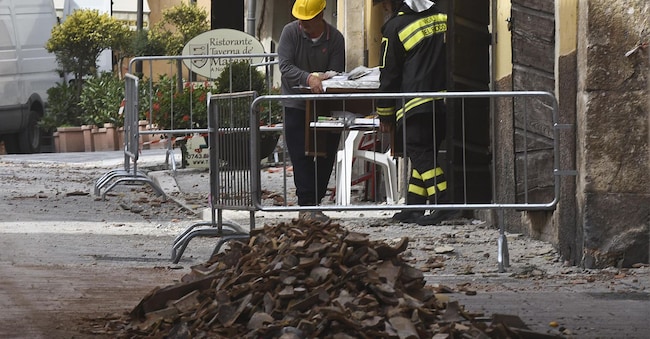
On 30 October 2016, the Valnerina was shaken once again, just a few days after the tremors of 26 October. The affected towns lie on the border between Umbria and the Marche. Among the main ones are Norcia, Preci and Castelsantangelo sul Nera. The swarm registered a magnitude of 6.5: buildings collapsed, but no one was injured. The earthquake on 30 October, like the one on 26 October, caused neither deaths nor injuries.
The emergency triggers a response from the police and a whole range of voluntary organisations. Among these is Anpas – the National Association of Public Assistance Organisations – one of the leading Italian organisations active in the fields of civil protection, medical emergency response and social care services.
A tribute from the Anpas National Head of Protection
ANPAS was already on the ground on the day of the earthquake: on 27 October, following the first tremors, it set up a soup kitchen inside a sports hall just outside the walls of Norcia. With the series of aftershocks on 30 October, the situation worsened and demand for meals increased.
“In around a hundred days of operation, we distributed nearly 50,000 meals; not only to the local population, but also to a large proportion of the workforce active in the area,” recalls Alessandro Benini, Anpas’s National Head of Protection. Around 580 volunteers arrived from all over Italia to help with the emergency, with an average of 30 volunteers per week. And this is one of the aspects that has touched Benini the most: the work carried out alongside the volunteers.
‘We’ve always given our all to solving problems; there’s never been a situation where anyone has thrown in the towel. The volunteers slept in tents, even when it was as cold as minus 12 degrees. And if, in the morning, no gas or water came out of the taps because of the cold, they’d just get on with it and sort it out. On several occasions, I was almost moved to tears.”

