Corporate Management

The Okr method in SMEs: why it can foster growth and innovation

This methodology is considered revolutionary and is now taken up as an important management tool by many of the Fortune 500 companies. Let us look at it in more detail

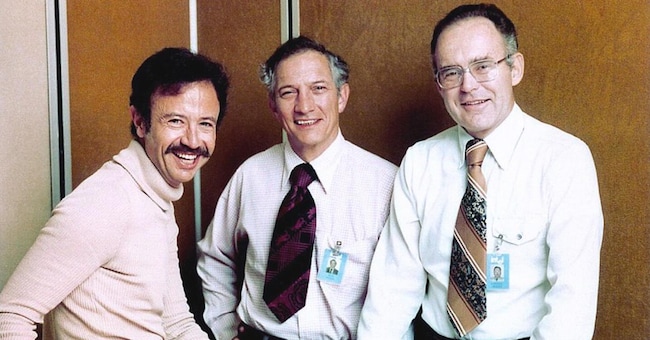
Andy Grove, Robert Noyce e Gordon Moore alla Intel nel 1978

5' min read

5' min read

The acronym OKR stands for 'Objectives and Key Results'. A methodology that is considered revolutionary - it was devised by the CEO of Intel, Andrew Grove, in the 1970s - and is now taken up as an important management tool by many of the Fortune 500 companies. The principles on which it is based are relatively simple, and as such have also found application in small and medium-sized enterprises, non-profit organisations, political bodies, among individual professionals (including athletes) and consulting specialists. Perhaps the most authoritative case of the use of OKRs concerns a start-up that has become multinational, such as Google, and it was one of the founders of the Californian BigTech, Larry Page, who said so years ago.

Linking the objectives of a subject (organisation, work group or individual) to the key results (never more than 4 or 5 per objective and measurable against a precise time horizon) required to achieve them is the essence of this methodology, which unlike other similar systems promises to stand out for some of its unique features. Such as? For example, transparency, because the objectives are known to all members of an organisation and not confidential and entrusted only to individual teams or departments.

Loading...

Other 'core' components of the OKRs are therefore collaboration and flexibility, because they are not imposed by top management (from C-level managers to employees) but elaborated collaboratively on the basis of the role and know-how of the individual (who contributes to defining attainable results that adhere to reality) and because they can be modified over time through periodic checks. Each person, in other words, knows at all times what others are doing and is aware of how objectives fit into the overall vision and mission of the company, creating a sense of cohesion, responsibility and shared motivation.

And it is precisely this versatile and 'open' nature that has made this methodology attractive to Italian companies as well, and especially to those in search of tools to govern growth and foster innovation. Luca Cipriani was among the first to introduce it into the fabric of SMEs, starting in 2017, and today he is one of the leading experts on the subject (with the OKR Business brand) as well as an OKR coach. With him, we tried to take stock of the 'state of the art' of the adoption of this methodology in Italian SMEs.

What corporate figure takes charge of 'promoting' this methodology and managing it within the company? And how?  

OKR adoption in SMEs is a collaborative process that actively involves all teams and individual employees. Upper management, and thus the CEO and the heads of IT and finance, initiate the process by defining the organisation's strategic objectives, while middle-managers and operations teams contribute by proposing 'key results', thus creating a two-way dynamic that ensures alignment and commitment at all levels. Reading works such as John Doerr's "Measure What Matters" may inspire initial interest in this methodology, but the transition from theory to practice requires expert guidance, a real coach. It is indeed crucial to identify and train 'Okr Champions', who often emerge spontaneously among the company's managers, and it is in most cases the middle-management figures, together with HR managers, who are the key actors of change, as they act as a bridge between the C-level strategic vision and the practical implementation of this model.

What, in general, are the main critical issues that have emerged and what are the main benefits of its implementation?

The main obstacle is the absence of basic prerequisites in the company. If there is a lack of a clear vision, a defined strategy, shared corporate values and familiarity with KPI measurement, implementing OKRs becomes very difficult. And for one simple reason: these tools amplify the positive aspects of an organisation, but can also exacerbate problem areas. It is therefore important to address critical issues before starting implementation. Resistance to change and mistrust represent another challenge, especially if OKRs are perceived as systems of control rather than empowerment. Coming to the benefits, I would definitely put at the first place the ability to accelerate growth and improve performance. Indeed, this methodology facilitates organisational alignment and agility, while the focus on setting clear and measurable goals fosters a working environment centred on transparency, collaboration and continuous improvement.

What is the as yet unexpressed potential of this tool that would help Italian SMEs to innovate the most?

OKRs offer the opportunity to rediscover and enhance the traditional strengths of a small and medium-sized enterprise, such as the capacity for innovation, through a management model that puts people, and their ideas, at the centre of the growth strategy. We are talking about a methodology that invites you to step out of your comfort zone, which encourages the breaking of organisational silos and values individuals or teams, their proposals and commitment, promoting open and constructive dialogue. This mechanism generates greater staff involvement, which translates into greater customer satisfaction and improved business performance.

Is a 'young' and talent-attractive company easier to use than a company with senior management and employees?

Young companies are more open to innovation and may find it more natural to integrate the methodology into their operations. Lack of experience, however, sometimes leads to a rigid application, focused more on the OKR structure than on the real contribution to business objectives. And this limitation can create a superstructure that ends up complicating the decision-making process. On the other hand, companies with a longer history and more senior management may be more cautious in adopting innovative methodologies, often due to an established habit with their business dynamics. The challenge, in this case, is to overcome resistance and preconceptions, making the most of accumulated experience.

We end with digital technologies, and AI first and foremost: can they be enablers for a successful OKR project? And why?

New technologies are certainly an enabler for OKR projects, as the capacity for advanced data analysis enables companies to set increasingly accurate and measurable targets. The possibility of automating the collection of progress and then analysing it quickly with artificial intelligence systems or other solutions also helps to reduce the workload on teams, allowing them to focus on other activities, including goal achievement. Finally, AI can support decision-making processes by providing predictive analytics that enable business leaders to make proactive adjustments to future OKRs, while LLM (Large Language Model)-based systems such as ChatGPT can be 'trained' on this methodology to offer SMEs direct support in the formulation and monitoring of OKRs, making these tools more manageable and less 'intimidating' for small and medium-sized businesses.

Copyright reserved ©
Loading...

Brand connect

Loading...

Newsletter

Notizie e approfondimenti sugli avvenimenti politici, economici e finanziari.

Iscriviti