
The rediscovery of chestnuts: from a poor man’s food to a ‘superfood’
The fact that it is gluten-free and rich in fibre and potassium is driving consumption, particularly of ready-to-eat and pre-cooked products (+12 per cent). The harvest is estimated at 50,000 tonnes, compared with 65,000 tonnes in 2025.

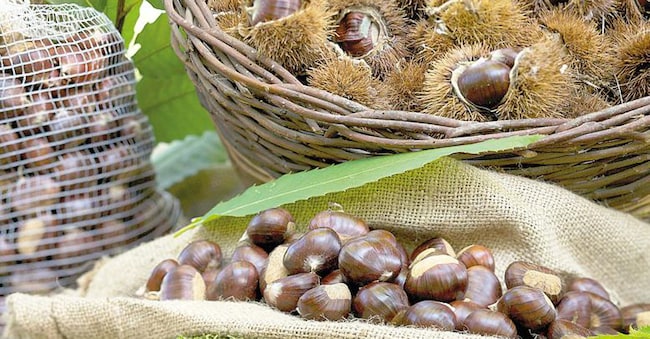
From a food of the poor to a superfood: the chestnut has undergone a transformation and, driven by changing dietary habits, has joined the ranks of health foods. For generations, it was one of the few sources of sustenance for mountain communities, so much so that the chestnut tree earned the name ‘bread tree’. Today, they are prized for their fibre, potassium, resistant starch and gluten-free nature. This is confirmed by NielsenIQ data: in the 52 weeks ending in August, sales of chestnuts in Italia exceeded 64.5 million, totalling over 8,100 tonnes.
Fresh chestnuts are worth 51.5 million (+1.6 per cent on the previous year) and 7,500 tonnes (+0.5 per cent), with an average price of around 6.9 euros per kilo. However, the main growth is coming from processed products, with dried and pre-cooked chestnuts totalling 13 million euros (+11.6 per cent) and 628 tonnes (+12.6 per cent), at around 21 euros per kilo.
Efforts are also underway to restore the product’s prestige in its natural state, in a context where – compared with a few decades ago – many chestnut groves have been abandoned because they are unprofitable. Fabio Ferrari, Head of Fruit and Imports at Coop Italia’s Fresh Produce Division, points out that for years the race to the bottom on prices had compromised quality, until supply chain initiatives brought about ‘a turnaround across the entire market’. Coop’s initiative, launched five years ago in partnership with Mitica and Agrintesa, has resulted in the ‘Marrone dell’Appennino Emiliano’, one of two collective brands recognised over the past two years by MASAF in Emilia-Romagna, alongside the Romagna brand. A similar initiative has emerged on the Tuscan side, with the ‘Marrone Fiorentino del Mugello’, and Ferrari hopes to eventually arrive at a single, unified product. For Enrico Bucchi, deputy general manager of Alegra – which, with its premium range, works alongside Coop and the consortia of Bologna, Modena and Reggio Emilia – the challenge is twofold: ‘to gradually increase availability and create new opportunities for consumption’. This year, the fresh chestnuts are joined by ready-to-eat roasted chestnuts, “to move beyond the heavy concentration of purchases typical of the period between October and November”. The group’s Nielsen research shows a level of popularity “significantly above average amongst 35–54-year-olds and decidedly lower amongst young people: all areas of growth yet to be developed”. Meanwhile, Slow Food has launched the Presidium for Traditional Chestnut Cultivation, involving around ten producers from Piedmont to Calabria, whilst there are already 16 PDO and PGI designations for chestnuts, nine of which are for ‘marrone’ chestnuts, and Campania – which has four – is awaiting approval for its fifth, the Castagna del Partenio.
Italia harvested around 65,000 tonnes of chestnuts in 2025, and a harvest of 45,000–50,000 tonnes is expected for 2026. Luciano Trentini, from the Centre for Chestnut Research and Documentation, explains that the first harvests began in mid-September – around ten days earlier than average – and that the estimate, which is yet to be confirmed in the field, indicates ‘a return to levels closer to the average’,despite some areas, such as Puglia, having been affected by drought and plant diseases. The gross saleable production is worth around 120–130 million euros. The total area under cultivation, around 40,000 hectares, is led by Campania (11,500) and Calabria (7,600), whilst Emilia-Romagna and Tuscany (8,500 combined) form the heartland of chestnut production: accounting for around 20 per cent of the harvest, with prices two to three times those of chestnuts. In 2025, imports totalled just under 14,000 tonnes, mainly from Turkey, Portugal and Greece, whilst exports amounted to 15,000 tonnes, destined for Germany, Switzerland and Austria. Bucchi is keeping an eye on the weather: early autumn temperatures are not helping consumption, but ‘we expect that, with the drop in temperatures anticipated around mid-October, interest in products such as these will grow’.

