
Cultivated mushrooms as a source of protein: why Italy risks falling behind
Despite the healthy state of the fresh mushroom production and market sectors, there is a lack of the investment needed to develop the industrial fermentation of mycoproteins

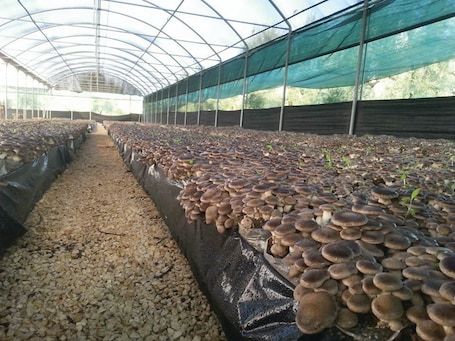
The global market is showing growing interest in mycoproteins, which are used as an ingredient in alternatives to meat and dairy products, as well as in snacks and other processed foods. Derived from the biomass of specific filamentous fungi, generally cultivated in fermenters , they are attracting industry and investors thanks to their nutritional profile and a potentially lower environmental impact than that of some animal-based proteins.
The global mycoprotein market in 2025, according to the report Mycoprotein market (2026–2033) by Future Market Report, reached approximately $1.09 billion and, with an estimated compound annual growth rate of 11.27 per cent, could reach $2.55 billion by 2033. This is a rapidly expanding sector, in which, however, Italia risks falling behind.
Romeo Fuser, a member of the executive committee of the Italian Mushroom Growers’ Association and vice-president of Gepc (European Mushroom Producers’ Group), explains: ‘Europe now regards the diversification of protein sources as a strategic priority for environmental, economic and food security reasons; in this context, mushrooms and mycoproteins represent one of the most promising technologies. Italia’s mushroom sector is heavily focused on fresh produce and pays little attention to the industrial fermentation required to produce mycoproteins. The main obstacles are the very high initial investment costs, the need for dedicated biotechnology facilities and any regulatory approval processes relating to novel foods. There are as yet no Italian operators comparable to the major international producers, but interest from the research community and certain start-ups is growing’.
According to the Italian Mushroom Growers’ Association, the Italian mushroom market has remained broadly stable over the last five years: production volumes range between 60,000 and 70,000 tonnes. The button mushroom accounts for around 80 per cent of the volume, whilst the remaining 20 per cent comprises other varieties, including oyster mushrooms, pioppino, cardoncello, shiitake and cornucopiae. Based on the quantities indicated by the association and an average cost of between 2.80 and 3.50 euros per kilo, the total value of the sector can be estimated at around 200 million euros per year.
However, interest in certain high-value-added species, such as shiitake, oyster mushrooms and cardoncello, has increased: it is precisely these varieties that consumers appreciate for preparing recipes free from animal-derived ingredients. ‘Pleurotus ostreatus (oyster mushroom)’, says Fuser, ‘has long fibres and a stringy texture, ideal for “pulled mushroom”, burgers and shredded dishes . Pleurotus eryngii (cardoncello or king oyster mushroom) has a very compact structure and is also used as a substitute for scallops and white meat. Lentinula edodes (shiitake) is rich in umami and can enhance the flavour and juiciness of dishes plant-based recipes. Pleurotus ostreatus and Pleurotus eryngii are showing steady growth, driven by the catering sector, specialist retailers and interest in the reducetarian diet. However, production volumes remain much lower than those of button mushrooms, which still account for by far the largest share of Italian production’.

