
So gamma rays help to better preserve grain
According to Enea tests, it is 'a safe, effective and sustainable technique to ensure microbiological safety, preserve nutritional characteristics and extend the shelf life of wheat'

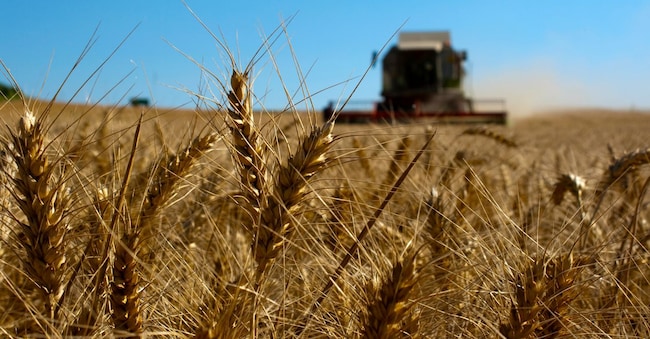
Gamma rays to improve wheat safety and storage. The experiment, initiated under the banner of sustainability, was carried out "and successfully tested" by researchers at ENEA "as a safe, effective and sustainable technique to ensure microbiological safety, preserve the nutritional characteristics and extend the shelf life of wheat".
The tests (the results were published in theopen access scientific journal Polysaccharides) were carried out in the Nuclear Department's Calliope irradiation facility at the Enea Casaccia Research Centre (Rome), on four types of wheat from Italia: one durum wheat and three soft wheat from conventional, organic and integrated agriculture.
"After exposing the milled wheat to a dose of gamma radiation sufficient to eliminate pathogenic microorganisms, fungi and moulds,' explains Alessia Cemmi, head of ENEA's Gamma Irradiation Facility Laboratory, 'we have proven that the treatment does not cause visible changes in the appearance or colour of the samples and, above all, does not compromise the chemical-physical properties or molecular structure of the starch present in the wheat.
Treatment with gamma rays, generated by the Cobalt-60 source at the Calliope facility, 'ensures the absence of modifications that can induce radioactivity in foodstuffs and allows foodstuffs to be preserved longer, delaying the ripening and spoilage processes'.
The methodology used, as emphasised by the researchers (Rocco Carcione, Beatrice D'Orsi, Ilaria Di Sarcina, Emiliana Mansi and Jessica Scifo are also participating along with the head of the laboratory) allows large quantities of goods to be processed in a single batch without generating waste or polluting waste and, unlike conventional methods, does not require high energy consumption or involve a rise in temperature.
A first step that also paves the way for other uses such as the extension of the application to polysaccharide products like maize. "In this context," adds the project leader, "we are participating in a project financed by Coldiretti Toscana focused on the eradication of this type of biodeterogens through greener and more sustainable approaches compared to traditional methods that include, for example, the use of pesticides. This technique, which is not yet widespread in Italy, is supported by international organisations to ensure the food safety of over 50 food categories, thanks to its effectiveness in eliminating bacteria, including pathogenic ones such as Escherichia coli, Salmonella and Listeria, as well as pests and fungal communities in meat, fresh fish, spices, perishable products and frozen food. Hindering its use are the high costs and, as the researcher points out, the fact that 'each foodstuff has an applicable limit dose that depends on its matrix

