

The rise of the middle powers takes us back to the politics of blocs
Today’s wars involve overlapping complex agendas and encompass regional players who are becoming decisive on the global stage. Take the case of the UAE, Saudi Arabia and Egypt. Such ‘plurilateralism’ does not necessarily lead to chaos. It can be useful to the EU for alliances that, whilst unconventional, are pragmatic.
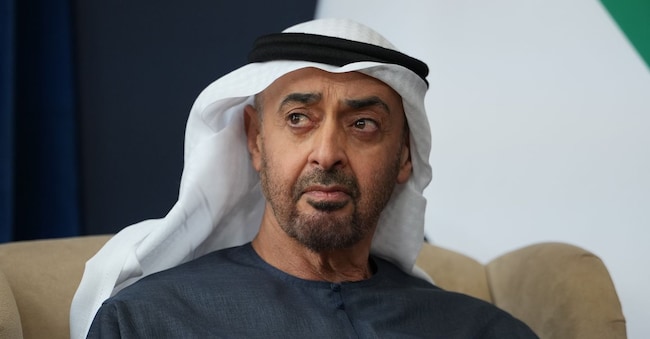
Contemporary wars risk becoming endless – that is to say, they are very easy to start but almost impossible to end. This is demonstrated by the conflict in Ukraine, where the front line has essentially stalled, and the war in the Middle East and the Persian Gulf, where Iran – lacking adequate conventional military capabilities – has choked the global economy by closing the Strait of Hormuz and forced the United States into a compromise that is as temporary as it is fragile. But these wars, and those we are in all likelihood to face in the near future, should no longer be viewed through the lens of a two-sided conflict. Around any crisis, the interests and actors involved are increasingly numerous, and their influence is growing. Take the Persian Gulf, for instance. The most active mediators in the agreement were, in various capacities, Pakistan and Qatar. Israel’s main adversary today – and for the foreseeable future – is Turkey. The United Arab Emirates has taken on a prominent, active military role in this crisis. Oman will be the linchpin of the transitional management of the Strait of Hormuz, acting as a sort of ‘local policeman’ overseeing the flow of goods. Meanwhile, Mohammed Bin Salman’s Saudi Arabia is already working on a new strategic axis – complementary to but independent of Washington’s defence umbrella – alongside Turkey and Pakistan, and based on a very clear equation: Ankara has one of the largest and most modern armies and is a key member of NATO; Islamabad possesses the atomic bomb; and Riyadh has vast capital reserves to support any project.
The rise of the new players
It is the resurgence of the ‘middle powers’, the realisation of what Fareed Zakaria referred to a few years ago as the ‘rise of the rest’, alongside the old and new global superpowers. The rise of countries such as those mentioned, but also Egypt, Brazil, Kenya and India – all invited by President Macron to the G7 summit in Evian – paints an international picture akin to a quagmire: an inhospitable place, yet one in which no single power truly holds overwhelming dominance. This certainly applies to the relationship between the United States and China, which will obviously be the main paradigm of geopolitical developments in the near future, but it applies even more so to the role of strategic counterweight that the middle powers will play.
The unknown future
The Mediterranean is now a central sea, in need of more effective models of development, cooperation and governance than in the past. To date, however, all plausible forms of multilateralism have proved ineffective and overly ideological. The rise of the BRICS – an acronym coined by the CEO of Goldman Sachs way back in 2001 – has, from a geopolitical perspective, proved to be little more than a slogan. The same applies to the more recent ‘Global South’ – the axis linking the markets of the Global South, whose numerical weight (particularly in economic and demographic terms) is undoubtedly substantial, but whose strategic cohesion is too weak due to divergent interests and values. The Middle East is riven by historical tensions and almost anthropological divisions. States’ political agendas shift opportunistically as conditions change. We saw yet another example of this during the very weeks of the conflict with Iran. Saudi Arabia, Iran’s arch-enemy, has stood by, watching vigilantly and hoping for the definitive overthrow of the Ayatollahs’ regime. Qatar has strengthened its role as a diplomatic champion in the region, caught between the need for peace and the presence of the most important US naval base in the Gulf. Peaceful Oman has a sizeable Shia minority on its territory, which it must control and pacify. The United Arab Emirates have put their formidable military apparatus to the test with the aim of bringing the conflict to a swift conclusion and returning to being the ‘happy island’ of finance and business. Erdogan’s Turkey has taken up the anti-Israeli (rather than pro-Palestinian) banner and turned it into a full-fledged political strategy, now extending its protective umbrella disproportionately across a vast area stretching from Libya to northern Iraq.
Tensions and dialogue
Under these circumstances, middle powers are more likely to come into conflict than to form alliances. And yet they represent a new and significant factor for the near future – one that should be of great interest to us Europeans and to us Italians. An advanced dialogue is already underway with each of these countries, though it is still based too heavily on major economic and commercial interests and too little on a vision of geopolitical governance. Whilst Europe’s fate is currently being played out on the eastern front – in Ukraine – it will, however, be decided in the near future in the south, in the Mediterranean. It is in our interest not only to strengthen bilateral ties but also to foster a broader sense of trust, which will at least enable us to establish a minimum framework of security in the region.
In a world that is being reorganised into spheres of influence, and in which the ‘multilateralism’ of principles must be abandoned without any nostalgia, we urgently need to find new approaches. One such approach, which we might call ‘plurilateralism’, would allow us to forge alliances that, whilst not traditional, are no less pragmatic, centred on specific issues of common interest. From climate to demographics, from energy to agriculture, the task facing us Europeans and Italians is to rewrite a few, but essential, rules of the game. The rise of middle powers does not necessarily create more chaos but lays the foundations for a revival of bloc politics, which, in a world where the major powers clash using artificial intelligence, drones and old trenches, may represent the hope for the survival of that old adage: ‘where goods pass, armies do not’.

