
La Russa: 'Fast track for the legal profession'
The President of the Senate at the Congress of Young Lawyers. From Aiga 11 reasons to say yes to the separation of careers

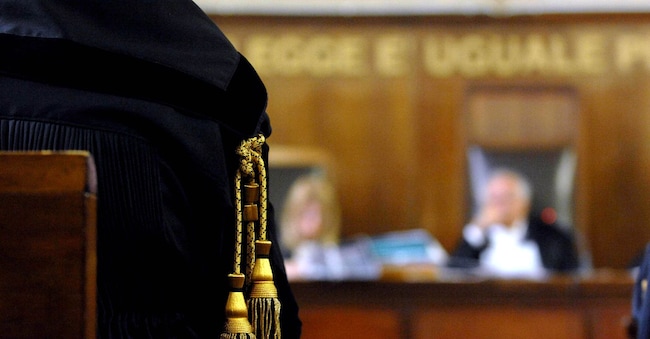
The draft law for the reform of the legal profession approved in September by the Council of Ministers, and now being examined by Parliament, "will certainly" reach the conclusion of the process by the end of the legislature. This was assured by Senate President Ignazio La Russa speaking on Friday 14 November at the 28th Congress of Young Lawyers of the Aiga, explaining that the "de facto monocameralism" will allow the Ddl to pass quickly through the Senate once it has been dismissed by the Chamber.
Career separation
Young lawyers meanwhile support the reform of the judiciary with eleven argued "yes" votes. On the day on which he closes the two-year - non-renewable - presidency of the Aiga, Carlo Foglieni from the stage of his Bergamo shared with the governor of Lombardy Attilio Fontana and the president of the commission of enquiry on waste trafficking Jacopo Morrone, does not shirk from the ritual question that will be the mantra of the coming months. "Our reasons, however, are of a technical nature and geared to the smooth running of the justice machine," says Foglieni. "We are the first to want and demand an authoritative and independent judiciary, characteristics not put at risk by this reform.
Of an opposite opinion, a few hours earlier and from the same stage, had been Cesare Parodi, president of the ANM, which had already been set up as the referendum 'no' committee. "The absolute need for the public prosecutor to interpret his role according to the rules of due process must be pursued not with the separation of careers but by correctly applying the Cartabia reform that has been in force for two years. The Nordio reform in my opinion is not functional: the principles are abstract, whereas we have to deal with criminal law in concrete terms'.
In this climate, however, Attilio Fontana emphasised, 'avoiding confrontations with the judiciary is difficult in view of the Anm's very harsh initiatives. I hope that dialogue will become civilised again and that we will talk seriously. We must divest ourselves of belonging to one party or another because this is only the beginning of a dutiful reform: in all countries where the accusatory rite is in force - in ours since 1989 - there is the separation of careers. Nothing will happen, in fact it will go better than before'.
For Patrizia Corona, vice-president of the National Forensic Council, 'the statistics on the outcome of the judgments show a significant number of absolutions at trial and this data raises serious questions about the proper functioning of the system. On the other hand, there is a lack of structured data on the relations between the prosecutor and the judge for preliminary investigations, precisely in the most delicate phase, that of the searchof the evidence: think, for example, of the requests for authorisation of telephone tapping, of which we do not know how many are rejected with respect to the requests".


