review

Samsung Galaxy Z Fold8 Ultra: the maturity of foldable phones comes at a very steep price

A week with the €2,299 foldable. Here’s how it went.

7' min read

Translated by AI
Versione italiana

7' min read

Translated by AI
Versione italiana

A week with the Samsung Galaxy Z Fold8 Ultra. Long enough to almost immediately forget that I was holding a foldable phone. And enough to remind me, every time I set it down on a table, just how much it costs: €2,299 for the entry-level model with 12 GB of RAM and 256 GB of storage. Yes, it’s expensive. In fact, it’s very expensive. To put that into perspective, for the same amount you could buy a decent laptop, a top-of-the-range smartphone and still have a few hundred euros left over for a short holiday. Samsung, on the other hand, offers a single device that tries to be a phone, a tablet, a diary, a camera and a small, pocket-sized office all in one.

The result is probably the most sophisticated foldable the Korean company has ever produced. But in this case, that sophistication comes at a price.
Loading...

What makes the Galaxy Z Fold 8 Ultra different?

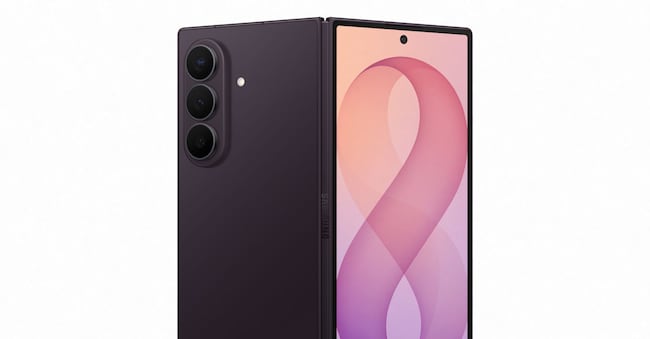
Samsung has reshaped its product range. The Galaxy Z Fold8 has become the most compact and widest model, whilst the Fold8 Ultra is the direct successor to the Fold7. The word ‘Ultra’ serves to clarify two things: this is the model with the best specifications, and it is also the one designed to drain your bank account most efficiently. The first difference compared to the older Fold models is noticeable even before you switch on the screen. The Fold8 Ultra is 4.1 millimetres thick when open, weighs 215 grams and features an 8-inch internal display. It is almost as slim as a traditional smartphone and weighs less than some non-foldable camera-focused phones. Samsung also specifies a 6.5-inch external screen.

The figures tell only half the story. The other half is felt through your fingers.

The edges are more rounded than on the Fold7. There’s more room to slip your thumb in to open the device. These are small details, but with foldable phones, the mechanical details matter just as much as the processor. An awkward hinge is used fifty times a day. After a week, it becomes an ergonomic burden.
It feels different here. The phone opens more smoothly and, once closed, no longer feels like a bulky remote control.

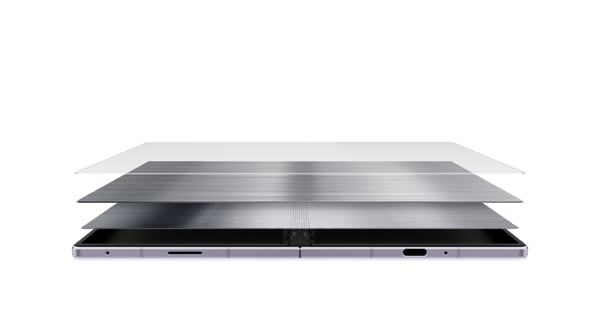
Samsung has focused primarily on the central crease. The new Flex Titanium structure stiffens the panel and reduces the indentation running across the screen. The crease remains. The physical design hasn’t been updated via software. However, it is less visible from the front and less noticeable when running a finger across the display. According to Samsung and initial international tests, the system uses a film and a titanium plate to increase the rigidity of the structure.

This is a significant improvement because it eliminates some of the ‘prototype’ feel that has characterised this category for years. The first Fold models looked like devices from the future, complete with a ‘handle with care’ label. This one looks like it’s from the present.

The screen is the real reason to buy it

When unfolded, the Fold8 Ultra features an 8-inch screen with a claimed peak brightness of 3,000 nits – 15 per cent higher than the Fold7. Samsung has also added an anti-glare coating to the main display.

Peak brightness is a figure that should be treated with caution. It does not mean that the entire screen always shines as brightly as a stadium floodlight. It indicates the maximum brightness achievable under specific conditions, often on small sections of the panel. In everyday use, readability is what matters most. And this is where the improvement is evident.

Loading...

Outdoors, text, maps and photographs remain legible. Glare is also less of a problem. An open leaflet has a large surface area, so it catches the light like a window. Reducing glare means you can actually use it on the train, in a café or at the airport without having to hunt for a dark corner like a digital vampire.

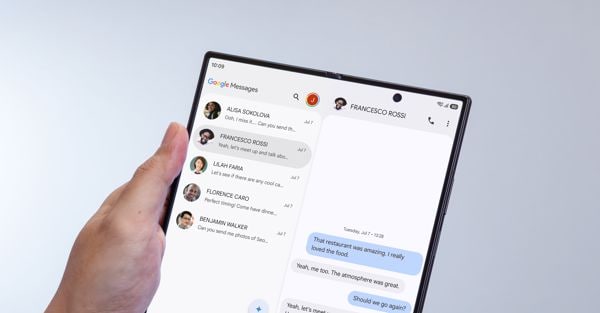
It is, above all, the screen space that changes the way we work. Two apps side by side do not look like thumbnails. A third window can be added without turning the screen into a Byzantine mosaic. You can read a document whilst taking notes, drag an image into a presentation, or compare an email with your calendar.

Here, Samsung retains a lead built up over years of trial and error. The foldable hardware is spectacular, but it is the software that determines whether that screen becomes a tool or a very small television.

Artificial intelligence finally finds a desk

The Fold8 Ultra uses the Snapdragon 8 Elite Gen 5 for Galaxy. Samsung emphasises the performance of the CPU, GPU and, above all, the NPU – the part of the chip dedicated to artificial intelligence calculations. There’s certainly no shortage of power. Apps open quickly, multitasking is smooth, and thermal management seems more controlled than on older foldable models. But the interesting point isn’t winning a benchmark race. It’s understanding what to do with all these transistors.

The Now Nudge and Now Brief features aim to turn your phone into an assistant that analyses the context and suggests the next step. Received a message with an appointment? The system suggests opening the calendar alongside the conversation. Are you gathering notes, documents and transcripts? Gemini-powered tools can help you organise the material, extract information and create a summary.

The idea behind an AI agent is this: the software doesn’t just wait for a command, but tries to understand the objective and link together a series of actions. It’s the difference between a waiter who simply brings the dish you’ve ordered and one who realises a fork is missing.

In practice, we’re still at an intermediate stage. Some suggestions save time. Others seem like over-zealous interns: they step in even when it’s not needed. However, the large screen makes these features more credible. On a traditional display, artificial intelligence mainly generates text. On the Fold, it can organise windows, move content and display sources and results simultaneously.

It is one of the few cases in which the abbreviation ‘IA’ does not appear to have been applied to the packaging as a sticker.

Loading...

The battery is finally getting a boost

For years, battery life has been the Achilles’ heel of foldable phones. Two screens, limited internal space and a design split into two halves are not the ideal combination for a high-capacity battery.

The Fold8 Ultra features a 5,000 mAh silicon-carbon battery, compared with the Fold7’s 4,400 mAh battery. Samsung claims up to 27 hours of video playback, three hours more than its predecessor. Wired charging has also been increased to 45 watts, whilst wireless charging has been increased to 20 watts.

Silicon-carbon allows more energy to be stored in the same volume than in traditional cells with an anode made predominantly of graphite. Imagine a car park where, without expanding the site, you can fit more cars. This advantage is particularly useful in foldable devices, where every millimetre of internal space is contested by hinges, cameras and circuits.

In everyday use, this improvement translates into greater peace of mind. The device can last until the evening even when switching between the external screen and the internal display, without needing to be plugged in during the afternoon. Of course, watching videos, browsing the web, playing games and intensive use of AI can drain the battery more quickly.

Camera: good, but the Ultra falls short

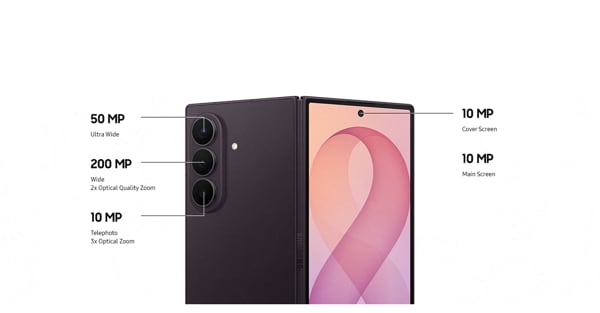
The camera system combines a 200-megapixel main sensor, a new 50-megapixel ultra-wide-angle lens and a 10-megapixel telephoto lens with 3x optical zoom. The ultra-wide-angle lens represents the most noticeable improvement on the Fold7’s 12-megapixel lens.

The problem is the telephoto lens. Ten megapixels and a 3x optical zoom are decent specifications for a premium smartphone. On a model called ‘Ultra’ and retailing for over two thousand euros, however, they seem to have come from the wrong meeting.

The compromise is probably down to space. Every new component means three others have to be moved. The technical explanation makes sense. The bill, however, still comes to 2,299 euros.

The real limitation is the 12 GB of RAM

Looking at the Fold range, the base model comes with 12 GB of RAM and 256 GB of storage. The 512 GB model also has 12 GB. Only the 1 TB version, priced at €2,899, has 16 GB.

Twelve gigabytes are more than enough for almost all current tasks. The key issue concerns the product’s lifespan and the development of local AI.

Language models running directly on the device take up memory. The more complex they become, the more space they require for parameters, context and open applications. RAM is like a kitchen worktop: twelve gigabytes are already enough to prepare an elaborate dinner, but Samsung is also selling the restaurant itself.

On a machine designed for multitasking and intelligent agents, 16 GB as standard would have been in keeping with the ‘Ultra’ name and the price. Especially as the memory cannot be upgraded after purchase.

So...

The Galaxy Z Fold8 Ultra marks a new level of engineering maturity for Samsung’s foldable phones. It reduces the crease, improves the opening mechanism, increases battery life, speeds up charging and remains reasonably lightweight. The screen is bright, multitasking is its strongest selling point, and the AI features are starting to really make the most of the form factor.

There are three drawbacks: the telephoto lens is rather basic, the 12 GB of RAM in the entry-level version is hardly ‘Ultra’, and the charger is not included in the box.

Then there’s the price. €2,299 isn’t just a technical specification; it’s a key feature of the product – perhaps the most obvious one. The Fold8 Ultra is a small computer that fits in your pocket, but it costs as much as a nearly complete digital office.

A week on, closing it again is still a surprise. As is the price.

Copyright reserved ©
  • Luca Tremolada

    Luca TremoladaGiornalista

    Luogo: Milano via Monte Rosa 91

    Lingue parlate: Inglese, Francese

    Argomenti: Tecnologia, scienza, finanza, startup, dati

    Premi: Premio Gabriele Lanfredini sull’informazione; Premio giornalistico State Street, categoria "Innovation"; DStars 2019, categoria journalism

Loading...

Brand connect

Loading...

Newsletter

Notizie e approfondimenti sugli avvenimenti politici, economici e finanziari.

Iscriviti