

The Saudi PIF fund reaches 900 billion in assets under management
The sovereign wealth fund, led by Yasir Al-Rumayyan, ended 2025 with revenue up 9 per cent to 120 billion and a net profit of 17. The value of its assets stood at 530 billion in 2021 and at just 150 in 2015
by 24Ore NextMed
 Aggiungi Il Sole 24 Ore
ai preferiti su Google
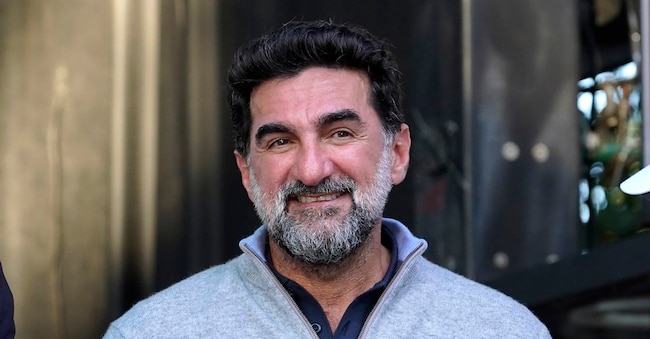
The Public Investment Fund (PIF) of Saudi Arabia closed 2025 with strong growth, confirming its role as one of the key drivers of the Kingdom’s economic transformation. According to the financial statements, revenue rose by 9 per cent to 120 billion dollars, whilst net profit more than doubled, reaching 17 billion. This surge reflects the greater maturity of the fund’s portfolio and the growing contribution from companies and projects developed in recent years. On a negative note, the return to shareholders was 5.8 per cent, compared with 7.2 per cent in 2024, although this is in line with the annualised average since 2017. The most impressive figure, however, remains that relating to the fund’s overall size. Assets under management by PIF have now exceeded 900 billion dollars, compared with around 530 billion in 2021 and just 150 billion in 2015. Over the course of a decade, the fund’s assets have therefore increased approximately sixfold, thanks to expansion across both the Saudi and international markets.
On the domestic front, the fund has strengthened its role as a driving force behind Saudi Arabia’s economic diversification. Since 2021, cumulative investment in the country’s priority sectors has reached 199 billion dollars. Tourism, entertainment, technology, artificial intelligence, mobility, industry and infrastructure are at the heart of this strategy. According to the fund led by Yasir Al-Rumayyan, these activities contributed over 342 billion dollars to Saudi Arabia’s real non-oil GDP between 2021 and 2025. Among the most significant moves of the past year, the acceleration of artificial intelligence stands out. PIF has launched HUMAIN, a wholly-owned subsidiary that will operate across the entire AI value chain, from data centres to the cloud, right through to advanced models and applications. At the same time, PIF and Aramco have finalised the terms for the energy group’s entry as a significant minority shareholder. The objective is clear: to build domestic digital infrastructure and position Saudi Arabia as a leading player in the global AI economy.
As for flagship projects, the NEOM Green Hydrogen Project is now more than 90 per cent complete, marking a decisive step forward in one of the Kingdom’s most ambitious energy initiatives. In Qiddiya City, Six Flags Qiddiya City has opened, marking the first Six Flags park outside North America. Red Sea Global has continued to expand its tourism portfolio with developments on Shura Island. Overall, these developments show that part of the portfolio is moving from the design and construction phase to the operational and revenue-generating phase. According to the official financial statements, the PIF has also continued to diversify its sources of funding. In 2025, it placed its first euro-denominated green bond, raising €1.65 billion with demand exceeding supply by more than six times. It also launched its first commercial paper programme, adding a short-term funding instrument to a financial structure that already includes bonds, sukuk and loans. Finally, the report marks the conclusion of the 2021–2025 strategy and the start of the new 2026–2030 cycle. After ten years of rapid expansion, the challenge for the PIF will no longer be merely to grow, but to transform the enormous volume of accumulated investments into sustainable returns, greater private-sector participation and a structural contribution to the Saudi non-oil economy.

