What changes

The Security Decree from A to Z: all the measures in the new law

From the crackdown on edged weapons to measures to combat juvenile violence and the protection of urban safety: here are all the novelties

by Camilla Curcio

(ANSA) ANSA

8' min read

Translated by AI
Versione italiana

8' min read

Translated by AI
Versione italiana

Strong crackdown on the use of knives and cutting weapons and measures to combat youth violence. But also urban Daspo and strengthened protections for teachers and railway transport employees. These are just some of the measures contained in the Security Decree (Decree 23/2026), now to all intents and purposes law (54/2026) with the publication of the conversion text in the Official Gazette last 24 April. A set of rules that has caused (and continues to cause) debate, even after the disappearance of the article - the 30bis - that provided for a remuneration for the lawyers of foreigners who facilitated their repatriation by joining specific programmes. But let us try to rewind the tape and understand in detail the novelties introduced by the 33 articles.

Dai coltelli ai parcheggiatori abusivi, cosa prevede il decreto Sicurezza

Cutting Weapons Regulation

Within the framework of the prevention of violence against the younger generations, Article 1 tightens the penalties for those who, without any plausible reason (e.g. work or sporting needs), take out of the house knives of more than eight centimetres or tools with folding blades of five centimetres or more (for the possession of blades of less than five centimetres, no justification is needed). Therefore, the crime of "unjustified carrying of weapons" is introduced for all intents and purposes and the risk is that of serving six months to three years in prison, with the application of an aggravating circumstance if the carrying of prohibited weapons takes place near schools, banks, parks, railway and metro stations, or in contexts where competitions or public meetings are held.

Loading...

In the event that minors commit the offence, the administrative fine - ranging from a minimum of 200 to a maximum of 1,000 euros - falls on the parents or those exercising parental responsibility. And, with regard to minors, a second prohibition has been put in place: that of selling or transferring knives and, in general, bladed weapons to persons under 18 years of age. For the holder, the transgression implies, also in this case, an administrative fine but higher because it ranges between a minimum of 500 and a maximum of 3,000 euros (for the shop that, instead, sold it to him, a closure order of a maximum of 15 days may also be ordered).

If the unlawful holder of blades or the perpetrator of offences such as altering weapons and manufacturing explosives is of foreign origin, the conviction - even if not final - for these offences becomes to all intents and purposes an obstacle to his entry into Italy. The direct reference is to Article 4 of the Consolidated Text of Provisions on the Discipline of Immigration, which mentions among the requirements for entry the fact that the foreigner is not considered 'a threat to public order or the security of the State'.

Youth Violence Prevention

At the heart of Article 2 is the extension of the Quaestor's warning to minors as well. Specifically, the measure - introduced by the Caivano decree and provided for until a complaint is filed against persons over the age of 14 - entails an administrative sanction against the parent or those exercising parental authority. But that's not all: the second type of warning is also confirmed, concerning boys and girls between 12 and 14 years of age who commit offences otherwise punishable by no less than five years' imprisonment (including brawling, trespassing, aggravated theft, mistreatment or killing of animals).

Extension of confiscation

With Article 3, however, the decree extends confiscation to both aggravated robbery and the new group robbery. Not only that: it extends the aggravating circumstance of receiving stolen goods and includes in the scope of burglary also the theft by stealth of means of payment (also electronic), identity documents, computer and telematic instruments, and telephones.

Urban security

Article 4 focuses on the implementation of instruments to protect urban security, applying removal orders and "Urban Daspo" also to the new 'enhanced surveillance' zones established by the prefect. Who, exercising the powers vested in him, may remove from these areas individuals who are distinguished by violent, harassing or threatening behaviour; who have been reported in the last five years for non-culpable offences against persons or property, crimes aggravated by hatred or racial discrimination and drug offences. The removal order is, as usual, ordered by the police and is valid for up to 48 hours after the facts have been established. As for the zones, the identification is valid for six months and can be renewed, even several times, up to 18 months.

But the biggest novelty is, without a doubt, the possibility of delayed flagrante delicto arrest for the crime of aggravated assault committed in the course of demonstrations.

The last point on the checklist: the tightening of sanctions against unlawful parkers - from 769 euro to 3,095, doubling if repeat offenders - and imprisonment of up to one year and six months in the most serious cases.

Against passing off

Article 5 contains several measures aimed at combating narcotics trafficking. Thus, the compulsory confiscation of motor vehicles and movable property used for the crimes of production, trafficking and illegal possession of drugs is introduced.

Video surveillance installation

The theme of urban security returns central in Article 6, which provides for the allocation of an endowment of 19 million - also for 2026 - for the installation of video-surveillance systems by municipalities for the prevention of 'widespread and predatory crime'; an increase of29 million in the Urban Security Fund and incentives for hiring (fixed-term) local police personnel and for paying them compensation for overtime work.

Manifestazioni

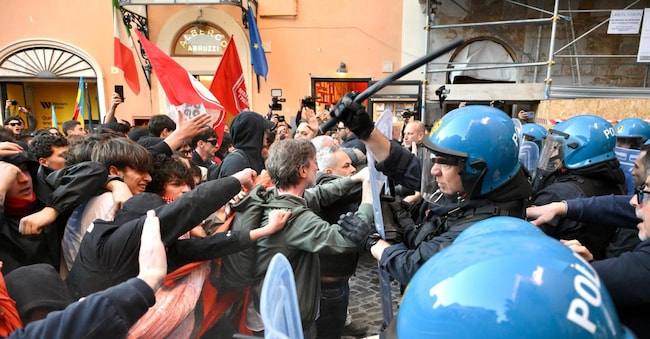
At the heart of Articles 7 and 9 is perhaps the most debated topic: demonstrations. Besides the arrest in flagrante delicto introduced by Article 4, the text legitimises a range of measures: article 7 extends the powers of search of the police at demonstrations in a public place or open to the public; it introduces a form of coercive escort to police offices - a preventive detention for a maximum of 12 hours - if there is a well-founded reason (e.g. possession of weapons or a criminal record with respect to actions committed in the last five years during public demonstrations) that suggests that the subjects may pose a real danger to the conduct of the demonstration. If the subjects are minors, their parents must of course be alerted immediately.

In Article 9, on the other hand, the penalty system for violations during public demonstrations is reformed. In particular, for those who organise them without warning, no more arrests but fines between 1,000 and 10,000 euro. Those, on the other hand, who create havoc in processions by covering their faces, start from a basic penalty of 2 thousand euro. It goes up to 20 thousand euro, finally, in the case of 'disobedience to the order to disband', i.e. refusal to break up the meeting or assembly.

Road safety

On the subject of road safety, Article 8 punishes dangerous fleeing from roadside checks with imprisonment from six months to five years and also extends deferred flagrante delicto arrest to this conduct.

Protection of school and railway staff

Article 11, innovating both the Criminal Code and the Code of Criminal Procedure, makes a number of changes to the subject of personal injuries. It extendsthe ex officio prosecution for injuries to public transport personnel also to violent conduct against teachers, co-workers and school managers, providing that in these cases arrest in flagrante delicto may also be made. The basis is a prison sentence of 2 to 5 years, 4 to 10 years in the case of serious injuries, and 8 to 16 years in the case of very serious injuries.

Preliminary note

Articles 12 and 13 intervene in the field of recording of criminal offences. Article 12, in particular, introduces the preliminary judicial record in a special register (established by Article 13) for offences committed 'in the presence of a clear cause of justification', as in the case of officers on duty. A measure previously extended only to the forces of law and order, now to all citizens acting in self-defence or necessity, which requires the Public Prosecutor to speed up the investigation and decide on the filing within no more than 30 days.

Police Forces and Competitions

The Security Decree (Articles 18 to 24) also intervenes on the structure of the police force. The competition for 2400 senior inspectors of the State Police is brought forward from 2028 to 2027 and is no longer a selection by titles and examinations but only by titles. Until the end of December 2027, the tests are limited to university graduates only.

Article 18 also provides for an endowment ofmore than 4 million for each of the years 2028 to 2034 and structurally from 2036 for the remuneration of overtime of State Police personnel.

With regard to terms of office, that of deputy commander of the Carabinieri is for two years, that of commander of the Guardia di finanza is extended until 31 December 2026.

Again with regard to the Guardia di Finanza, the decree allows public competitions until 31 December 2027 and for the recruitment of personnel with the rank of marshal in the IT and technological innovation, technical-logistics, aviation, naval and health sectors.

For access to the role of inspectors of the Prison Police, Article 24 also authorises public competitions until 31 December 2027.

More resources for the Fund for the valorisation of property confiscated from the mafia

Article 26 provides for an increase of 2 million for the Fund for the development of property confiscated from the mafia.

Assumptions for victims of terrorism

Article 27 of the decree states that public administrations shall establish a recruitment programme for victims - if they have a disability of 80% or more - of terrorism and terrorist massacres, of duty (law enforcement employees who have fallen at work or been disabled in the course of duty), organised crime, and Covid-19 infection (in the case of health, social and health care personnel or pharmacists). A provision that, if the persons are deceased, extends to the surviving family members.

Not only: Article 27-bis recognises - for victims of duty and their relatives - the right to take time off work for a maximum of 18 hours per year to participate in public initiatives to spread the culture of legality and the memory of the victims of organised crime, terrorism and duty.

Migranti

Another sensitive issue at the centre of political and public debate is immigration. On this front, the Security Decree activates several measures: the obligation for foreign detainees and internees to cooperate in order to ascertain their identity, an element that may impact both on early release and on the judgement of social dangerousness, which is a necessary prerequisite for the expulsion of a foreigner convicted of crimes that provide for mandatory or optional arrest in flagrante delicto (Article 28).

Article 29, on the other hand, provides that it is the border police office (or the Quaestor when he is assigned the task) that is responsible fortransfer to the Member State of arrival of persons found in internal EU border areas and without the right to stay. That's not all: in case of violation of the second expulsion order, the article provides that another one is not adopted but, except for the occurrence of different personal situations, one proceeds directly to detention at a Cpr or, when possible, to administrative expulsion.

Another big change, again in Article 29: access to free legal aid for the appeals of non-EU foreigners against deportation orders is no longer released from ordinary income limits.

Finally, in Article 30, there is an authorisation for the Ministry of the Interior to derogate from the regulations - until 31 December 2028 - concerning the building and restructuring of the CPRs.

Copyright reserved ©
Loading...

Brand connect

Loading...

Newsletter

Notizie e approfondimenti sugli avvenimenti politici, economici e finanziari.

Iscriviti