Kitchen

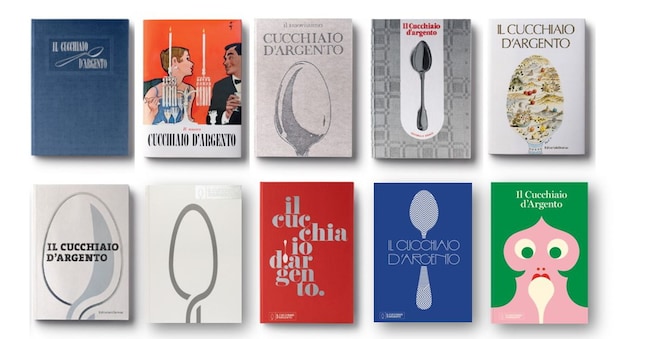
The Silver Spoon turns 75 and celebrates 2,000 recipes and over 3 million copies

On 23 September, the twelfth edition with a cover designed by artist Olimpia Zagnoli continues to follow the evolution of contemporary cuisine
by Maria Teresa Manuelli

4' min read

4' min read

Seventy-five years, twelve editions, 2,000 recipes, over 250 photographs and well over 3 million copies. But above all: three generations of Italians conquered and 16 translations all over the world. These are the numbers of Il Cucchiaio d'Argento, the recipe book par excellence that since 1950 has accompanied the transformations of Italian cuisine at home, photographing not only the changes in taste but the very evolution of Italian society.

From the post-war period to today: the revolution of the Italian table

"The whole rhythm of our life has become tighter, the service considerably reduced, people no longer want to waste much time either in the kitchen or at the table". These words of Gianni Mazzocchi, a pioneer of Italian publishing and founder of Editoriale Domus, date back to the post-World War II period, when he sensed that new lifestyles were changing table habits. Yet they sound incredibly relevant today.

Loading...

From that intuition, Il Cucchiaio d'Argento (The Silver Spoon) was born, with the aim of collecting 'practical and sometimes even refined recipes, but always presented in the simplest way'. Success was immediate: 500,000 copies sold in a few months and a second edition printed by the end of the same year.

Browsing through the various editions is to take a real journey through time in Italian home cooking, where meals and portions have changed, condiments lightened, cooking techniques refined and the range of ingredients expanded to embrace flavours and cultures from around the world.

Woman at the centre of the domestic revolution

.

The most significant change concerns the target audience. "At one time, the cookery book was by nature aimed only at women, complete with household servants, today it is absolutely a world in which everyone plays a part without distinction of gender or role," explains the twelfth edition. A transformation also testified to by a curious document from 1959, which read: 'The woman of the house who provides for the purchases for the whole family controls both its absoluteness and its economic resources' and had to make 'every lira spent on food as much as possible', often renouncing expenses for herself 'for other purposes aimed at the comfort and happiness of the family'.

"This is a book that today is no longer aimed only at housewives, not only at families, but we know that there are also a lot of men who now cook, they are passionate about it," confirms Tatjana Pauli, editorial director of Il Cucchiaio d'Argento. "They are also perhaps the ones who are a bit more technical, more sophisticated, because they cook perhaps a bit less than women, and when they try their hand they want to do things that are a bit challenging".

From contours to protagonists: the vegetable revolution

Browsing through the many editions, one of the most noticeable transformations over the years concerns the role of vegetables, which have gone from being mere 'side dishes' to protagonists of the menu. For the first time in the book's history, the twelfth edition devotes an entire chapter to 'Veg Dishes', reflecting the cultural change of those who prefer to reduce their consumption of animal protein.

"It is clear that Il Cucchiaio already has plenty of vegetarian recipes, spaghetti with tomato sauce, pasta with beans, ribollita,' explains Pauli, 'but here we have collected the kind of preparation that many omnivores have now also introduced into their diet, using not only vegetables, but all those ingredients such as tofu, tempeh, seitan and then seaweed, soya and miso condiments, which make the vegetarian dish more contemporary, tasty and complete.

The New Way of Dining

.

The rhythm of meals has also changed. "It used to be that there was this rigidity of sitting at the table and having from starter to dessert the four courses, then by the way all very generous," says the editorial director. "Today you often bring a lot of small portions to the table when you have guests, some finger food, some savoury pie, some pizzas, some sauces, and then there is one main course. It's really changed the way we also sit at the table together'.

Cooking time has also changed: from the lengthy preparations of the past, there has been a shift to quicker recipes, with tips on how to prepare beforehand and store, responding to the reduction in time available.

A benchmark in the digital age

.

Despite the advent of social media and culinary influencers, The Silver Spoon maintains its role as an authoritative reference. 'Compared to all the incredible real-time information we receive from the web, it is still experienced as a value,' Pauli emphasises. 'Basically, the spoon gives you the reliability that first-time cooks are looking for, but even for enthusiasts it is still a faithful ally, which edition after edition also takes you into contemporary home cooking.

The twelfth edition, arriving on 23 September with a cover designed by artist Olimpia Zagnoli, confirms this 'educational' vocation with 150 new recipes and new chapters dedicated to contemporary techniques such as perfect frying. A book that continues to write the history of Italian cuisine, because as the claim of the new edition states: "Tradition is renewed, taste remains".

Copyright reserved ©
Loading...

Brand connect

Loading...

Newsletter

Notizie e approfondimenti sugli avvenimenti politici, economici e finanziari.

Iscriviti