
The South and cities of art: how tourism has changed with the arrival of foreign visitors
Between 1962 and 2025, visitor numbers in Southern Italy rose to 21 per cent; the share of the Centre-North fell, though it remains in the lead in terms of overnight stays

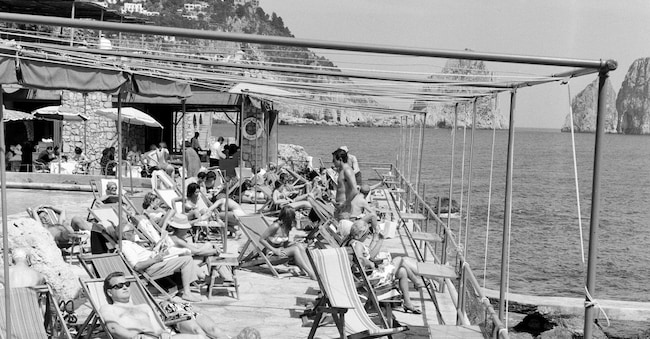
More foreign visitors and higher visitor numbers in the South, on the islands and in cities of art. Whilst we await the final figures for this scorching summer, Istat data provide a snapshot of the transformation of Italian tourism over recent decades. More specifically, from 1962 to 2025.
At the height of the economic boom, the geographical distribution was very clear: three-quarters of visitor nights – that is, nights spent in hotels and other accommodation establishments – were concentrated in seven regions of the Centre-North: Emilia-Romagna, Veneto, Liguria, Lombardy, Tuscany, Trentino-Alto Adige and Lazio. The South accounted for just 11.7 per cent of the total. It was local tourism or short-haul tourism, with foreign visitors making up 30.7 per cent of the total.
Sixty years on, the map still shows a strong concentration in the Centre-North, but the South has doubled its share, whilst the proportion of regions such as Emilia-Romagna and – above all – Liguria (which has fallen from 13 to three out of every 100). Friuli-Venezia Giulia, Piedmont and the Marche have also seen their share decline, albeit to a lesser extent.
The redistribution of visitor numbers took place during a period of strong growth in the tourism industry, which rose from 161 to 481.1 million visitors in 2025. This means that even those regions which saw their relative share decline have, in any case, recorded a sharp increase in visitor numbers. The only exception is Liguria, which lost 6.4 million visitors.
The foreigners are coming
In line with the boom in low-cost flights and the digital revolution, and with the rise of hotels and accommodation booked via online platforms, the role of international tourism has grown. Based on data from Istat, Il Sole 24 Ore has calculated that tourists arriving from abroad account for around two-thirds of the total number of visitors.


