Cannes Film Festival

The splendour of 'Parthenope', an award-winning film

Paolo Sorrentino arrived on the Croisette with his latest film. Also in competition was 'Marcello mio' with Chiara Mastroianni

3' min read

3' min read

And the day came for 'Parthenope': the new film by Paolo Sorrentino, the only Italian director in the running for the Palme d'Or, was presented at the Cannes Film Festival.

Despite being a darling of the French kermesse, it had been nine years since Sorrentino had brought one of his feature films to the Croisette. In 2015 it was 'Youth', but the Neapolitan director had previously been in the competition five other times, from 'The Consequences of Love' (2004) to 'The Great Beauty' (2013), including winning the Jury Prize in 2008 with 'Il divo'.

Loading...

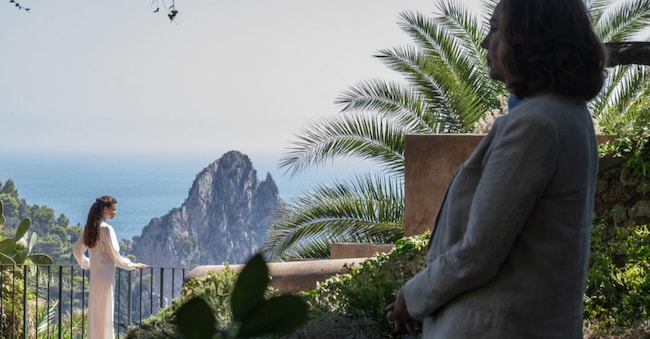
At the centre is the story of a woman, the Parthenope of the title, whose life we follow from her birth in the 1950s to the present day. She is no mermaid and no myth, perhaps, but her existential journey has the flavour of the great epic.

Between realism and legend, Partenope is named after its city and its history will be constantly associated with that of the Gulf of Naples, a place of the soul and a space of memory in this film that represents it in all its beauty, but also in its contradictions.

After 'It was the Hand of God' (2021), a splendid and profoundly autobiographical film, Sorrentino returned to his hometown, which had not been the setting for his work since his feature debut with 'The Extra Man'.
Sorrentino builds a female character of extraordinary depth, a young woman loved by everyone, perennially searching for her place in the world, who will see her family break up due to a tragic event that will mark her forever.

Strong emotions

.

This film is a real emotional whirlwind, combining nostalgia for the past and excitement for the future, extremely vital moments and others with melancholic and desperate tones.

Sorrentino plays strongly with symbolism and gives life to a courageous and suggestive product, fascinating in its staging and strong in some truly goose-bump sequences, which confirm his talent and audiovisual courage.

The protagonist Celeste Dalla Porta is surprising in terms of intensity, but the cast as a whole works very well. Among the many familiar faces on stage are Gary Oldman, Silvio Orlando and Luisa Ranieri.

A film that deserves to be included in the festival's final palmarès.

Marcello mio

Marcello mio

There is also a lot of Italy in another title in the running for the Palme d'Or: 'Marcello mio', the new film by Christophe Honoré, which pays homage to Marcello Mastroianni in the year in which the centenary of his birth falls.

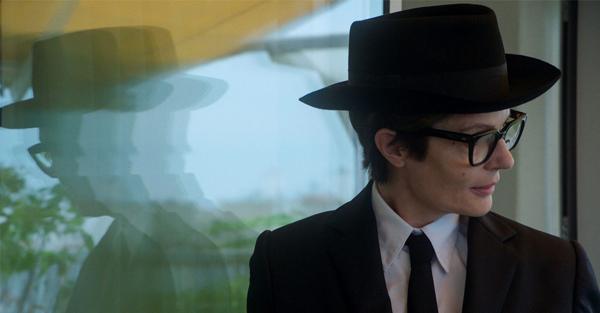
Marcello's daughter, Chiara, plays herself in this film in which her character wants to 'become' her father, tracing his inimitable style, speech and manners. Bewildered, the people around her, from her mother Catherine Deneuve to other acquaintances in the world of cinema, decide to support her on her journey to Italy to the places of Marcello's life.

Opening with a sequence that reproposes the famous scene from 'La dolce vita' with the bath in the Trevi fountain, 'Marcello mio' rattles off a very long series of moments that recall Mastroianni's filmography, his characters, his unmistakable style.

In this game of identity, in which a daughter tries to revive her father figure within herself, there are some not inconsiderable psychoanalytical hints, but they are too watered down by a fluctuating screenplay, which goes from touching moments to others that are really coarse and poorly focused.

The result is a film that only works in a small way, capable of enthralling in some passages, but also the victim of too many pauses and not very incisive turns. It is a pity because the premises for making something important were there.

Copyright reserved ©

Brand connect

Loading...

Newsletter

Notizie e approfondimenti sugli avvenimenti politici, economici e finanziari.

Iscriviti