
The strengthening of Aspides to be discussed by EU defence ministers on Monday
Italia is at the forefront of calls to strengthen the EU naval mission, ensuring safe passage through the Bab el-Mandeb Strait. Many countries are concerned about the issue, but first and foremost, the necessary resources are lacking
from our correspondent Beda Romano
 Aggiungi Il Sole 24 Ore
ai preferiti su Google
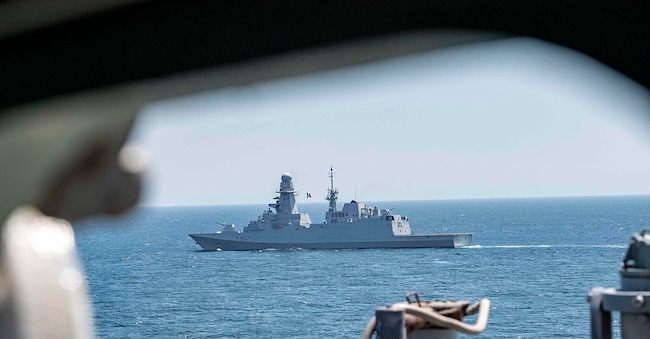
BRUSSELS – A possible reinforcement of the European Aspides mission will be at the centre of discussions between defence ministers on Monday 28 September in Brussels. Pressure to send new ships and personnel to the Red Sea, in order to ensure safe passage through the Bab el-Mandeb Strait, is coming in particular from Italy. The outcome of the meeting remains uncertain. Many member states are aware of how crucial this maritime passage is, but lack the necessary resources.
In the middle of the month, the Italian Defence Minister Guido Crosetto sent a letter to High Representative Kaja Kallas requesting reinforcements in the Red Sea. The former Estonian Prime Minister has endorsed the Italian request, urging the EU-27 in a letter dated 19 September to increase their presence ‘substantially’. Member states take turns deploying forces to the region, with a total of two ships. Greece is leading the operation. Italia currently has one frigate in the region, to which two minesweepers could be added.
The fears
The Italian government fears that, with its current resources, it will be unable to counter the attacks by the Houthis, the Iran-backed Shia group. According to information gathered in Brussels, there is awareness of the issue, but many European partners appear reluctant to commit further. In the initial diplomatic discussions here in Brussels, Member States did not react excessively to the exchange of letters.
A diplomat explains: “Apart from the issue of resources, some governments have decided, for security reasons, to reassess their involvement following the recent Houthi attacks.” A European official said, however, that he hoped for “progress” on Monday. Belgium is reportedly willing to make a ship available. It is possible that France and the Netherlands may do the same. Paris currently has two vessels in the region, typically stationed in the Strait of Hormuz, the epicentre of the conflict between the United States and Iran.
The Crossing of the Red Sea
The Bab el-Mandeb Strait has traditionally been important because, by bypassing the Suez Canal, it allows ships bound for Europe or Asia to avoid circumnavigating Africa. It is estimated that 10 per cent of world trade passes through this stretch of sea between Yemen and Djibouti. According to data from the US Energy Information Administration, in 2023, 12 per cent of oil traded by sea and 8 per cent of liquefied gas imported and exported passed through Bab el-Mandeb.


