
The UN gets involved in AI governance. Here's what it's doing
The last UN General Assembly marked a turning point in the (sensitive) regulation of artificial intelligence

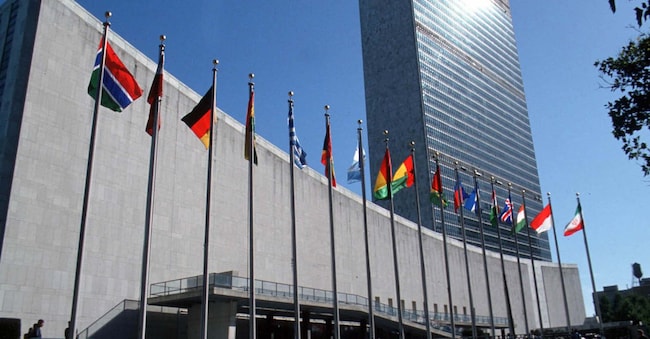
The last United Nations General Assembly, held in New Work at the end of September, had on its agenda well-known topical issues, but it also marked (at least this is the feeling) a turning point as far as the (delicate) regulation of artificial intelligence is concerned. The UN's response to the magnitude of the social implications of the spread of AI are two new bodies whose aim is to build an architecture capable of ensuring a more inclusive governance of algorithmic technologies, the Global Dialogue on AI Governance and the Independent International Scientific Panel on AI. The first is basically a forum that brings governments, industry, civil society and the scientific community around the table to exchange practices, define common standards, promote interoperability between different regulatory models and thus contribute to the construction of safe and reliable artificial intelligence systems.
A gap to be bridged
The idea behind these two new bodies, in a nutshell, is to bring order to a complex landscape, reducing the existing regulatory fragmentation and making shared governance tools accessible to all. The obstacle to be overcome immediately can just as easily be summarised and stems from the low level of participation in major international initiatives on the subject of AI governance, with as many as 118 countries still remaining on the fringes of this discussion, according to a report by the United Nations itself. The development of tools based on algorithms and LLM models, in other words, is proceeding faster than the rules that should guide it. And we must therefore speed up in finding a solution to bridge this gap. The report drawn up by the World Economic Forum in collaboration with Accenture, 'Advancing Responsible AI Innovation: A Playbook', explains in this regard how the availability of reliable AI ecosystems is a differentiating element in the development of AI.
The World Economic Forum's role and critical points
Governing AI and responding to the uncertainties surrounding generative artificial intelligence to ensure an adoption process that generates benefits for all is not only a matter of establishing rules but also of finding an execution plan to 'bring them to life' in the economic and industrial spheres. It is in this vein that the World Economic Forum's Centre for the Fourth Industrial Revolution has launched the AI Governance Alliance, a body involving governments, businesses, academia and civil society to promote responsible practices. In parallel, as the report 'Advancing Responsible AI Innovation' suggests, the line to follow for all those involved is to see AI (when reliable and controlled throughout its application cycle) not as a brake, but as an engine of scale. Provided that business strategy is aligned with the technology-driven innovation process and internal organisational capacity is strengthened to govern it. The projects i

