

The US and Italia are working together in Libya
The United States has taken the Tripoli and Benghazi dossier back under its wing. It arranged a meeting in Angola between the two chiefs of staff and summoned Saddam Haftar to Washington. The diplomatic adviser to Palazzo Chigi was also present.

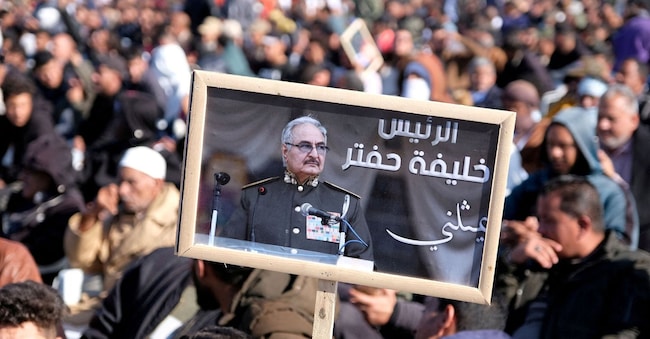
Recently in Luanda, Angola, Africom (the US military command for Africa) organised a conference of the continent’s chiefs of staff. Thirty-five countries and a number of international partners were present. The event is nothing new. The news, in fact, is the simultaneous presence of General Salah al Din al Namroush, head of the armed forces in Tripoli, and Khaled Haftar, son of Khalifa and Chief of Staff of the Libyan National Army in Benghazi. On the agenda were the development of defence capabilities across the continent, increased operational readiness, joint training and innovation. For Tripoli, this presented an opportunity to foster the exchange of experiences and establish bilateral partnerships. However, the main focus was on the participation of the two Libyan military figures, who for the first time discussed shared issues and joint objectives. This rapprochement is almost entirely down to the Americans, who over the last two months appear to have taken the Libyan dossier back into their own hands with the aim of initiating a diplomatic dialogue between the two halves of the country, maintaining relations with the Haftar family and, at the same time, aligning themselves with the military command centres on the ground. This represents a substantial shift in approach. One need only recall that last April, when the joint military exercises known as Flintlock 2026 were held in Sirte – in which Italian special forces also took part – Khaled Haftar had left his seat empty whilst posing for photographs alongside the Russian ambassador. In the meantime, of course, many things have changed, and an important visit to Washington has also taken place. On that occasion, Saddam Haftar – Khalifa’s second son and deputy commander of the LNA – met with the US Special Envoy, Massad Boulos; the Director for Middle East Affairs at the National Security Council, Wayne Wall; and the Chargé d’Affaires at the US Embassy in Libya. The aim of the meeting – according to the press release issued from Benghazi – was to launch a process of unifying Libya’s military and political institutions. This is considered essential if the country’s overall stability is to be strengthened. Also present in Washington, alongside the three US delegates, was Fabrizio Saggio, diplomatic adviser to Prime Minister Giorgia Meloni. His name appears in the press release itself, indicating Italy’s leading role at a time of change for Libya. This positive news follows on from the announcement made less than two weeks ago by Palazzo Chigi. Rome, Ankara and Doha have signed a protocol to establish a joint operations centre for the local Coastguard. The main objective: controlling migration flows. This move forms part of both the path urged by the US and the process of dialogue between local authorities, which could lead to constitutional reform and elections currently scheduled for February 2027. The conditional tense is a must here. Not only because the various players are operating on overlapping levels, but also because Europe is not united on this issue. Paris, for example, has independently concluded an agreement with the Tripoli Navy to support its development, but without including the issue of migration flows. Certainly, despite Donald Trump’s statements against Rome regarding NATO, the US and Italia are working together in Libya. And this is also a boost for our companies.

